
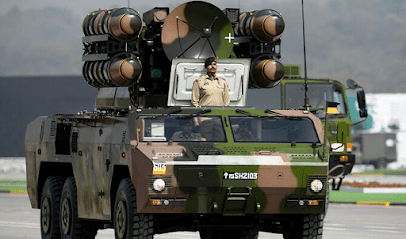
The United States’ latest move to impose sanctions on Pakistan’s missile program has sparked heated debates in global corridors of power. Labeling Pakistan’s ballistic missile advancements as an “emerging threat,” Washington has unveiled its growing unease with Islamabad’s strategic ambitions. But what has truly put the U.S. on edge, and how does Pakistan’s missile program stack up against its regional and global rivals?
How Advanced Is Pakistan’s Missile Technology?
Pakistan’s missile program is no longer a secretive endeavor; it is an established force in South Asia’s military balance. With advancements in the SHAHEEN series, including long-range capabilities that rival some of the most advanced missile systems globally, Pakistan is now among the elite club of nations with operational nuclear deterrence.
Its missile technology includes:
- SHAHEEN-III: A medium-range ballistic missile with a range of 2,750 km, capable of striking deep into Indian territory and even reaching parts of the Middle East.
- BABUR Cruise Missile: A stealthy, terrain-hugging missile with pinpoint accuracy and the ability to evade radar detection.
- NASR Tactical Missiles: Short-range weapons designed for battlefield use, giving Pakistan the ability to counter conventional threats swiftly.
Reports indicate Pakistan is also advancing in rocket propulsion technologies and miniaturized warheads, possibly hinting at an intercontinental ballistic missile (ICBM) capability in the future.
Why Is the U.S. Concerned?
The U.S. views Pakistan’s growing missile prowess as a strategic challenge on multiple fronts:
- Potential Threat to American Interests: While Pakistan has no intent of targeting the U.S., Washington sees long-range missile development as a precursor to technologies that could theoretically reach American soil in the future.
- Impact on Regional Stability: Pakistan’s missile program alters the strategic equation in South Asia. It neutralizes India’s conventional military superiority, giving Islamabad a reliable deterrent against any aggression.
- Allies in the Middle East: Pakistan’s capabilities pose a theoretical threat to American allies like Israel and Gulf states. While Pakistan maintains cordial relations with most of the Middle East, its missile range and the unpredictability of global alliances keep Washington wary.
- China-Pakistan Nexus: The U.S. perceives Pakistan’s growing defense ties with China as a challenge to its dominance in the Indo-Pacific. China’s alleged support in enhancing Pakistan’s missile program adds another layer to Washington’s fears.
A Threat to India and U.S. Allies in the Region
For India, Pakistan’s missile advancements represent a significant strategic hurdle. Despite its massive defense budget, India has struggled to neutralize Pakistan’s nuclear deterrent, which now includes tactical nuclear weapons designed for battlefield deployment.
In the Middle East, Pakistan’s missile range potentially covers regions of strategic interest to the U.S. and its allies. While Islamabad has no history of hostility towards these states, the mere existence of such capabilities shifts the power dynamics in the region.
Why Pakistan Is Unfazed by U.S. Sanctions
Pakistan’s defiance in the face of U.S. sanctions is a testament to its resolve. Over the decades, the country has developed indigenous capabilities, reducing reliance on external technology. The sanctions, primarily symbolic, will have little to no impact on Pakistan’s progress.
On the contrary, these actions may boost the morale of Pakistani scientists and defense strategists, reaffirming their belief in the necessity of self-reliance and technological advancement. Pakistan has weathered decades of international pressure, including sanctions and embargoes, and has emerged stronger each time.
My Two Cents
The U.S.’s fear of Pakistan’s missile program is less about any immediate threat and more about Islamabad’s refusal to bow to external pressures. This fear underscores Pakistan’s growing independence and resilience on the global stage. For Pakistan, this moment serves as a reminder of its achievements and a motivation to continue progressing.
While the sanctions may reflect Washington’s apprehensions, they are unlikely to derail Pakistan’s strategic ambitions. Instead, they highlight the shifting dynamics of global power, where even nations like Pakistan can stand tall against superpowers.
In Conclusion
The U.S.’s unease with Pakistan’s missile program is rooted in its inability to control the trajectory of a rising power. As Pakistan continues to develop its defense capabilities, it sends a clear message to the world: it will chart its own path, regardless of external pressures.