
Special Report by Zohaib Ahmed | 18th May 2026
Executive Summary
The Middle East is undergoing the most significant geopolitical transformation since the collapse of the Ottoman Empire and the post-Cold War restructuring that followed the American invasions of Iraq and Afghanistan. By the spring of 2026, the traditional frameworks that once defined regional politics, namely Arab nationalism, sectarian rivalry, and the “War on Terror,” have begun collapsing under the weight of technological acceleration, infrastructure competition, economic fragmentation, and strategic overextension.
The old order is dying.
For nearly two decades, regional security architecture revolved around the containment of Iran and the management of the so-called “Shiite Crescent.” Tehran’s land corridor stretching from Iran through Iraq and Syria into Lebanon represented the defining strategic anxiety of Israel, the Gulf monarchies, and the broader Western alliance system. Yet the kinetic escalations following October 2023, combined with the collapse of the Assad dynasty in December 2024, systematically degraded the logistical foundations of Iranian regional power.
The result was not stability.
Instead, the vacuum created a far larger geopolitical struggle between competing models of connectivity, sovereignty, and regional integration.
As of 2026, the Middle East is no longer being reorganized around ideology alone. It is increasingly being reorganized around infrastructure sovereignty. The defining struggle is no longer simply Sunni versus Shiite, Arab versus Persian, or Islamism versus secularism. The defining struggle is now about who controls the ports, cables, corridors, data routes, energy infrastructure, chokepoints, and rare-earth supply chains that will underpin 21st century global commerce.
The region has effectively become a laboratory for infrastructure warfare.
At the center of this transformation stands Israel’s emerging “Leviathan Doctrine,” a maritime and technological hegemonic project seeking to transform Israel from a regional military power into the indispensable logistical and digital gateway linking Europe, the Mediterranean, the Gulf, and the Indo-Pacific. Supported by strategic integration with India, the UAE, Greece, and Cyprus, this doctrine seeks to establish a new corridor-based order centered on maritime dominance, digital sovereignty, AI-enabled security systems, and energy routing.
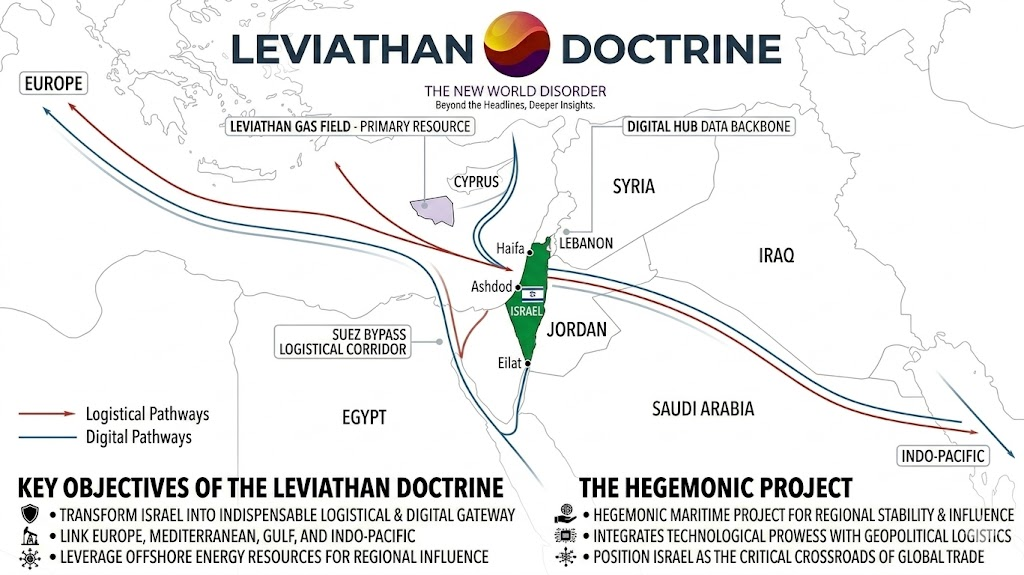
Opposing this architecture is the emergence of what may be called the “Sunni Shield,” a pragmatic counter-bloc led primarily by Türkiye, Saudi Arabia, and Pakistan. Unlike the ideological Shiite Axis of the previous era, this emerging coalition is defined less by revolutionary doctrine and more by strategic depth, state sovereignty, military deterrence, and land-based alternatives to Israeli-controlled maritime infrastructure.
The resulting confrontation is not yet a formal Cold War. However, it increasingly resembles a struggle between two competing geopolitical operating systems.
The first is maritime, technological, and highly networked.
The second is territorial, militarized, and geographically expansive.
Simultaneously, both systems face structural limitations. Israel’s corridor ambitions have encountered political resistance, governance instability, and strategic overstretch in Gaza, the Horn of Africa, and the wider Red Sea. Meanwhile, the Turkish-led bloc faces economic constraints, alliance cohesion challenges, and vulnerability to technological asymmetry.
This has produced what can best be described as a “Multipolar Armed Peace,” a condition in which states are economically integrated yet militarily hostile, technologically interconnected yet strategically distrustful.
The emerging order is therefore not unipolar, bipolar, or fully multipolar in the traditional sense.
It is infrastructural.
The powers capable of controlling maritime chokepoints, AI ecosystems, undersea cables, energy flows, mineral extraction networks, and logistics corridors will increasingly determine the shape of global power in the Indo-Mediterranean century.
The struggle between the Leviathan and the Shield is therefore not merely a Middle Eastern rivalry. It may represent the prototype of 21st century geopolitical warfare itself.
I. The Death of the Post-Cold War Middle East
The modern Middle Eastern order that emerged after the Cold War was built on three foundational assumptions.
First, that American military supremacy would remain uncontested.
Second, that regional states would continue relying on Washington as the ultimate security guarantor.
Third, that ideological competition would remain the primary organizing force of regional politics.
By 2026, all three assumptions have fractured.
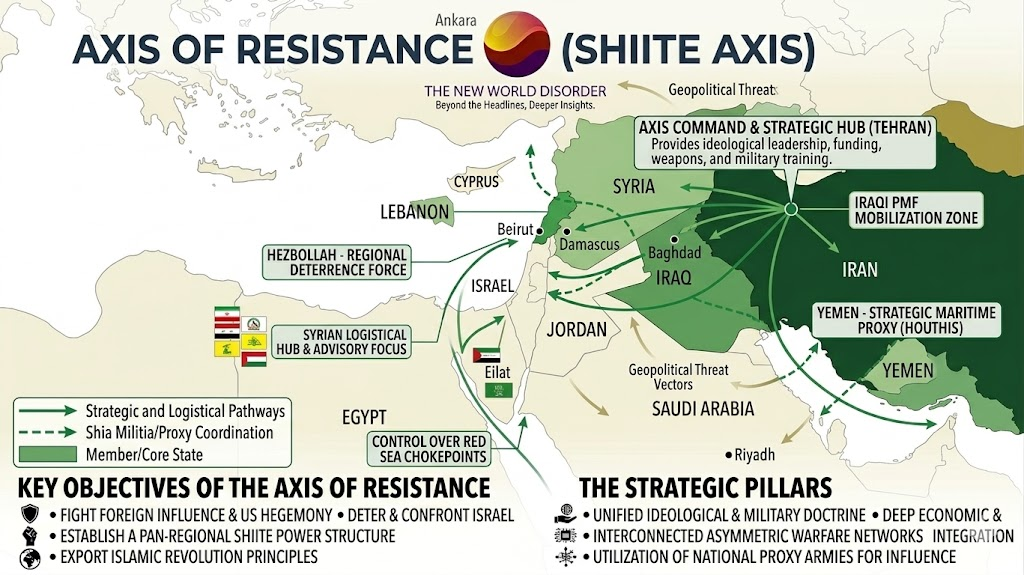
The collapse began gradually after the 2003 invasion of Iraq. The removal of Saddam Hussein eliminated the primary Arab balancing force against Iran, unintentionally opening the door for Tehran’s regional expansion. Iran rapidly embedded itself across Iraq, Syria, Lebanon, and Yemen through a sophisticated network of state-aligned militias, political proxies, ideological institutions, and logistical corridors.
This became known as the “Axis of Resistance.”
The Arab Spring accelerated fragmentation rather than democratization. Libya collapsed into militia governance. Syria descended into civil war. Yemen became a proxy battleground. Iraq fragmented internally. State institutions weakened while non-state actors expanded.
At the same time, the United States entered a period of strategic retrenchment. Washington’s military fatigue after Afghanistan and Iraq, combined with growing competition with China, reduced America’s willingness to act as the sole security manager of the Middle East.
Regional powers began recalibrating.
Türkiye pursued strategic autonomy through military industrialization and regional interventions. The Gulf monarchies shifted toward economic diversification and technological investment. Israel accelerated normalization efforts with Arab states through the Abraham Accords framework.
The old ideological architecture slowly gave way to transactional geopolitics.
October 2023 acted as the catalytic rupture.
The Gaza war triggered regional escalations that exposed the fragility of every existing power structure. Iranian proxies became increasingly vulnerable to sustained precision strikes. Maritime insecurity surged across the Red Sea. Insurance costs rose dramatically. Global shipping routes became unstable.
Then came the decisive turning point.
The collapse of the Assad dynasty in December 2024 severed the physical spine of the Iranian land corridor connecting Tehran to the Mediterranean. For over a decade, Damascus had functioned as the logistical heart of Iranian regional power projection. Once Syria fragmented and new leadership in Damascus pivoted toward Turkish and Gulf reconstruction frameworks, the strategic coherence of the Shiite Axis began disintegrating.
The Middle East entered a new phase.
The defining question was no longer how to contain Iran.
The defining question became:
Who would control the infrastructure of the post-Iranian order?
II. The Collapse of the Shiite Crescent
The weakening of Iran’s regional position did not emerge from a single military defeat. It resulted from the cumulative collapse of an overextended geopolitical system.
For nearly twenty years, Tehran pursued an imperial strategy based on strategic depth through proxy integration. Rather than directly occupying territory, Iran embedded itself into fragmented states through militias, ideological networks, and parallel security institutions.
This model initially proved highly effective.
Hezbollah transformed into the most powerful non-state military actor in the Middle East. Iraqi Popular Mobilization Forces consolidated influence inside Baghdad’s security apparatus. The Houthis gained leverage over the Bab el-Mandeb Strait. Syria functioned as the physical corridor linking Tehran to the Mediterranean.
Yet the entire structure depended on uninterrupted logistics.
Once those logistics fractured, the system began collapsing from within.
The fall of Damascus in late 2024 represented the fatal strategic rupture. The new Syrian leadership under Ahmed al-Sharaa moved rapidly to distance itself from Tehran in pursuit of Turkish and GCC investment. Iranian weapons transit networks became compromised. Hezbollah’s supply chains deteriorated.
Simultaneously, sustained Israeli precision operations degraded command continuity across multiple proxy structures. Key commanders, weapons depots, and intelligence hubs faced systematic targeting.
Economic pressure intensified the collapse.
Iran entered a period of severe fiscal strain marked by hyperinflation, currency devaluation, sanctions fatigue, declining oil revenues, aquifer depletion, and energy infrastructure deterioration. Environmental stress compounded political dissatisfaction. Water shortages, electricity failures, and economic stagnation reduced the regime’s domestic legitimacy.
The Axis of Resistance increasingly transformed from an expansionary geopolitical project into a defensive survival structure.
Lebanon entered paralysis. Hezbollah retained localized military capabilities but lost much of its regional deterrence posture. Iraq’s militias became increasingly fragmented and localized. The Houthis remained operational yet isolated geographically.
Iran did not disappear as a regional power.
However, its imperial logistics became unsustainable.
The “Shiite Crescent” ceased functioning as an integrated strategic architecture and instead fragmented into disconnected insurgent nodes struggling for survival within increasingly unstable domestic environments.
The vacuum left behind would reshape the entire Indo-Mediterranean system.
III. Israel’s Leviathan Doctrine
As the Iranian corridor weakened and the traditional Arab state system fragmented, Israel began transitioning from a reactive security state into a proactive infrastructural power.
This transformation forms the basis of what may be described as the “Leviathan Doctrine.”
Unlike earlier Israeli strategic paradigms centered primarily on deterrence and territorial defense, the Leviathan model seeks to establish Israel as the indispensable connective artery between Europe, the Mediterranean, the Gulf, Africa, and the Indo-Pacific. It is not merely a military doctrine. It is a civilizational logistics project.
At its core, the Leviathan strategy recognizes a defining reality of the 21st century:
Power no longer flows only through armies.
It flows through corridors.
The doctrine therefore seeks to fuse maritime dominance, digital sovereignty, energy routing, AI-enabled security systems, and transcontinental infrastructure into a single geopolitical architecture centered around Israeli-controlled gateways.
The strategy rests on five interconnected pillars.
1. Maritime Control and Chokepoint Dominance
Israel’s traditional security doctrine focused primarily on land borders and aerial superiority. The post-2024 environment forced a dramatic maritime shift.
The Eastern Mediterranean became central to Israeli grand strategy.
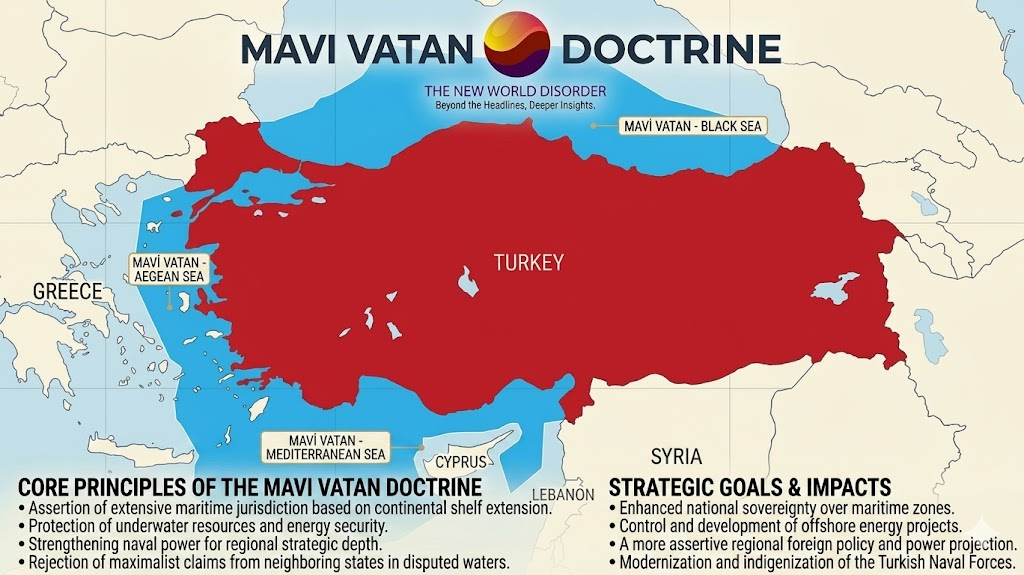
Through trilateral military coordination with Greece and Cyprus, Israel accelerated efforts to neutralize Türkiye’s Mavi Vatan or “Blue Homeland” doctrine, which seeks to establish Turkish dominance across key maritime zones in the Mediterranean and Aegean seas.
This emerging maritime bloc effectively created a geopolitical bisection of the Eastern Mediterranean.
Joint naval exercises, intelligence sharing, subsea monitoring systems, and energy infrastructure coordination transformed the Israeli-Greek-Cypriot triangle into a strategic counterweight against Turkish expansionism.
At the same time, Israel expanded its focus southward toward the Red Sea and the Bab el-Mandeb Strait.
The recognition of Somaliland in December 2025 represented one of the boldest components of this maritime strategy. By pursuing access to Berbera and the wider Horn of Africa, Israel aimed to establish strategic overwatch over one of the world’s most critical maritime chokepoints.
Nearly 12 percent of global trade flows through the Bab el-Mandeb corridor.
Control over this space offers influence not only over Gulf energy exports, but also over European-Asian shipping patterns and emerging Indo-Mediterranean supply chains.
The maritime layer of the Leviathan doctrine therefore seeks to create a continuous strategic arc stretching from Haifa to Cyprus, through the Red Sea, and toward the Indian Ocean.
2. Digital Sovereignty and the Blue-Raman System
Perhaps the least understood yet most transformative aspect of the Leviathan strategy is its emphasis on data sovereignty.
Modern geopolitical power increasingly depends not only on controlling territory or sea lanes, but on controlling the infrastructure through which digital civilization itself operates.
Undersea cables now carry the overwhelming majority of global internet traffic, financial transactions, AI cloud synchronization, military communications, and state-level digital infrastructure.
In this environment, whoever controls digital routing nodes acquires enormous strategic leverage.
The Blue-Raman cable system emerged as a cornerstone of Israel’s digital ambitions.
Designed to link Mumbai to Europe through Israel rather than through traditional Egyptian or Turkish bottlenecks, the system transforms Eilat and Haifa into critical digital junctions connecting Asia to the Mediterranean.
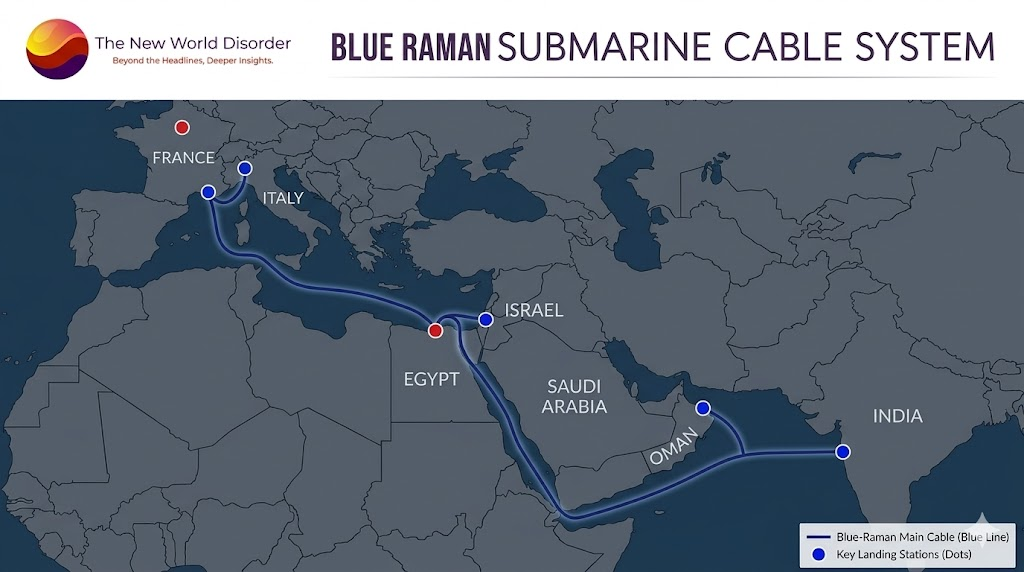
This architecture serves multiple purposes simultaneously.
First, it bypasses vulnerable or politically uncertain transit routes.
Second, it embeds Israel directly into the digital backbone of Indo-European commerce.
Third, it creates a framework for long-term data sovereignty independent of hostile intermediaries.
The strategic implications are profound.
By positioning itself as a central digital gateway between India and Europe, Israel gains potential influence over AI ecosystems, financial clearing systems, cloud infrastructure, cybersecurity coordination, and future quantum communication architectures.
The battle for cables is therefore not merely technological.
It is civilizational.
In the 20th century, empires controlled canals and railways.
In the 21st century, they increasingly seek to control data streams.
3. Energy Hegemony and the Mediterranean Gas Strategy
Energy forms the third pillar of the Leviathan architecture.
The discovery and expansion of Eastern Mediterranean gas reserves significantly altered Israel’s long-term strategic calculations. Fields such as Leviathan and Tamar transformed Israel from an energy importer into an emerging energy hub capable of influencing European diversification strategies following the deterioration of Russian-European energy relations.
This shift accelerated after the Ukraine war exposed Europe’s vulnerability to energy dependence.
Israel recognized an opportunity to position itself as a stabilizing energy dispatcher between the Eastern Mediterranean and European markets.
Projects such as the Great Sea Interconnector and broader Eastern Mediterranean energy integration frameworks became instruments of geopolitical influence rather than purely economic ventures.
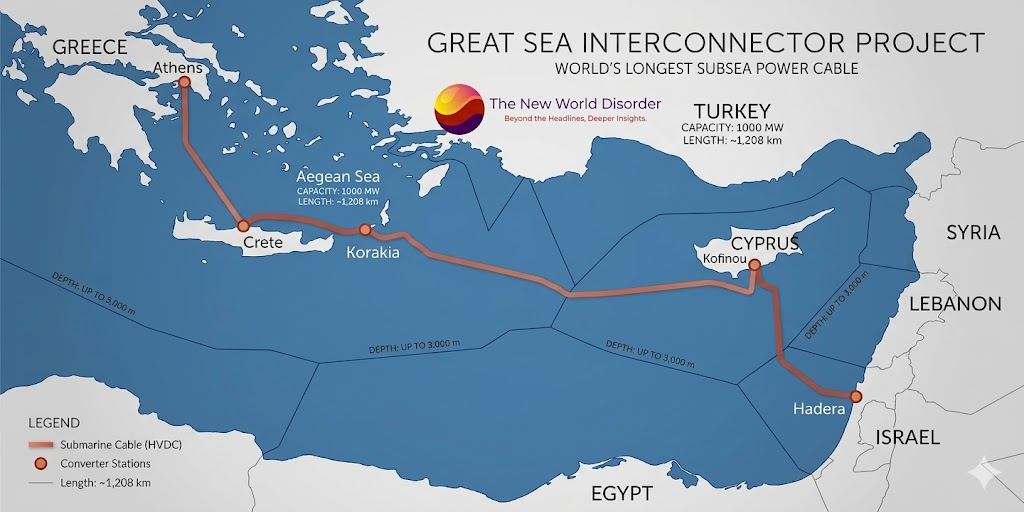
The strategic objective is straightforward:
To ensure that future energy routing between Asia, the Gulf, and Europe increasingly flows through Israeli-supervised infrastructure rather than through rival corridor systems dominated by Türkiye, Iran, or unstable Arab transit states.
This energy layer also intersects directly with maritime security.
Offshore gas fields require naval protection, cybersecurity integration, subsea monitoring, and alliance coordination. Energy infrastructure therefore reinforces Israel’s broader transformation into a maritime-security state.
4. The Security Export Model
A defining feature of Israeli regional influence is the exportability of its security ecosystem.
Unlike traditional military powers dependent primarily on troop deployments, Israel increasingly projects influence through scalable security technologies.
Iron Dome, Iron Beam, AI-assisted targeting systems, drone warfare platforms, predictive surveillance tools, cyber-defense frameworks, and border automation systems have transformed Israel into one of the world’s leading security exporters.
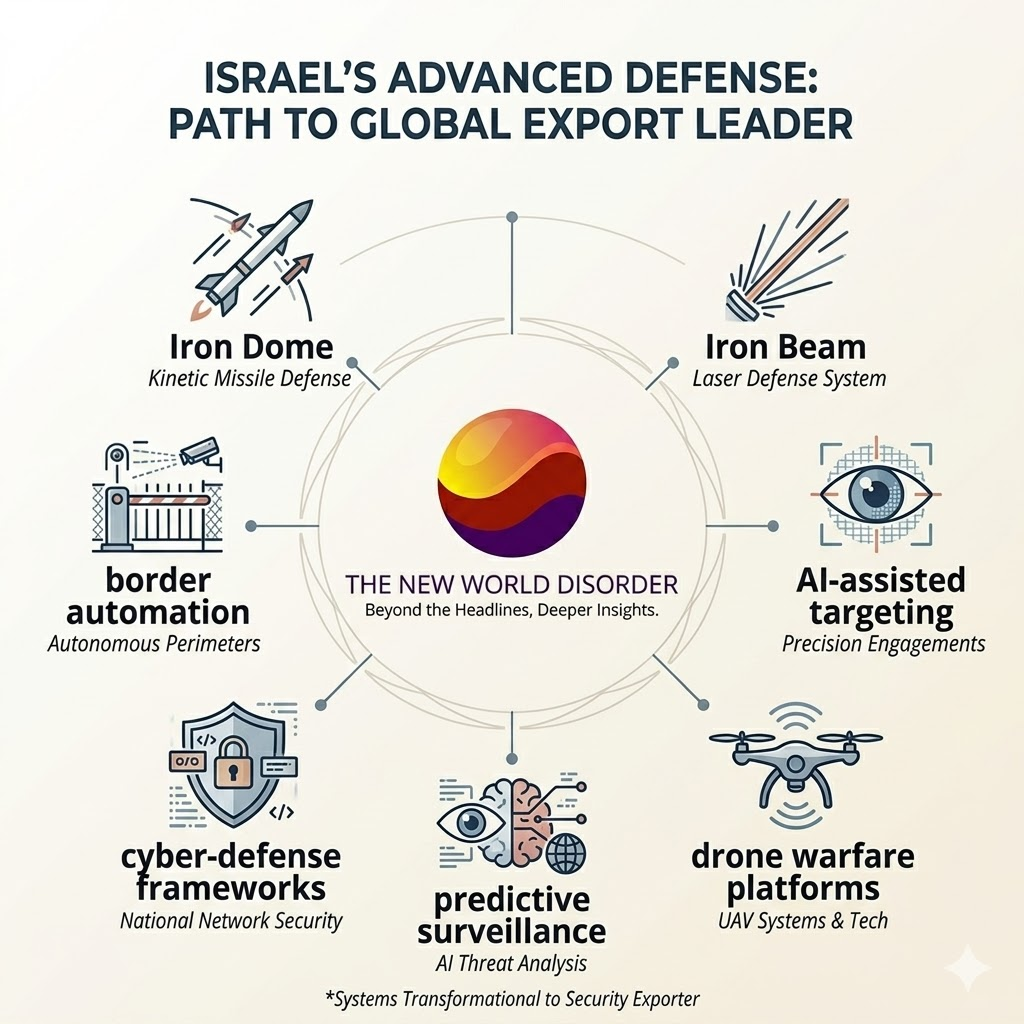
This creates a new form of geopolitical leverage.
States integrating Israeli defense technologies gradually become interconnected with Israeli intelligence systems, cybersecurity architectures, and strategic planning frameworks.
The result is not direct occupation.
It is infrastructural dependency.
The “security-as-a-service” model allows Israel to project influence far beyond its geographic size while embedding itself into the operational nervous systems of allied governments.
This becomes particularly important for Gulf monarchies seeking advanced missile defense capabilities against drones, cyberattacks, and emerging hybrid warfare threats.
The more unstable the region becomes, the more valuable Israeli technological integration appears.
5. Corridor Geopolitics and the IMEC Vision
The final pillar of the Leviathan strategy is corridor sovereignty.
The India-Middle East-Europe Economic Corridor, commonly referred to as IMEC, represents far more than a trade initiative.
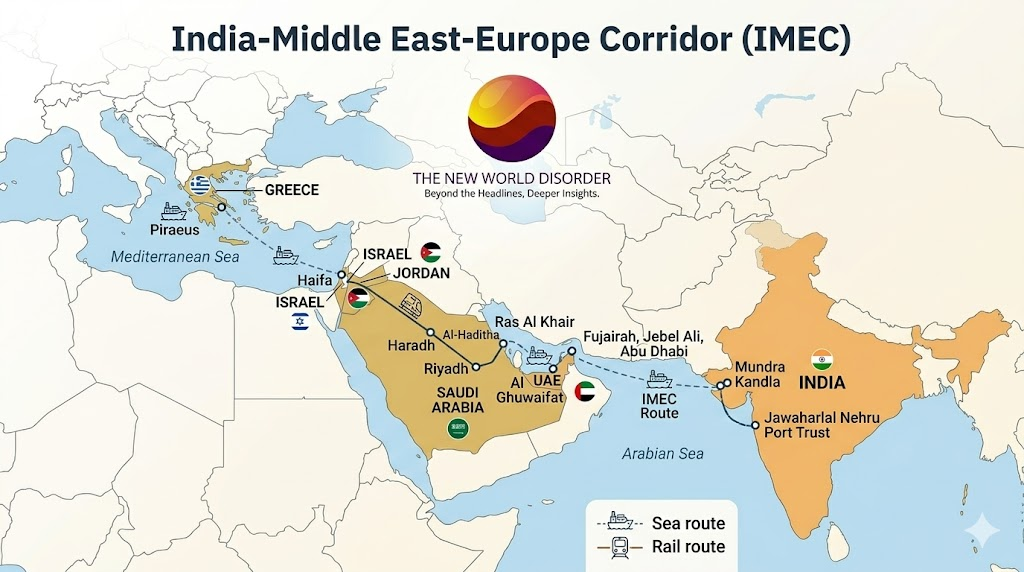
It is a geopolitical reorganization project.
The corridor seeks to connect Indian manufacturing and Gulf logistics directly to European markets through rail, port, and maritime integration centered around Israeli transit infrastructure.
In strategic terms, IMEC attempts to achieve four major objectives simultaneously:
- Reduce dependence on Chinese-controlled supply chains.
- Bypass unstable Iranian and Iraqi routes.
- Diminish Turkish leverage over Eurasian transit.
- Establish a Western-aligned Indo-Mediterranean economic architecture.
This is why India became central to the emerging Leviathan system.
India provides demographic scale, manufacturing demand, technological labor, and long-term market sustainability. Israel provides security, infrastructure integration, and technological coordination. The UAE provides financing and logistics.
Together, the triangle forms the operational core of the emerging Indo-Mediterranean order.
Yet despite its sophistication, the Leviathan project also faces deep structural vulnerabilities.
Infrastructure alone cannot eliminate geography, demography, or political legitimacy.
And it is precisely these vulnerabilities that triggered the emergence of the Sunni Shield.
IV. The Nagel Doctrine and the Rise of the Sunni Shield
The strategic recalibration inside Israel following the collapse of the Iranian corridor produced a profound shift in threat perception.
For nearly two decades, Israeli military planning focused overwhelmingly on Tehran and its proxy network. By early 2025, however, sections of the Israeli strategic establishment began identifying a different long-term challenger emerging across the region.
That challenger was Türkiye.
The January 2025 Nagel Committee Report marked a critical intellectual turning point. While Iran remained a security concern, the report increasingly framed Türkiye as a structurally greater long-term threat due to its demographic scale, industrial depth, NATO interoperability, and expanding maritime ambitions.
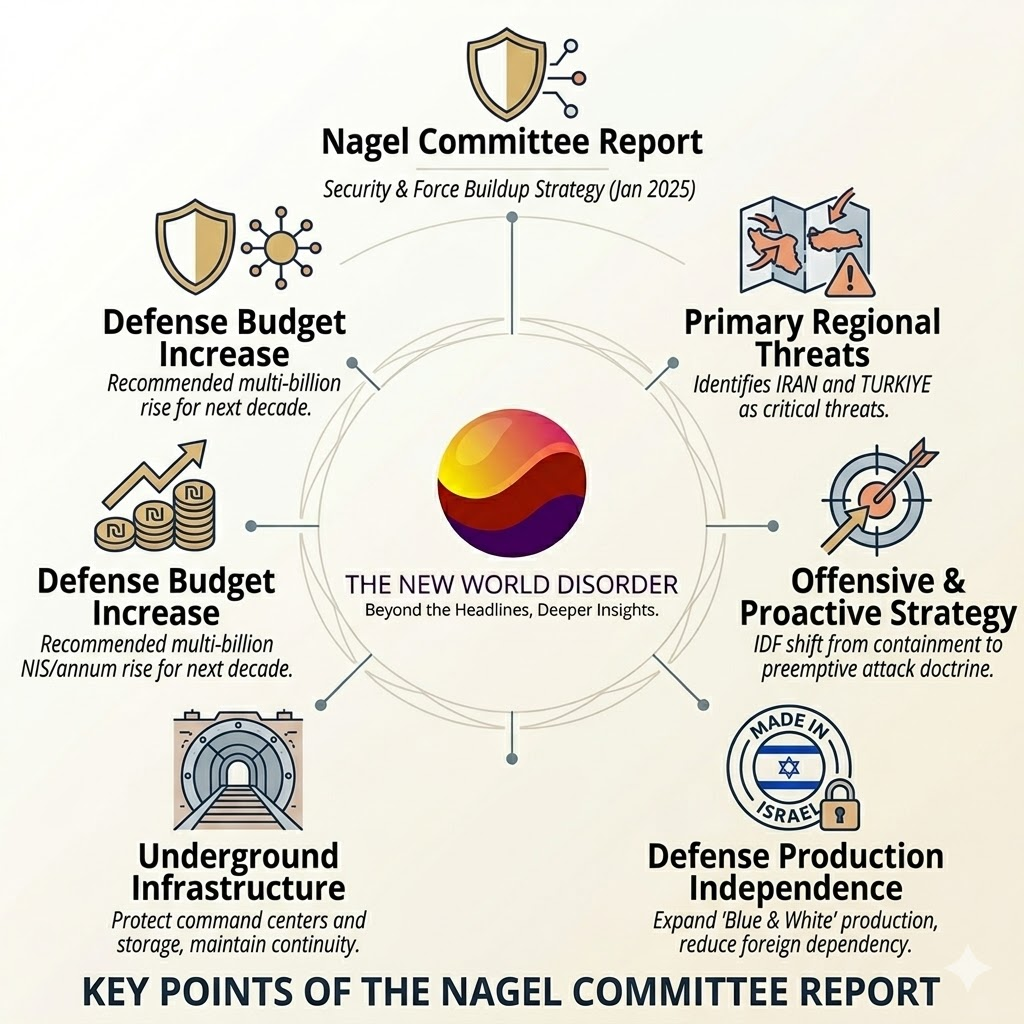
Unlike Iran, Türkiye possessed the characteristics of a sustainable state-based competitor rather than an ideologically overextended proxy empire.
This distinction was crucial.
Iran’s regional influence depended heavily on fragmented militias and unstable logistical corridors. Türkiye, by contrast, possessed a functioning industrial base, a rapidly expanding defense sector, sophisticated drone warfare capabilities, strategic geography linking Europe and Asia, and increasing influence across the Mediterranean, the Caucasus, Africa, and Central Asia.
Israeli planners increasingly feared that if the post-Iranian vacuum were filled by a Turkish-led strategic ecosystem, the Leviathan project could face long-term containment from both land and sea.
This concern accelerated the emergence of what can be described as the “Sunni Shield.”
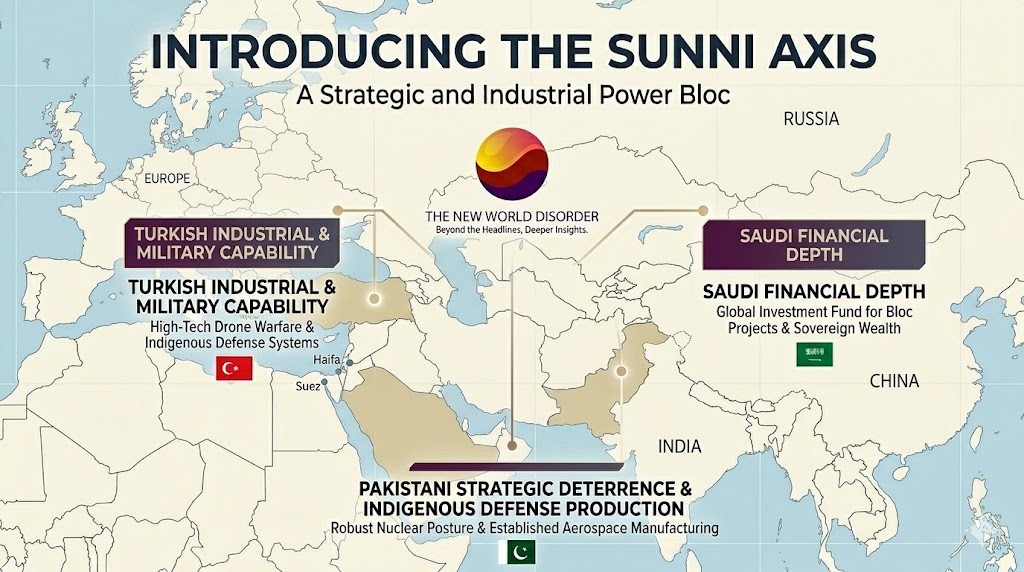
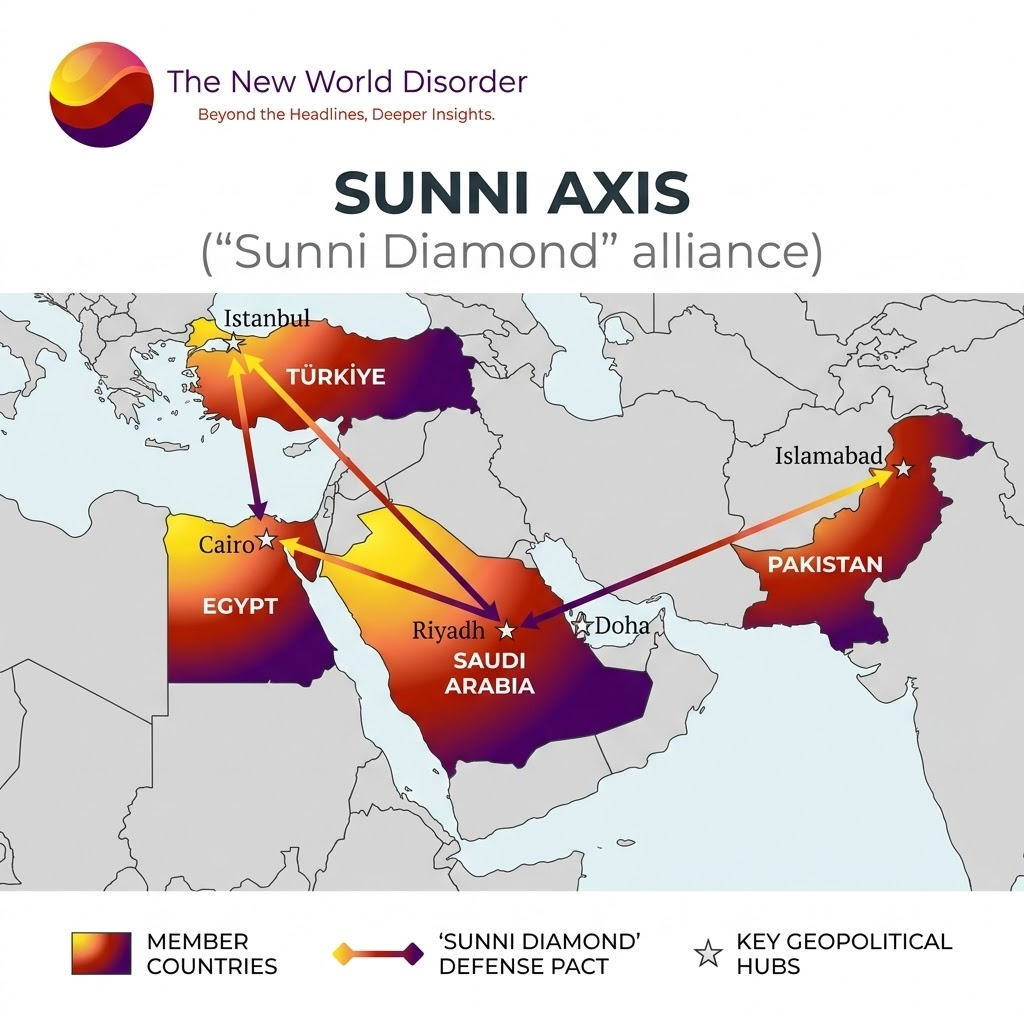
Unlike the old Sunni bloc centered primarily around ideological competition with Iran, the Sunni Shield is a pragmatic strategic balancing framework built around three pillars:
- Turkish industrial and military capability,
- Saudi financial depth,
- Pakistani strategic deterrence.
It is less ideological than the old sectarian order and more focused on preserving sovereign maneuverability against emerging infrastructural monopolies.
The View from Ankara: Recalibrating the Middle Eastern Order
I. The Limits of the Leviathan and the Return of Geography
As I survey the wreckage of the post-1945 order from my vantage point, I am struck by how quickly the “Leviathan” has been outpaced by the very geography it sought to conquer. What was once presented as a seamless vision of technological dominance and corridor-based control is now colliding with the oldest variable in geopolitics: physical space. We are witnessing a classic case of hegemonic overreach, where the pursuit of absolute security through technology, exclusion, and infrastructural centralization has generated its own structural insecurity. The attempt to compress a vast and historically complex region into a managed set of corridors has instead amplified resistance at every node.
The so-called “Hexagon Alliance” is not a masterpiece of statecraft; it is a desperate maritime bisection strategy, a “wall in the water” attempting to bypass the historical and demographic weight of the Anatolian heartland. By seeking to turn the Mediterranean into a semi-controlled logistics basin and the Red Sea into a regulated corridor, Tel Aviv and its financial partners in Abu Dhabi have overlooked a fundamental axiom of power: geography does not dissolve under technological pressure. It reasserts itself when overextended systems begin to fracture. You cannot marginalize a nation that sits at the literal center of the World Island and simultaneously controls access between Europe, Asia, and the Middle East without triggering systemic counter-alignment.
II. Fragmentation, Prediction, and the Emergence of the Sunni Axis
The strategic landscape has shifted toward what we identified years ago as the “Great Fragmentation,” not as a reactive theory, but as a structural inevitability of post-hegemonic transition. The collapse of the old Shiite Axis was not the beginning of a new Israeli unipolar moment, but rather the removal of the last stabilizing barrier separating regional competition into manageable compartments. Once that barrier weakened, a direct structural confrontation between the region’s true enduring powers became unavoidable.
We have already observed how the “David Corridor” failed to materialize not due to engineering limitations, but because it lacked what no infrastructure system can manufacture: regional legitimacy and political acceptance. In its place, we have anchored what is increasingly described as the “Sunni Axis,” though it is more accurately a Strategic Shield rather than an ideological bloc. It links Turkish industrial depth with Pakistan’s nuclear deterrence and the capital strength of the Hijaz and wider Gulf ecosystem. This is not a revolutionary formation; it is a correction of imbalance. While the Hexagon invests in experimental “stunts” across Somaliland and speculative digital constructs such as quantum routing architectures, the Sunni Shield remains grounded in the enduring fundamentals of power: land continuity, maritime control, and historical memory embedded within the region’s own societies.
III. Systemic Incompatibility and the Nagel Doctrine
The tragedy of the current moment lies in the systemic incompatibility of strategic visions now competing across the Eastern Mediterranean and Indo-Mediterranean space. The Nagel Doctrine, which frames Türkiye, an established NATO pillar and G20 economy, as a “New Iran,” is not an analytical assessment; it is a strategic mischaracterization that reveals a shift from managed competition toward existential framing. Once an actor is redefined as an existential threat, diplomacy begins to collapse under its own logic, and security dilemmas become self-fulfilling.
When the TCG Anadolu carrier group and associated maritime assets operate in the Eastern Mediterranean today, they do so not as instruments of expansion, but as mechanisms of maritime enforcement aligned with the Mavi Vatan doctrine. This doctrine is not a theoretical construct; it is a strategic recognition that maritime sovereignty in the 21st century is defined not only by naval capability, but by control of contested waters where energy, data, and logistics converge. The emerging reality is clear: the gatekeepers of the maritime century will not be those who attempt to build exclusionary fences, but those who possess the depth to sustain pressure across both sea and land domains simultaneously.
IV. Sovereignty, Continuity, and the End of External Hegemony
In this era of shifting shadows and hardened geometries, the map of the Middle East is no longer being drawn exclusively in global boardrooms or abstract strategic simulations detached from regional realities. It is being forged in the operational resilience of sovereign actors who remain embedded within the geography they seek to shape. The attempt to impose externally engineered corridors without accounting for local continuity has repeatedly demonstrated its limitations.
The “Leviathan” may currently maintain dominance over data infrastructure, undersea cable networks, and financial routing systems, but history consistently demonstrates that no system built on exclusionary architecture can indefinitely sustain itself when it attempts to regulate the essential flows of neighboring civilizations. Air, water, land access, and demographic continuity cannot be permanently outsourced to external control mechanisms without generating systemic pushback.
What is emerging is not the disappearance of power, but its redistribution back toward actors with enduring geographic centrality. The era of externalized hegemony is reaching its structural limits. The future of the region will increasingly be determined by those who do not merely operate within it as external managers, but by those who have always belonged to its historical and civilizational fabric, and who continue to possess the depth required to absorb shocks, sustain pressure, and maintain strategic continuity across generations.
Türkiye and the Return of Strategic Depth
Türkiye’s geopolitical advantage lies in geography.
No regional power sits at the intersection of as many strategic corridors simultaneously. Ankara connects the Black Sea, the Mediterranean, the Balkans, the Caucasus, Central Asia, and the Levant.
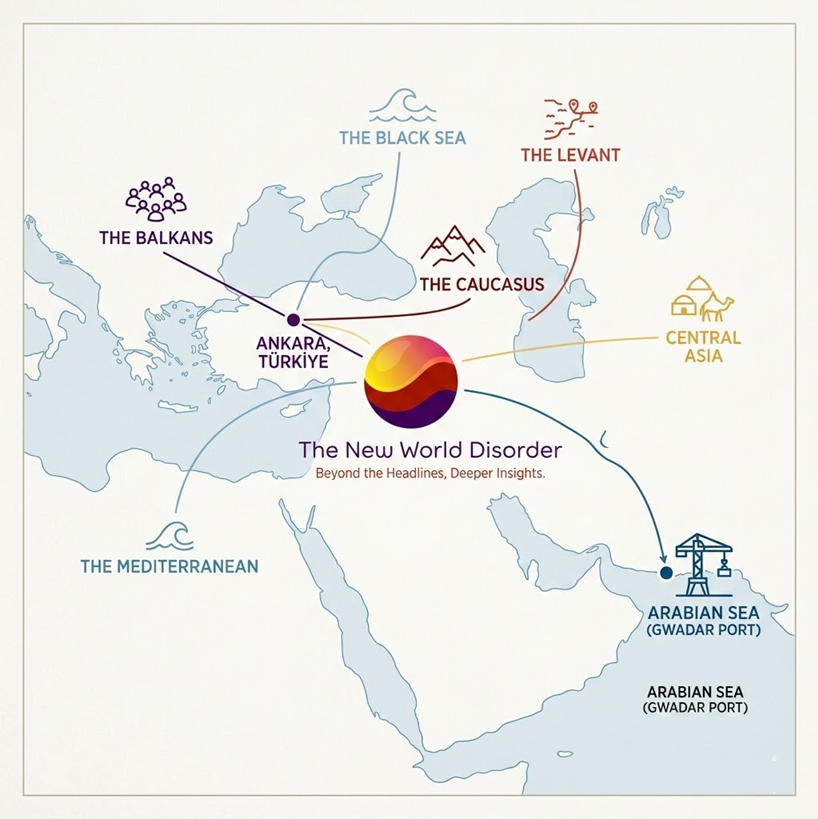
For centuries, control of Anatolia meant influence over Eurasian connectivity itself.
Modern Turkish strategy increasingly reflects this historical understanding.
The Mavi Vatan doctrine represents more than maritime nationalism. It is an attempt to prevent the Eastern Mediterranean from transforming into an exclusionary Israeli-Greek maritime architecture that marginalizes Turkish access to energy resources and regional trade routes.
At the same time, Türkiye’s defense industrial expansion dramatically altered regional military balances.
The rise of Bayraktar drones during conflicts in Libya, Syria, Nagorno-Karabakh, and Ukraine demonstrated Ankara’s ability to produce scalable, low-cost military technologies capable of reshaping modern warfare doctrines.
Türkiye’s growing naval ambitions further reinforced Israeli concerns.
Expanded submarine programs, amphibious assault capabilities, drone carriers, indigenous missile development, and Mediterranean naval deployments signaled Ankara’s intention to become a long-term maritime power rather than merely a continental actor.
The Turkish-Somali defense relationship became especially significant.
By embedding itself in Somalia, Türkiye gained strategic positioning near the Bab el-Mandeb corridor, directly intersecting with Israeli maritime ambitions in Somaliland and the wider Horn of Africa.
This transformed the Red Sea from a peripheral theater into a central front in the emerging infrastructural Cold War.
Saudi Arabia and the Financial Balancing Strategy
Saudi Arabia occupies a uniquely delicate position within the emerging order.
Riyadh shares many Israeli concerns regarding Iranian expansionism and regional instability. Simultaneously, however, Saudi leadership remains cautious about any regional architecture that could permanently subordinate Arab economic sovereignty to Israeli-controlled infrastructure systems.
This creates a balancing strategy rather than full alignment.
Vision 2030 accelerated Saudi ambitions to transform itself into a logistics, tourism, technology, and investment hub. Yet these ambitions depend on preserving Saudi relevance within future trade and energy networks.

An overwhelmingly dominant IMEC architecture centered around Haifa and Israeli transit corridors risks reducing Gulf states into secondary financial nodes rather than sovereign geopolitical centers.
As a result, Saudi Arabia increasingly pursues dual-track diplomacy:
- tactical engagement with Israeli and Western frameworks,
- strategic hedging through Türkiye, Pakistan, and alternative land corridors.
This balancing posture explains Riyadh’s cautious response toward deeper regional integration proposals following the Gaza escalations and subsequent instability.
Saudi Arabia seeks connectivity.
But it does not seek dependency.
Pakistan and the Nuclear Dimension
Pakistan’s role within the Sunni Shield differs fundamentally from that of Türkiye or Saudi Arabia.
Islamabad does not possess comparable economic scale or maritime reach. Its strategic value instead lies in escalation deterrence.
Pakistan remains the only Muslim-majority nuclear weapons state and maintains one of the region’s largest and most experienced standing militaries.
This transforms Pakistan into a strategic depth provider for the broader Sunni ecosystem.
As India deepened integration with Israel and the Gulf under the IMEC framework, Pakistani strategic planners increasingly viewed the emerging Indo-Mediterranean architecture not merely as an economic initiative, but as a geopolitical encirclement structure capable of marginalizing Pakistani transit relevance.
The implications extend beyond trade.
If India secures long-term maritime and infrastructural integration with Gulf economies while simultaneously bypassing Pakistani geography, Islamabad risks strategic isolation across both economic and security domains.
This perception accelerated Turkish-Pakistani defense coordination.
Joint drone development, naval cooperation, intelligence sharing, and military training partnerships expanded significantly. Pakistan’s strategic geography along the Arabian Sea, combined with Gwadar’s long-term potential, preserved its relevance within alternative corridor calculations.
From Ankara’s perspective, Pakistan provides nuclear-backed deterrence against any future regional order dominated exclusively by Israeli-Indian integration.
From Islamabad’s perspective, Türkiye offers industrial capability and geopolitical support against long-term marginalization.
The relationship is therefore deeply structural rather than merely symbolic.
Syria as the Buffer State
The collapse of Assad-era Syria fundamentally altered the balance between the Leviathan and the Sunni Shield.
Under the new leadership framework in Damascus, Syria gradually transitioned from an Iranian logistical artery into a contested buffer state.
Türkiye and Gulf investors rapidly recognized Syria’s geopolitical value.
Whoever shapes post-war Syrian reconstruction potentially influences future land corridors connecting the Gulf, Iraq, Türkiye, and the Mediterranean.
This transformed Syria from a battlefield into a transit competition zone.
For the Sunni Shield, rebuilding Syria serves several strategic objectives simultaneously:
- preventing total Israeli maritime encirclement,
- restoring Arab transit sovereignty,
- weakening residual Iranian influence,
- creating overland alternatives to Israeli-controlled corridors.
This is why infrastructure investment inside Syria increasingly carries geopolitical significance far beyond reconstruction alone.
Roads, pipelines, rail systems, industrial zones, and port modernization projects are becoming instruments of strategic alignment.
The future of Syria may therefore determine whether the Middle East evolves into a maritime-dominated order centered around the Leviathan or a hybrid system where land-based strategic depth continues to counterbalance infrastructural monopolization.
The competition between these models would soon expand beyond the Mediterranean and the Levant into the deeper architecture of global connectivity itself.
V. Infrastructure Warfare and the New Cold War
The geopolitical struggle emerging across the Middle East can no longer be understood solely through the traditional frameworks of territorial conquest, ideological rivalry, or military occupation.
A new strategic paradigm is taking shape.
Infrastructure itself has become the battlefield.
The defining powers of the 21st century are increasingly those capable of controlling the systems through which global civilization operates: ports, undersea cables, logistics corridors, semiconductor supply chains, AI cloud infrastructure, energy pipelines, satellite systems, and rare-earth extraction networks.
This transformation marks the rise of what may be called “Infrastructure Warfare.”
Unlike classical warfare, which focuses on occupying territory, infrastructure warfare seeks to control connectivity. The objective is not necessarily to annex land, but to dominate the flows that sustain modern economies and digital societies.
In previous centuries, empires controlled rivers, canals, and sea lanes.
The British Empire dominated maritime chokepoints from Gibraltar to Singapore.
The United States built a global order around airpower, naval supremacy, and dollar-centered financial systems.
China’s Belt and Road Initiative attempted to reshape Eurasian commerce through railways, ports, and debt-financed infrastructure.
The emerging Indo-Mediterranean competition represents the next evolution of this historical trajectory.
In this environment, strategic influence increasingly belongs to the actor capable of becoming indispensable to global connectivity.
This explains why infrastructure projects that once appeared purely economic now carry military and geopolitical significance.
A port is no longer merely a commercial asset.
It is a surveillance platform, a logistics hub, a naval foothold, a data-routing node, and a leverage mechanism within global supply chains.
Similarly, undersea cables are no longer simply telecommunications infrastructure.
They are strategic arteries carrying financial transactions, military communications, AI synchronization systems, cloud architecture, intelligence coordination, and state-level digital governance.
The war for infrastructure is therefore simultaneously economic, military, digital, and civilizational.
The Strategic Logic of Connectivity
Modern globalization created unprecedented interdependence between states. Yet this interdependence also produced new forms of vulnerability.
The more connected economies become, the more damaging it becomes to lose control over the systems enabling that connectivity.
As a result, major powers increasingly seek “connectivity sovereignty,” the ability to maintain autonomous access to trade, energy, data, and technological ecosystems without dependence on hostile intermediaries.
This strategic logic sits at the heart of the Leviathan doctrine.
Israel’s infrastructure strategy seeks to ensure that future Indo-Mediterranean commerce flows increasingly through Israeli-supervised gateways. Whether through energy pipelines, digital cables, AI cloud systems, or maritime transit, the objective is to transform Israel into an unavoidable node within global infrastructure architecture.
The implications extend far beyond economics.
Once states become dependent on specific corridors or digital ecosystems, they become strategically constrained.
Dependency creates leverage.
This is why the struggle over IMEC, the Blue-Raman cable, Red Sea ports, and Eastern Mediterranean energy fields has become so intense. These projects are not isolated initiatives. Together, they form components of an integrated hegemonic ecosystem.
The same logic explains Türkiye’s response.
Ankara increasingly views exclusion from emerging connectivity systems as an existential strategic threat. If trade routes, energy flows, and digital infrastructure permanently bypass Turkish geography, Türkiye risks losing the geopolitical centrality that has historically defined its regional influence.
Thus, the emerging rivalry between the Leviathan and the Sunni Shield is fundamentally a struggle over who will own the future architecture of Eurasian connectivity.
Maritime Geoeconomics and the Hyper-Rimland
One of the most important consequences of infrastructure warfare is the growing importance of maritime geoeconomics.
The Indo-Pacific era has transformed sea lanes into the primary arteries of global commerce. More than 80 percent of global trade still moves through maritime networks. The critical chokepoints connecting these networks, Hormuz, Suez, Bab el-Mandeb, Malacca, and the Eastern Mediterranean, have therefore become central to geopolitical competition.
This has produced what may be described as the “Hyper-Rimland” effect.
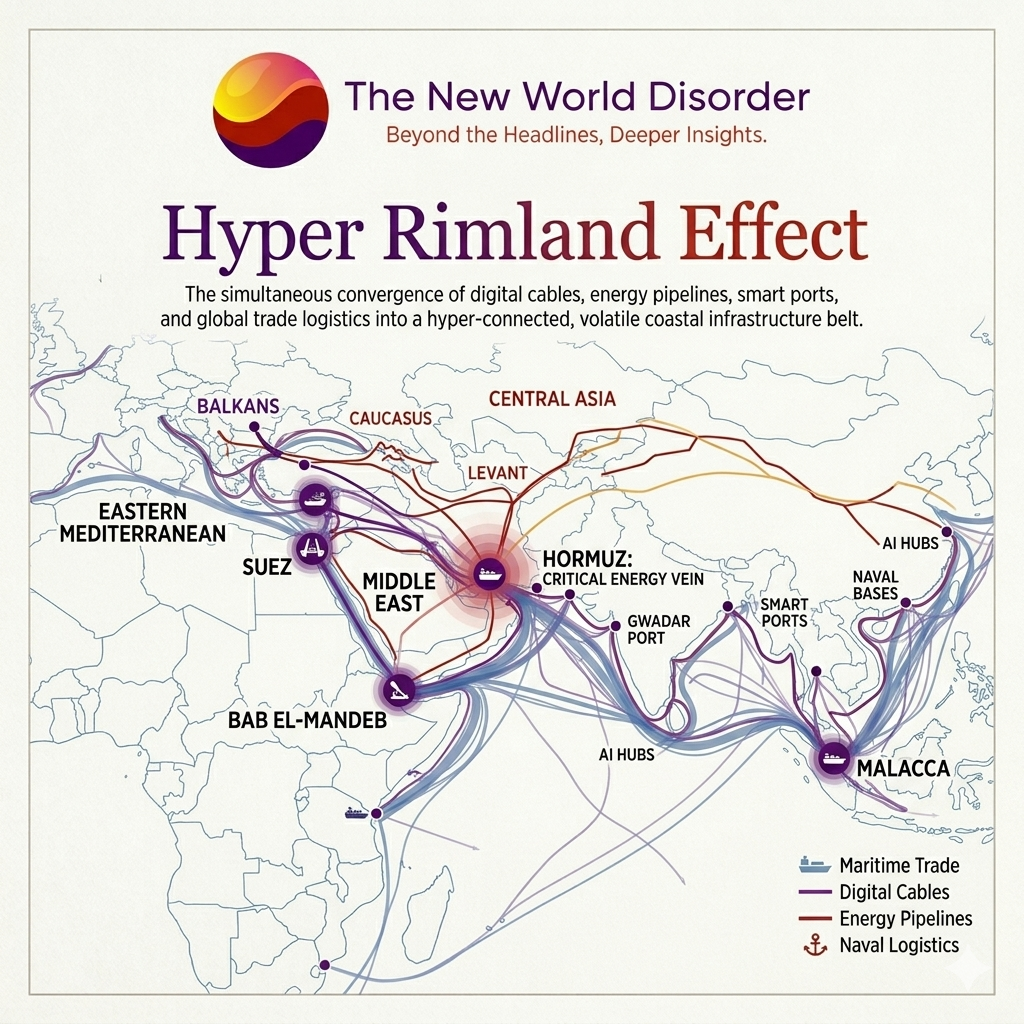
Classical geopolitical theory, particularly Nicholas Spykman’s Rimland concept, argued that the coastal belt surrounding Eurasia would determine global power. In the 21st century, this Rimland has evolved into a hyper-connected infrastructure zone where ports, cables, pipelines, satellites, AI systems, and naval logistics intersect simultaneously.
The Middle East sits directly at the center of this emerging Hyper-Rimland.
Whoever dominates the Eastern Mediterranean, the Red Sea, and the Gulf gains disproportionate influence over Europe-Asia connectivity.
This explains why seemingly peripheral regions such as Somaliland, Cyprus, Djibouti, and southern Syria suddenly acquired enormous geopolitical importance.
They are no longer peripheral.
They are infrastructural gateways.
The Militarization of Economic Corridors
As infrastructure becomes strategic, economic corridors increasingly require military protection.
This creates a dangerous feedback loop.
The more valuable a corridor becomes, the more vulnerable it becomes to disruption. States therefore militarize infrastructure to secure it, which in turn transforms commercial systems into geopolitical targets.
The Red Sea illustrates this dynamic perfectly.
Originally viewed primarily as a commercial shipping lane, the region has rapidly evolved into one of the world’s most militarized maritime zones. Drone attacks, missile threats, naval deployments, intelligence operations, and proxy conflicts now intersect directly with global shipping patterns.
Insurance premiums surged dramatically after repeated disruptions following the Gaza conflict and subsequent regional escalations. Shipping companies rerouted vessels around Africa, increasing costs and exposing the fragility of modern supply chains.
This revealed a defining truth of infrastructure warfare:
Efficiency creates vulnerability.
Highly optimized global systems often lack resilience during geopolitical disruption.
As a result, states increasingly seek redundant corridors, alternative transit systems, and sovereign logistical ecosystems.
This trend directly fuels projects like IMEC, the Iraq-Europe Development Road, the Blue-Raman cable system, and competing maritime security frameworks.
AI, Data, and the Future of Strategic Power
The next phase of infrastructure warfare may ultimately center less on oil and more on data.
Artificial intelligence systems require immense quantities of:
- data processing,
- cloud synchronization,
- semiconductor infrastructure,
- undersea cable bandwidth,
- satellite coordination,
- energy-intensive computing facilities.
This means future geopolitical power will increasingly depend on the integration of physical and digital infrastructure.
Israel’s growing emphasis on AI-enabled defense systems, cybersecurity exports, predictive surveillance architecture, and quantum communication research reflects this emerging reality.
India’s technological labor force, Gulf sovereign wealth financing, and Israeli cybersecurity integration together form the early foundations of a potential AI-geopolitical bloc spanning the Indo-Mediterranean region.
At the same time, rival powers increasingly recognize the risks of technological dependency.
The Sunni Shield therefore seeks not merely military balancing, but infrastructural autonomy.
The emerging competition is no longer simply about controlling territory.
It is about controlling the operating system of globalization itself.
And nowhere is this competition becoming more visible than in the Horn of Africa and the wider Red Sea arena.
VI. The Horn of Africa and the Rimland War
The Horn of Africa has historically existed at the edge of Middle Eastern strategic thinking, important but secondary, relevant yet peripheral.
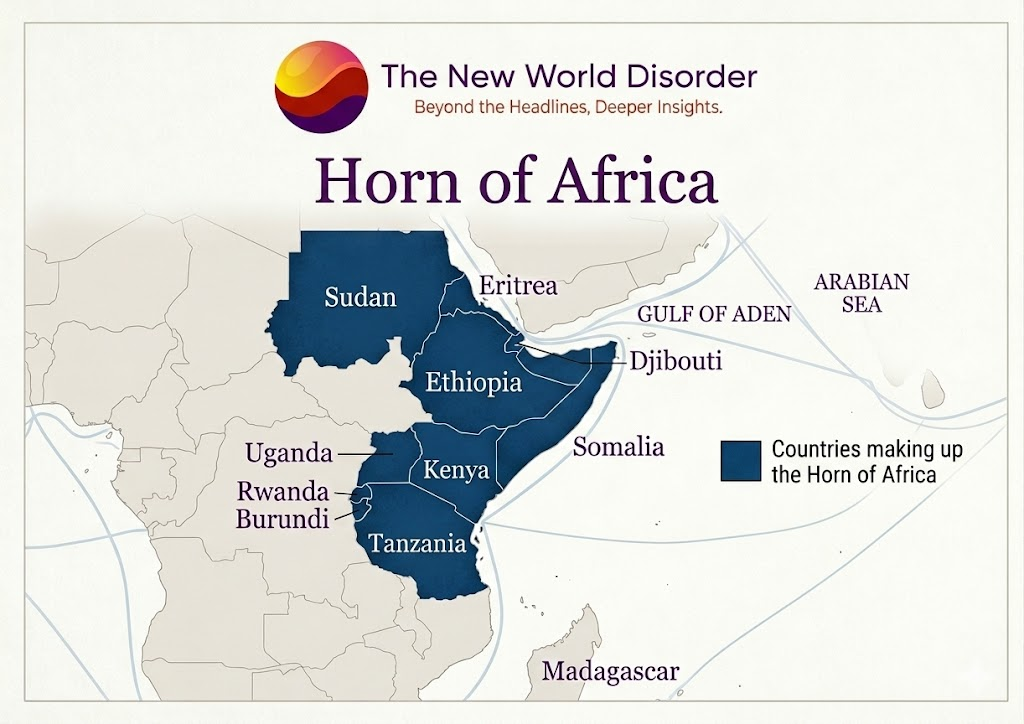
By 2026, that perception has fundamentally changed.
The region stretching from Sudan and Eritrea through Djibouti, Somaliland, Somalia, and Ethiopia has become one of the most contested geopolitical theaters on Earth. What once appeared to be fragmented and economically unstable territory is now emerging as a decisive arena in the global struggle for maritime control, infrastructure sovereignty, and Indo-Mediterranean connectivity.
The reason is geography.
The Bab el-Mandeb Strait, positioned between Yemen and the Horn of Africa, functions as one of the world’s most critical maritime chokepoints. Nearly all trade moving between Europe and Asia through the Suez Canal must pass through this narrow corridor.
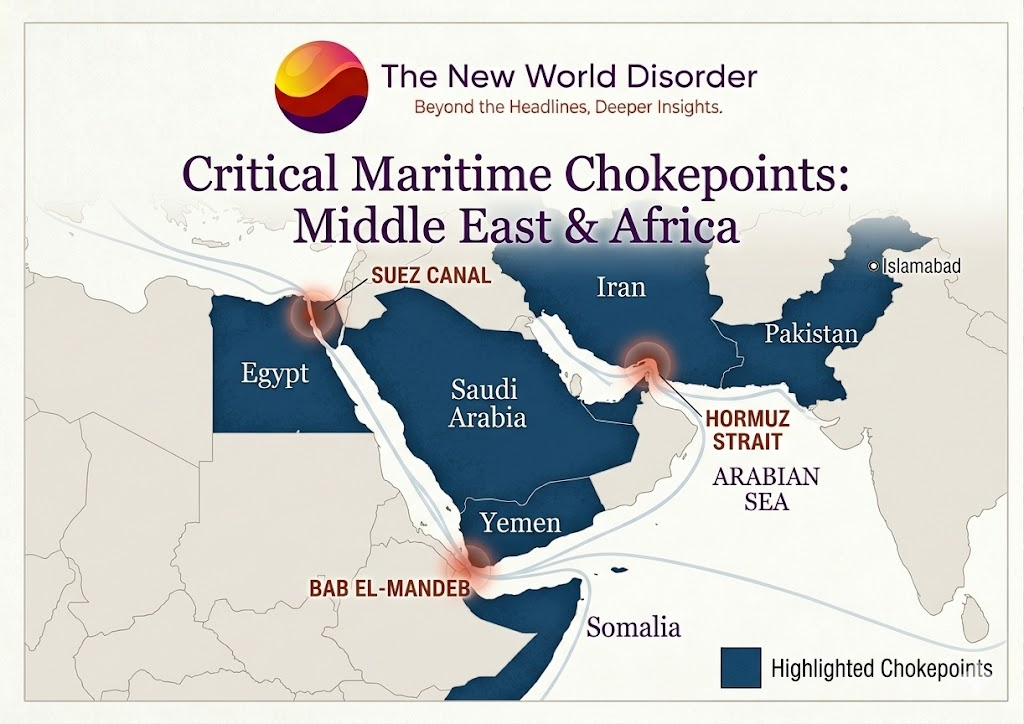
Any actor capable of influencing this gateway gains leverage over:
- Gulf energy exports,
- European supply chains,
- Indo-Pacific shipping routes,
- digital cable systems,
- military logistics.
As infrastructure warfare intensified across the Middle East, the Horn transformed from a peripheral frontier into a strategic “Rimland battlefield” where regional and global powers increasingly collided.
Somaliland and the Berbera Gambit
Israel’s recognition of Somaliland in December 2025 represented one of the most controversial geopolitical moves of the decade.
Officially framed around diplomatic normalization and maritime cooperation, the deeper strategic objective was far more ambitious.
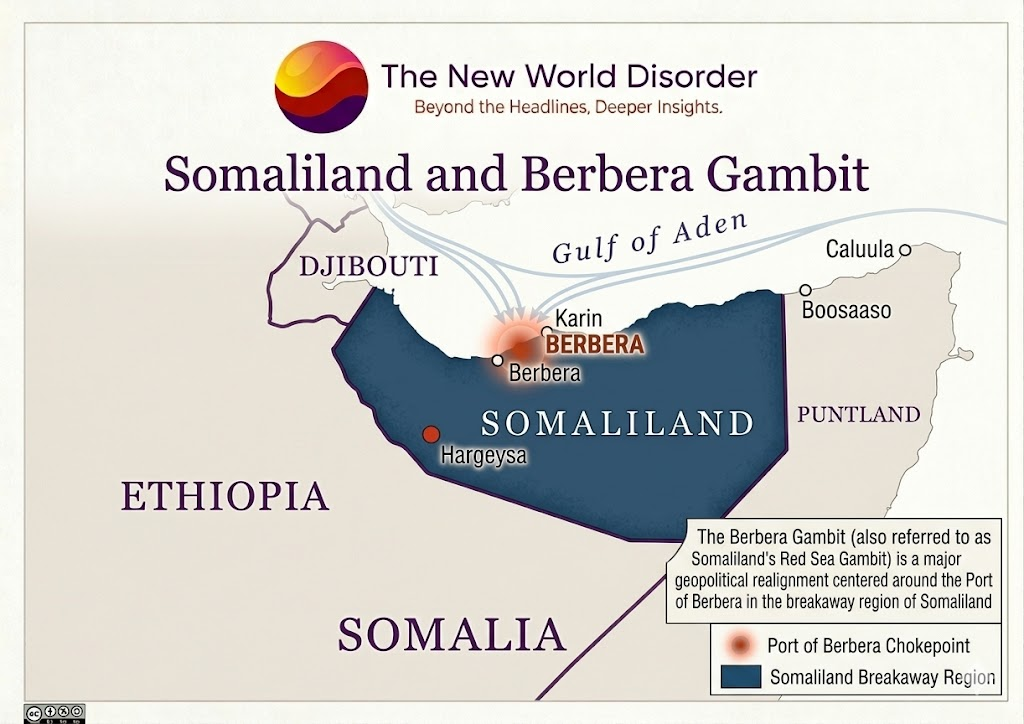
By expanding influence into Berbera, Israel sought to establish a forward intelligence and logistical position overlooking the Red Sea corridor. Such a foothold would have significantly expanded Israel’s ability to monitor maritime traffic, secure emerging Indo-Mediterranean shipping routes, and reinforce the southern flank of the Leviathan architecture.
Berbera’s strategic value is enormous.
The port sits near one of the most heavily trafficked maritime routes in the world. Its modernization potential, combined with proximity to Gulf shipping lanes, makes it an ideal logistics hub for future maritime integration projects linking Africa, the Gulf, and the Mediterranean.
For Israel, Berbera represented more than a port.
It represented strategic depth beyond the Levant.
However, the move triggered immediate backlash.
Türkiye, already deeply invested in Somalia through military cooperation and infrastructure agreements, interpreted Israeli expansion into Somaliland as a direct challenge to Turkish influence in the Horn. Ankara rapidly intensified diplomatic, military, and intelligence coordination with Mogadishu.
The result was the emergence of a Turkish-Somali counter-alignment designed to block Israeli penetration into the region.
This confrontation transformed the Horn into a frontline arena of the wider struggle between the Leviathan and the Sunni Shield.
Türkiye’s African Expansion
Türkiye’s engagement with Africa has accelerated dramatically over the past decade.
Unlike traditional Western or Chinese approaches focused primarily on resource extraction or debt-financed infrastructure, Ankara pursued a hybrid model combining:
- military training,
- humanitarian outreach,
- defense exports,
- religious diplomacy,
- infrastructure development,
- political partnership.
Somalia became the centerpiece of this strategy.
Turkish military bases, drone deployments, training programs, and port agreements established Ankara as one of Mogadishu’s most important external security partners. Turkish firms simultaneously expanded influence across construction, logistics, and energy sectors.
This gave Türkiye strategic positioning near the Bab el-Mandeb corridor while also extending Turkish influence deeper into East Africa.
From Ankara’s perspective, controlling influence around the Horn serves multiple objectives simultaneously:
- protecting maritime access,
- counterbalancing Gulf rivals,
- challenging Israeli expansion,
- expanding defense exports,
- reinforcing Türkiye’s image as a transregional power.
The Horn therefore became deeply integrated into Ankara’s broader Mavi Vatan vision.
What makes Türkiye particularly effective in Africa is its ability to blend hard and soft power simultaneously. Military partnerships are often accompanied by educational institutions, humanitarian programs, religious engagement, and trade integration.
This creates political legitimacy that purely military interventions often fail to achieve.
The UAE, Ports, and Maritime Capitalism
While Türkiye expanded through security partnerships, the UAE pursued a different model based on port ownership and logistics integration.
Abu Dhabi increasingly recognized that future geopolitical influence would depend not merely on energy exports, but on controlling the infrastructure through which global trade flows.
As a result, Emirati investment surged across strategic ports stretching from the Gulf to East Africa.
DP World and associated logistics networks became instruments of geopolitical influence as much as commercial expansion.
The UAE’s approach reflects a broader transformation in Gulf strategy:
from petrostate dependency toward maritime capitalism.
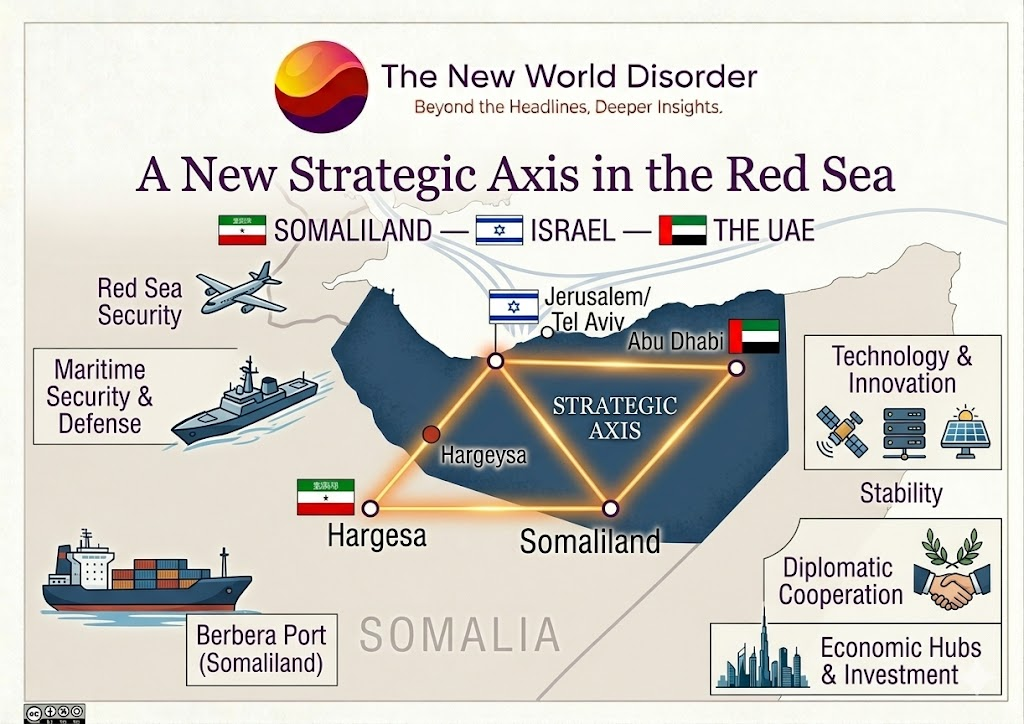
Ports are now treated as sovereign strategic assets.
Through investments in:
- Berbera,
- Aden,
- Djibouti,
- East African logistics hubs,
- Red Sea maritime systems,
The UAE seeks to establish itself as a central commercial node linking Asia, Africa, and Europe.
This overlaps significantly with Israeli corridor ambitions, explaining the increasingly close logistical and strategic coordination between Abu Dhabi and Tel Aviv after the Abraham Accords.
Yet this alignment also created friction with traditional Gulf power structures, particularly Saudi Arabia, which fears losing long-term regional centrality within a UAE-Israel-India logistics ecosystem.
Ethiopia and the Red Sea Equation
Ethiopia’s role within the Horn has also expanded significantly.
As Africa’s second most populous state and one of the continent’s fastest-growing economies, Ethiopia increasingly seeks independent access to the Red Sea to sustain long-term economic expansion.
This ambition carries enormous geopolitical consequences.
Landlocked states are structurally vulnerable to external transit dependency. Ethiopia therefore views maritime access not simply as an economic necessity, but as a strategic imperative tied directly to sovereignty and regime stability.
Competition over Red Sea access increasingly intersects with broader regional rivalries involving:
- Somalia,
- Eritrea,
- Türkiye,
- the UAE,
- Egypt,
- Israel.
The Horn thus evolves into a multilayered geopolitical arena where African, Arab, Mediterranean, and Indo-Pacific strategic calculations converge simultaneously.
China, America, and the Globalization of the Horn
The Horn of Africa is not contested solely by regional actors.
Global powers increasingly recognize the region’s strategic importance.
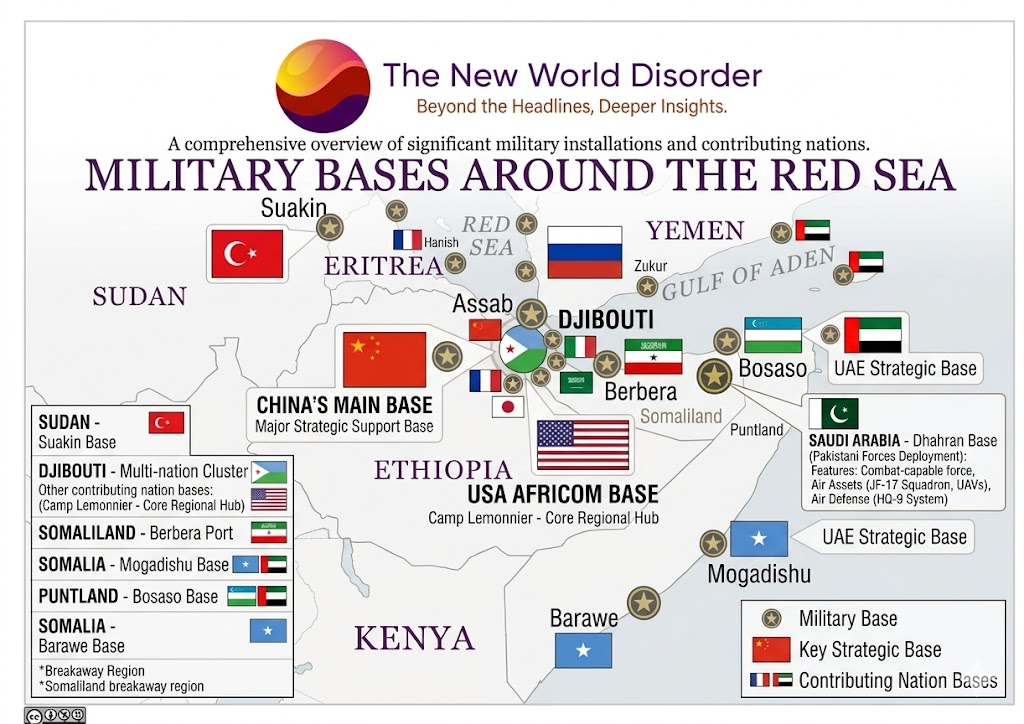
China’s military base in Djibouti marked Beijing’s first permanent overseas military installation, reflecting China’s growing dependence on Red Sea shipping lanes for energy imports and global trade.
The United States maintains significant military infrastructure through AFRICOM operations and counterterrorism frameworks.
Reports of a significant Pakistani military deployment linked to the Red Sea littoral and Saudi Arabia’s borders have just been confirmed through a detailed Reuters investigative report published on May 18, 2026.
Scope and Composition of the Force
Intelligence and government sources have detailed the following breakdown of the active deployment, which began moving into the Kingdom in early April 2026:
- Ground Troops: Approximately 8,000 personnel have been deployed, adding to the thousands already stationed in the Kingdom under older bilateral agreements. The text of the confidential pact reportedly allows for an upper ceiling of up to 80,000 Pakistani troops if border security conditions deteriorate further.
- Air Assets: A full squadron of around 16 JF-17 Thunder fighter jets was dispatched to Saudi Arabia (notably arriving at King Abdulaziz Air Base), accompanied by two squadrons of unmanned aerial vehicles (UAVs).
- Air Defense: A Chinese-manufactured HQ-9 long-range surface-to-air missile system has been integrated into the defense layout. This creates a unique operational landscape where sophisticated Chinese air defense networks are working in parallel with Saudi Arabia’s existing US-made Patriot and THAAD architectures.
- Naval Assets: Security officials confirmed that the bilateral pact explicitly involves the deployment of Pakistani warships to secure maritime approaches, including the Red Sea and the Bab el-Mandeb strait, where shipping lanes face persistent threats. However, independent confirmation of specific hull arrivals in Saudi waters remains classified.
The specific focal point for this deployment is King Abdulaziz Air Base, located near Dhahran in Saudi Arabia’s Eastern Province.
While the strategic rationale of the deployment includes protecting Saudi Arabia’s Western flank and Red Sea maritime approaches under the 2025 Mutual Defense Agreement, the physical forces are garrisoned in the East due to immediate kinetic threats to Saudi energy hubs.
European powers continue expanding naval deployments to protect shipping routes.
India deepens maritime engagement to secure western Indian Ocean transit.
Russia pursues opportunistic access agreements.
The result is the globalization of the Horn.
What was once viewed as a fragile peripheral region now sits at the intersection of:
- global trade,
- maritime security,
- AI-era infrastructure,
- military competition,
- energy transit,
- food security,
- digital connectivity.
In many ways, the Horn of Africa is becoming the Singapore of geopolitical competition, a hyper-strategic junction where local instability intersects with global infrastructure dependency.
The Failure of Absolute Maritime Dominance
Despite Israel’s ambitious southern expansion strategy, the Horn also exposed the limitations of technological hegemony.

The backlash against Somaliland recognition demonstrated a critical geopolitical reality:
Infrastructure projects cannot survive without political legitimacy.
Israeli efforts to establish influence around Berbera faced resistance not only from Türkiye and Somalia, but from wider African diplomatic networks concerned about sovereignty fragmentation and external intervention.
Similarly, instability in Sudan undermined Israeli ambitions to establish deeper Red Sea strategic depth through normalization agreements.
These developments revealed that even highly sophisticated infrastructure systems remain vulnerable to:
- local politics,
- insurgency,
- nationalism,
- maritime insecurity,
- demographic instability.
Technology alone could not fully override geography or legitimacy.
This realization would become increasingly important as the Leviathan project itself began showing signs of strategic overreach.
VII. The Failure of Total Hegemony
By mid-2026, both the Leviathan architecture and the remnants of the old Shiite Axis began confronting the same fundamental reality:
No single power could fully dominate the Middle East without encountering structural resistance from geography, demography, economics, and political legitimacy.
This marked the beginning of what many analysts increasingly describe as the “Great Fragmentation.”
The region was no longer moving toward a clean bipolar order.
Instead, every major actor began encountering the operational limits of its own expansion model.
For Iran, the limits emerged through overextended proxy logistics and economic exhaustion.
For Israel, the limits emerged through infrastructural overstretch and geopolitical backlash.
The result was a regional deadlock in which nearly every major power remained simultaneously influential and constrained.
The Collapse of the David Corridor
One of the clearest examples of Israeli strategic overreach emerged through the failure of the so-called “David Corridor.”
The corridor envisioned a highly integrated trade and energy route linking Gulf infrastructure through Jordan into Israeli transit networks before connecting onward to Europe.
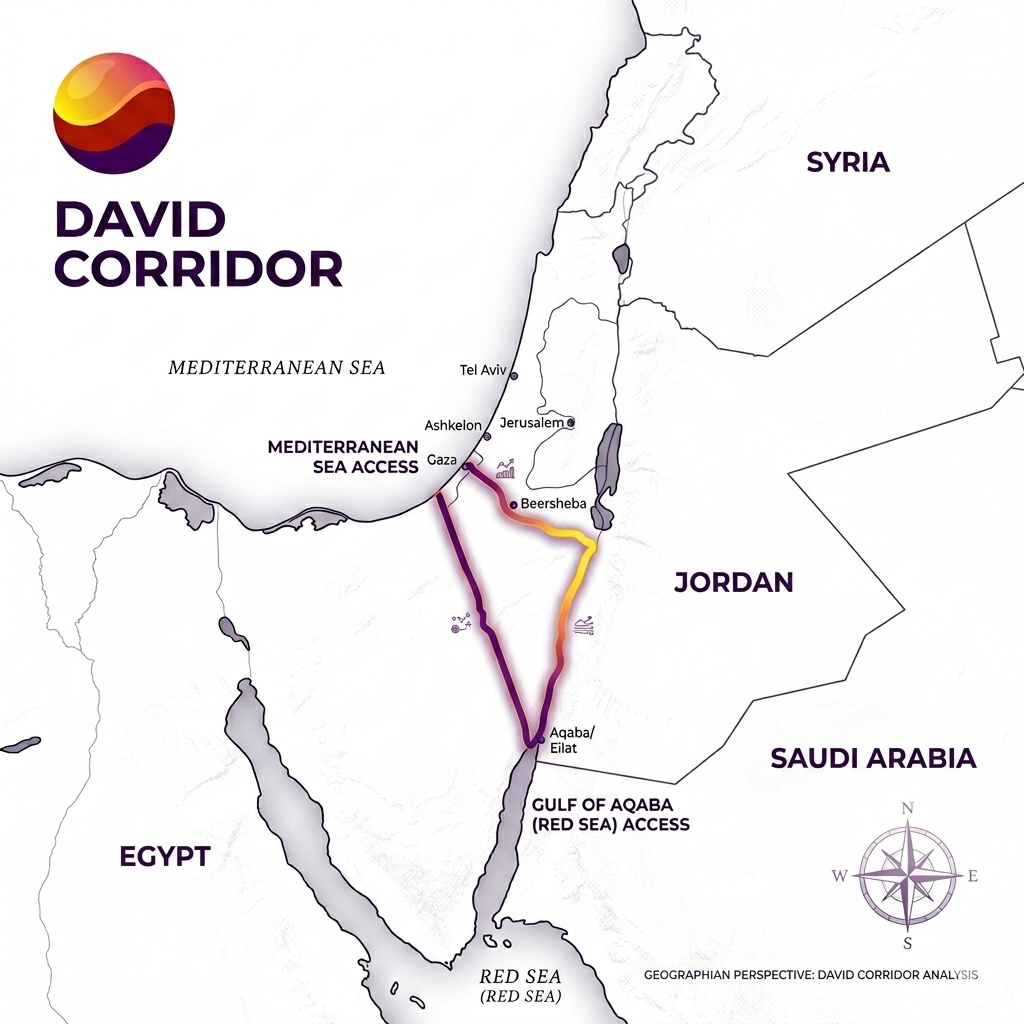
In theory, this framework would have transformed Israel into the primary land bridge between the Arabian Peninsula and the Mediterranean.
In practice, the project encountered severe political and security obstacles.
The Gaza war fundamentally destabilized the normalization momentum that had initially enabled the corridor’s political viability. Governance failures in the West Bank, rising regional anger, and repeated escalatory cycles made overt regional integration politically costly for Arab governments.
Saudi Arabia, while continuing quiet strategic coordination with Washington and Tel Aviv on certain security matters, slowed deeper normalization discussions amid domestic and regional pressures.
Without broad Arab political consensus, the corridor lacked sovereign durability.
Investors became cautious.
Insurance risks increased.
Cross-border integration stalled.
The core weakness of the David Corridor became increasingly obvious:
Infrastructure cannot replace legitimacy.
No amount of technological sophistication can fully stabilize transit systems operating within unresolved political conflicts.
Gaza and the Limits of Hyper-Securitization
The post-2023 Gaza environment also exposed the strategic limitations of purely security-driven governance models.
Israel maintained overwhelming military superiority across conventional and technological domains. Yet prolonged instability revealed a deeper contradiction inside the Leviathan doctrine.
Hyper-connectivity requires stability.
But hyper-securitization often produces instability.
The more militarized regional infrastructure became, the more vulnerable it also became to disruption, sabotage, and reputational damage.
Shipping insecurity in the Red Sea increased global logistical costs. Repeated drone and missile threats demonstrated how relatively low-cost asymmetric systems could threaten enormously expensive infrastructure networks.
The asymmetry was striking.
A multimillion-dollar logistics corridor could be disrupted by comparatively inexpensive drones, insurgent attacks, or cyber operations.
This fundamentally altered the strategic equation of infrastructure warfare.
Efficiency increasingly came at the expense of resilience.
The Red Sea Crisis and Maritime Fragility
The Red Sea became the clearest demonstration of modern infrastructural vulnerability.
For decades, globalization assumed uninterrupted maritime circulation as a permanent feature of world commerce. The events following 2023 shattered that assumption.
Attacks on shipping routes triggered cascading effects across global supply chains:
- shipping rerouting,
- insurance inflation,
- logistical delays,
- fuel cost increases,
- commodity disruptions.
Global trade suddenly rediscovered the importance of chokepoints.
This produced a paradox for the Leviathan strategy.
The more central Israel became to emerging maritime architectures, the more exposed those architectures became to regional instability.
Maritime dominance created influence.
But it also created concentration risk.
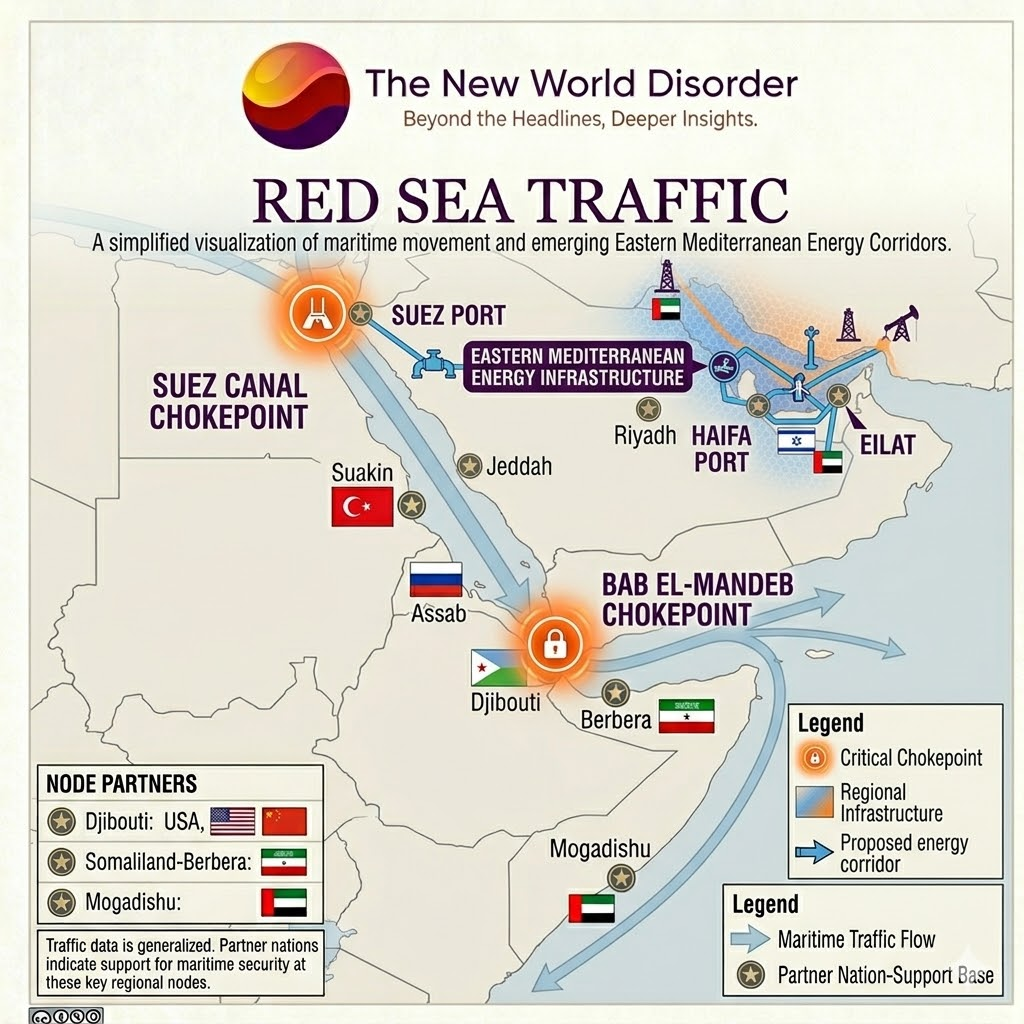
Any disruption near:
- Bab el-Mandeb,
- Suez,
- Haifa,
- Eilat,
- Eastern Mediterranean energy infrastructure,
could generate disproportionate geopolitical consequences.
As a result, rival actors increasingly focused not on matching Israeli capabilities directly, but on exploiting systemic vulnerabilities inside highly optimized connectivity systems.
The Horn of Africa Backlash
The backlash against Israeli expansion into Somaliland and the wider Horn of Africa further illustrated the limits of infrastructural power projection.
The strategy appeared logically coherent from a maritime-security perspective:
- secure Berbera,
- establish Red Sea oversight,
- reinforce IMEC,
- create southern strategic depth.
Yet the geopolitical environment proved far more resistant than anticipated.
Türkiye rapidly mobilized diplomatic and military partnerships to counterbalance Israeli expansion. Somalia framed the Somaliland issue as a sovereignty challenge. African Union actors expressed concern over precedent-setting recognition policies that could encourage fragmentation elsewhere across the continent.
The result was strategic friction rather than seamless expansion.
Israel discovered that infrastructure access points are ultimately embedded within political ecosystems that cannot simply be bypassed through technology or capital alone.
The Horn became a lesson in geopolitical reality:
Local legitimacy still matters.
OPEC Fragmentation and Gulf Rivalries
Simultaneously, internal fragmentation inside the Gulf further complicated the emerging regional order.
The UAE’s exit from OPEC in April 2026 marked a symbolic rupture in traditional Gulf energy politics. Abu Dhabi increasingly embraced a post-cartel strategy centered on high-volume production, logistics integration, sovereign wealth deployment, and infrastructure financing.
This reflected the UAE’s broader transition from a classical petrostate into a globalized maritime-commercial power.
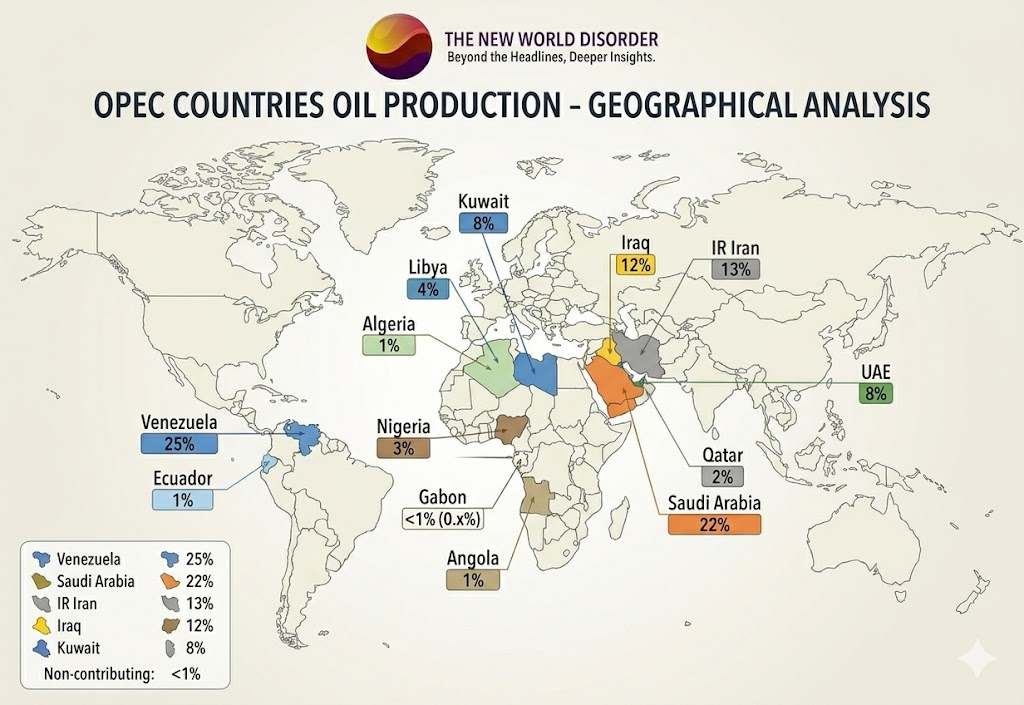
Yet the move intensified tensions with Saudi Arabia.
Riyadh’s Vision 2030 depended heavily on maintaining relatively elevated oil prices to finance domestic transformation projects. A prolonged low-price environment risked undermining the fiscal sustainability of large-scale Saudi diversification initiatives.
This divergence created competing Gulf visions:
- Saudi Arabia pursuing strategic balancing and sovereign centrality,
- the UAE accelerating integration into Indo-Mediterranean logistics ecosystems.
The Gulf Cooperation Council increasingly appeared less like a unified bloc and more like a collection of competing strategic models.
Pakistan–Morocco Defence Cooperation and the Strategic Relevance of the Strait of Gibraltar
Pakistan and Morocco have taken a significant step toward deepening defense-industrial cooperation with the signing of a Memorandum of Understanding (MoU) on January 13, 2026, marking a formal expansion of bilateral military relations and a shift toward joint production ecosystems. The agreement was signed in Rabat by Pakistan’s Federal Defense Minister Khawaja Muhammad Asif and Morocco’s Minister Delegate for National Defense Administration Abdellatif Loudyi, establishing a structured institutional framework for long-term collaboration in defense technology, military training, and industrial development. A central feature of the MoU is the launch of joint manufacturing initiatives in advanced electronics and optronics, signaling a transition from traditional defense diplomacy toward high-technology co-production and potential technology transfer in sensitive domains such as surveillance systems, sensors, and battlefield optics.
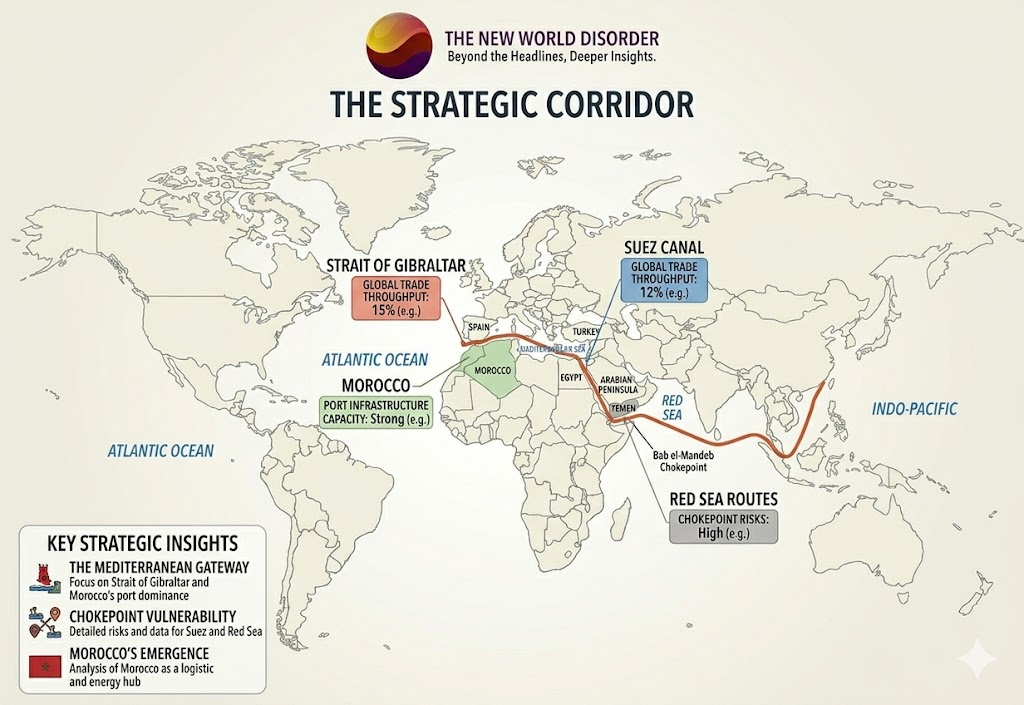
Strategically, Morocco represents a pivotal and often underappreciated node in wider maritime and geoeconomic architectures that extend beyond the Indo-Mediterranean space. While strategic discourse frequently focuses on chokepoints such as the Red Sea, the Strait of Hormuz, Bab el-Mandeb, and the Suez Canal, the Strait of Gibraltar remains one of the most consequential global maritime gateways due to its role in connecting the Mediterranean Sea with the Atlantic Ocean. Control of influence within this corridor effectively links European maritime trade with transatlantic shipping routes, making it a structural leverage point in any long-term global connectivity framework. In this context, enhanced defense cooperation with Morocco provides Pakistan with access to a strategically significant western maritime frontier that extends its diplomatic and defense footprint beyond its immediate regional environment.
Within the broader context of evolving alignments often described under emerging Indo-Mediterranean and Hexagon-related frameworks, engagement with Morocco reflects a calculated recognition of shifting geopolitical geography. Morocco’s position offers dual strategic depth as both a gateway to Europe and a gateway to the Atlantic maritime system, giving it relevance far beyond its immediate regional setting. At a time when multiple corridor-based architectures are competing for influence across Afro-Eurasian trade routes, Pakistan’s expansion of defense cooperation with Morocco signals an effort to diversify strategic partnerships, strengthen defense-industrial collaboration, and position itself within a wider network of states linked through maritime geography, industrial cooperation, and long-term security alignment.
The Geography Problem
Perhaps the most important lesson of 2026 was the return of geography itself.
For much of the digital globalization era, technological optimism encouraged the belief that geography had become secondary. Data could move instantly. Capital could cross borders electronically. Supply chains appeared infinitely flexible.
The crises of 2024–2026 shattered that illusion.
Geography returned with force.
Chokepoints mattered again.
Ports mattered again.
Maritime depth mattered again.
Territorial buffers mattered again.
Population distribution mattered again.
Freshwater access mattered again.
The physical world reasserted itself against purely technological visions of seamless connectivity.
This is why the phrase “Geography defeated technology” increasingly captures the strategic reality of the emerging Middle East.
Technology can accelerate power projection.
But geography still determines sustainability.
The Emergence of a Multipolar Deadlock
By late 2026, the region no longer resembled the binary order of the previous decades.
The Iranian Axis had fragmented.
The Israeli Leviathan remained technologically superior yet strategically constrained.
Türkiye expanded influence but faced economic pressure and alliance limitations.
Saudi Arabia hedged cautiously between competing frameworks.
Pakistan retained deterrence value but struggled economically.
The UAE accelerated maritime-commercial integration while provoking regional tension.
No actor possessed the capacity to fully dominate the system.
This produced a new geopolitical condition:
A multipolar armed peace.
Economic interdependence continued expanding even as military distrust deepened. States increasingly cooperated commercially while simultaneously preparing for infrastructural disruption and strategic confrontation.
The old Middle East of ideological blocs was fading.
A new Middle East based on connectivity competition was emerging.
And from this fragmentation, a new architecture began taking shape:
the Hexagon Alliance.
VIII. The Rise of the Hexagon Alliance
Out of the fragmentation of the old Middle Eastern order emerged a new geopolitical architecture that differed fundamentally from the alliance systems of the 20th century.
This structure was not ideological.
It was not treaty-based.
It was not territorial in the classical sense.
It was infrastructural.
By early 2026, strategic coordination between Israel, India, the UAE, Greece, Cyprus, and emerging peripheral partners began forming what analysts increasingly described as the “Hexagon Alliance,” a distributed network-state ecosystem built around connectivity sovereignty, maritime geoeconomics, technological integration, and corridor security.
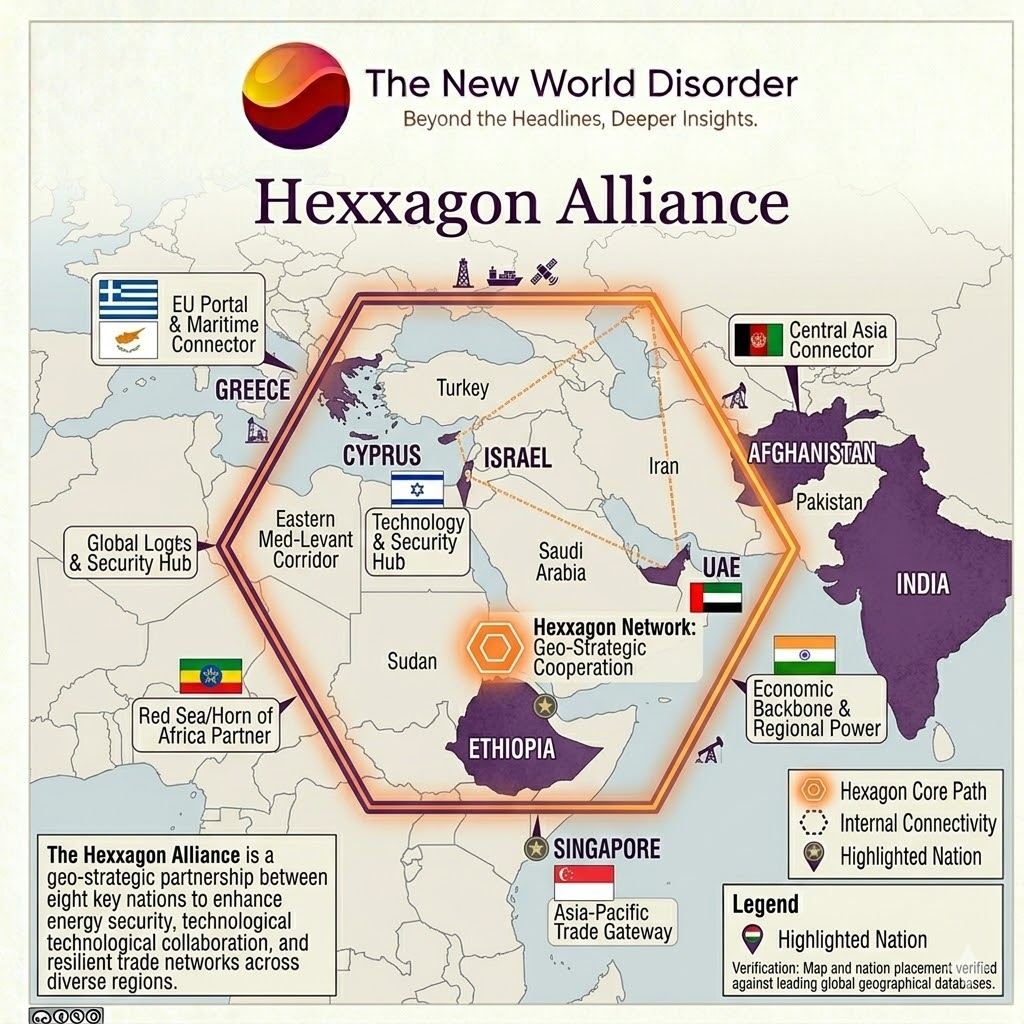
Unlike NATO or the Warsaw Pact, the Hexagon does not operate through rigid collective-defense obligations. Instead, it functions as a modular strategic framework where each node contributes a specialized capability to a broader Indo-Mediterranean operating system.
The alliance is therefore best understood not as a traditional bloc, but as a functional ecosystem.
Its coherence emerges through interdependence rather than ideology.
Israel: The Intelligence and Technology Core
At the center of the Hexagon sits Israel.
Its role is not demographic or economic scale, but systems integration.
Israel provides:
- cybersecurity architecture,
- AI-enabled defense systems,
- missile defense networks,
- intelligence coordination,
- digital infrastructure management,
- maritime surveillance capability.
This transforms Israel into the nervous system of the alliance.
The country’s strategic value lies in its ability to fuse:
- security,
- technology,
- infrastructure,
- predictive analytics,
- logistical coordination.
The Leviathan doctrine therefore evolves from a purely regional project into the operational backbone of the wider Hexagon framework.
Israeli ambitions increasingly extend beyond military defense toward what might be called “infrastructural governance,” the ability to regulate and secure the flows upon which regional commerce depends.
This is why:
- ports,
- cables,
- cloud systems,
- AI networks,
- energy corridors,
- maritime gateways,
occupy such central importance within Israeli strategic thinking.
India: The Scaling Force
If Israel functions as the nervous system, India functions as the scale engine of the Hexagon.
India’s importance derives from:
- demographic mass,
- industrial growth,
- technological labor,
- market consumption,
- maritime positioning.
No long-term Indo-Mediterranean architecture can achieve sustainable economic gravity without Indian integration.
For New Delhi, the strategic logic is straightforward.
India seeks:
- secure access to European markets,
- reduced dependence on Chinese-controlled maritime ecosystems,
- diversified energy routes,
- greater influence across the western Indian Ocean.
IMEC therefore represents more than infrastructure.
It represents India’s westward strategic expansion.
Through integration with Gulf logistics, Israeli infrastructure systems, and Mediterranean transit routes, India gains direct participation in a transcontinental supply-chain network stretching from Mumbai to Europe.
This also aligns with broader American and Gulf interests in balancing China’s Belt and Road Initiative.
The result is the emergence of an Indo-Abrahamic strategic architecture where Indian economic scale fuses with Gulf capital and Israeli technological integration.
The UAE: Maritime Capitalism and Financial Sovereignty
The UAE occupies perhaps the most transformational role within the Hexagon.
Abu Dhabi increasingly views the future of geopolitical influence through the lens of logistics, finance, ports, AI infrastructure, and maritime commerce rather than traditional hydrocarbon dependency alone.
The April 2026 exit from OPEC symbolized this transition.
It was effectively an economic declaration of strategic independence.
By breaking from traditional cartel frameworks, the UAE signaled its intention to pursue:
- high-volume energy production,
- aggressive infrastructure financing,
- logistics expansion,
- sovereign wealth deployment,
- technological integration.
This allows Abu Dhabi to function as the financial engine of the Hexagon system.
Through sovereign wealth funds, port investments, AI financing initiatives, fintech integration, and maritime infrastructure projects, the UAE increasingly positions itself as the commercial capital of the emerging Indo-Mediterranean order.
The Emirati model differs sharply from traditional Arab nationalism or ideological statecraft.
It is transactional, post-ideological, and hyper-globalized.
Its strategic logic is based not on territorial expansion, but on owning strategic nodes within global circulation systems.
In many ways, the UAE represents the purest expression of infrastructure geopolitics in the Middle East.
Greece and Cyprus: The Mediterranean Gateway
The inclusion of Greece and Cyprus inside the Hexagon reflects the alliance’s Mediterranean dimension.
For Israel, these partnerships serve several critical functions:
- balancing Turkish maritime influence,
- securing Eastern Mediterranean energy infrastructure,
- creating direct European connectivity,
- establishing military-operational depth inside the Mediterranean basin.
For Greece and Cyprus, Israeli integration provides:
- security cooperation,
- energy investment,
- intelligence coordination,
- strategic balancing against Ankara.
Together, the Israeli-Greek-Cypriot triangle creates a maritime corridor stretching from the Levant into Southern Europe.
This effectively bypasses Turkish-controlled transit space while reinforcing the Mediterranean flank of the Hexagon architecture.
The Eastern Mediterranean therefore evolves into one of the defining geopolitical frontiers of the 21st century.
The Peripheral Expansion Strategy
The Hexagon increasingly seeks expansion beyond its core members.
Its broader strategic ambition involves creating a distributed “rimland network” connecting strategic infrastructure nodes across:
- East Africa,
- the Gulf,
- the Mediterranean,
- South Asia,
- Southeast Asia.
This explains growing interest in:
- Ethiopia,
- Singapore,
- East African ports,
- Indian Ocean logistics systems,
- African rare-earth corridors.
Unlike classical empires that relied primarily on territorial annexation, the Hexagon expands through:
- infrastructure financing,
- technological integration,
- security partnerships,
- digital architecture,
- maritime logistics.
The objective is not direct occupation.
The objective is connectivity dependence.
The Tehran Pivot and Radical Integration
Perhaps the most controversial aspect of the evolving Hexagon framework is the possibility of eventual Iranian integration.
Historically, Israeli and Iranian strategic competition defined much of the region’s security architecture. Yet by 2026, sections of the geopolitical establishment increasingly began considering a radically different scenario:
containment through integration rather than perpetual confrontation.
The logic behind this “Tehran Pivot” is highly pragmatic.
A weakened, post-sanctions Iran integrated into a larger infrastructure framework could potentially:
- stabilize transit routes,
- reduce long-term military expenditures,
- reconnect Eurasian logistics,
- weaken Chinese and Russian influence,
- unlock massive energy and mineral corridors.
The proposed Haifa-Baghdad-Tehran-Mumbai corridor reflects this logic.
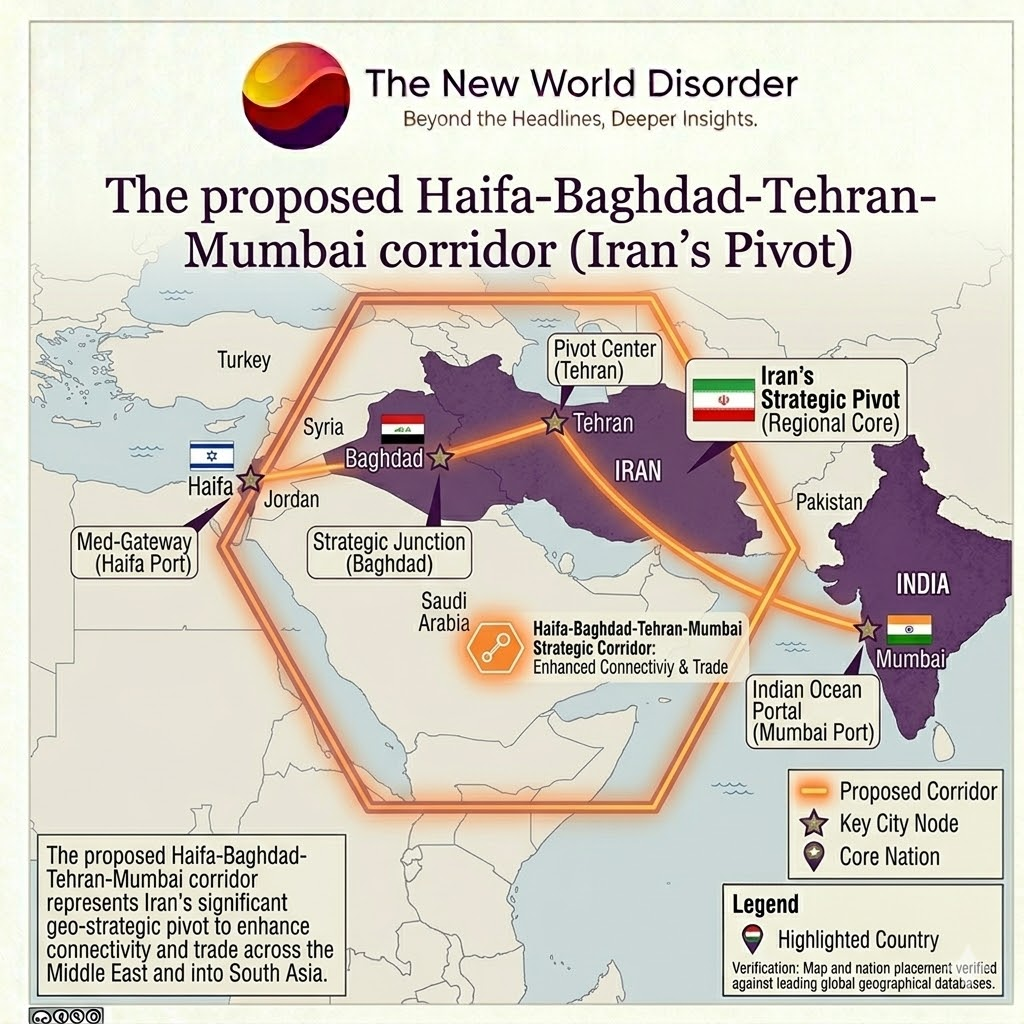
Rather than permanently isolating Iran, sections of the Hexagon envision absorbing Iran into a controlled infrastructural ecosystem where economic dependency gradually replaces ideological confrontation.
This would represent a historic geopolitical reversal comparable to Nixon’s opening toward China during the Cold War.
Whether such integration is realistically achievable remains uncertain.
However, the mere discussion of such possibilities demonstrates how fundamentally infrastructure geopolitics has altered regional strategic thinking.
Afghanistan and the Rare-Earth Frontier
The Hexagon’s interest in Afghanistan is driven less by ideology and more by resource security.
Afghanistan possesses some of the world’s largest untapped reserves of:
- lithium,
- copper,
- cobalt,
- rare-earth minerals.
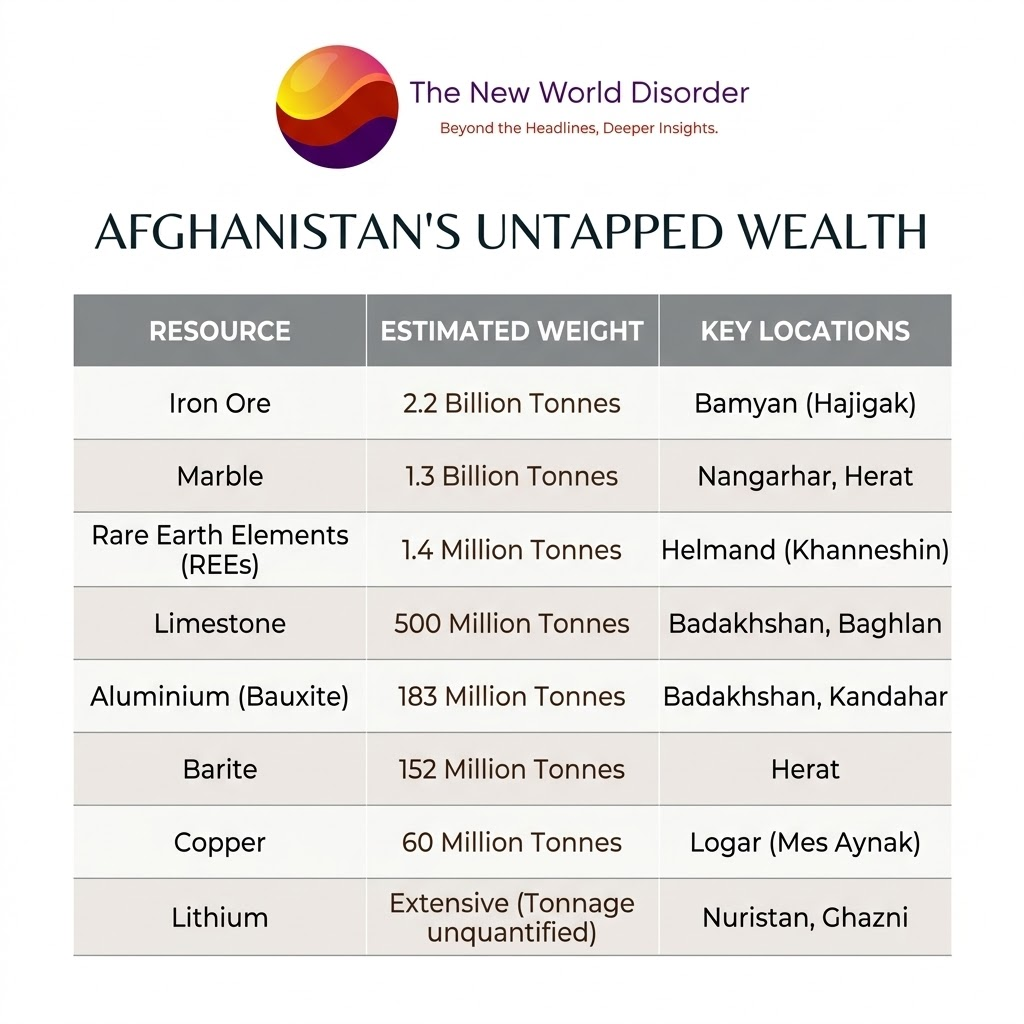
As AI systems, battery industries, semiconductor manufacturing, and advanced military technologies increasingly depend on these materials, control over rare-earth supply chains becomes strategically critical.
China currently dominates many global rare-earth processing networks.
The inclusion of Afghanistan inside emerging Indo-Mediterranean frameworks therefore offers the possibility of diversifying strategic mineral access.
Within this vision, Afghanistan transforms from a counterterrorism theater into an “industrial battery” for future technological civilization.
Infrastructure corridors, mining security systems, drone surveillance, and logistics frameworks increasingly replace traditional military occupation models.
This reflects a profound transformation in how great powers perceive strategic space.
Territory is valuable not simply because people live there.
It is valuable because data centers, AI systems, batteries, quantum computing infrastructure, and advanced manufacturing depend on the resources beneath it.
The Logic of the Hexagon
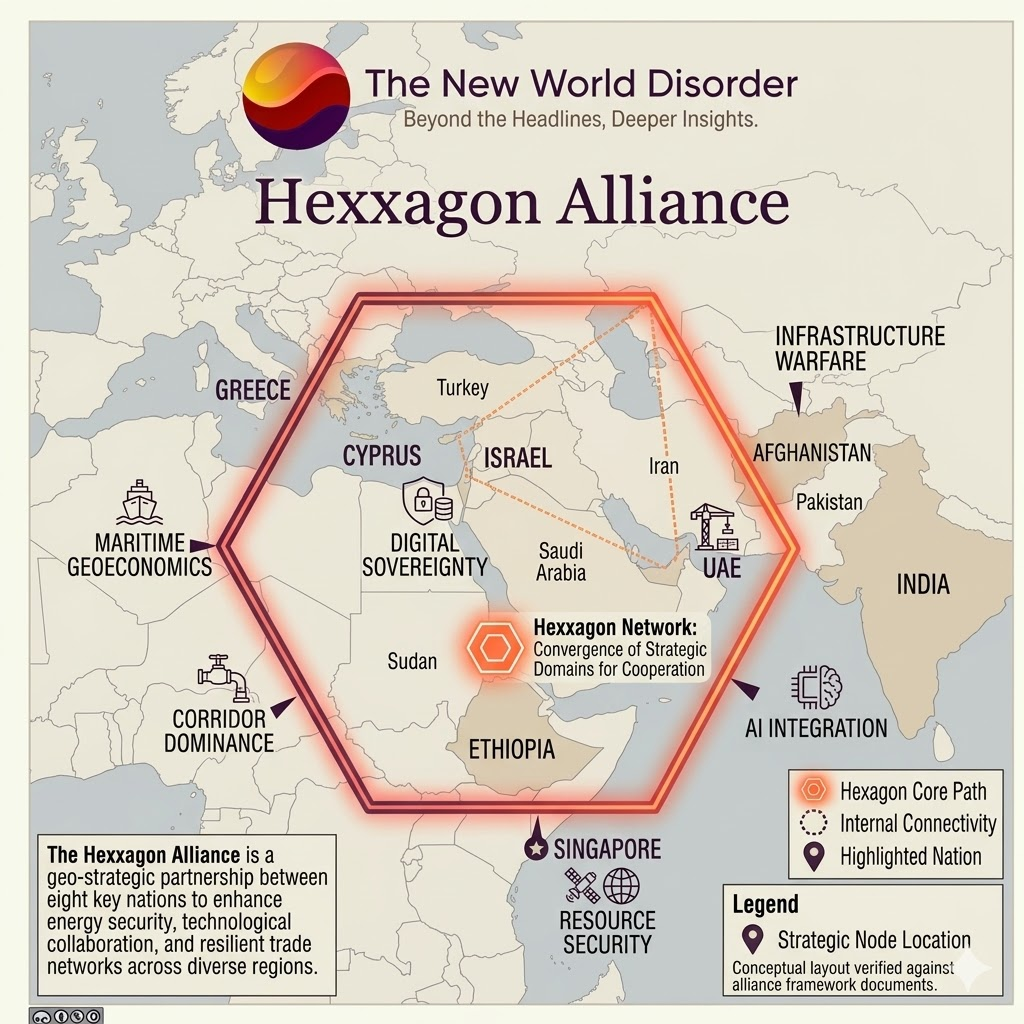
Ultimately, the Hexagon represents the fusion of:
- maritime geoeconomics,
- digital sovereignty,
- infrastructure warfare,
- AI integration,
- resource security,
- corridor dominance.
It is the first major geopolitical structure of the fully interconnected age.
Unlike previous empires, it does not seek to govern populations directly.
It seeks to govern flows.
And yet, despite its sophistication, the alliance still faces a powerful counterweight:
the enduring strategic depth of the Sunni Shield.
The Shield of Sovereignty: A Strategic Outlook on the 2026 Continental Realignment
I. Ankara’s Strategic Reading of the New Order
By May 2026, Türkiye has emerged as a central stabilizing power in a fragmented Eurasian system, not by accident, but through a sustained recalibration of its strategic doctrine over the past decade. While external narratives often attempt to frame Ankara’s posture as expansionist, the internal assessment within Turkish strategic circles is fundamentally different. What is being constructed is a Shield of Sovereignty, designed to preserve regional autonomy against a new era of maritime-centered structural dominance.
From Ankara’s perspective, the emerging “Hexagon architecture” is not a neutral connectivity ecosystem. It is an exclusionary system of corridor governance, increasingly shaped by technological integration, financial leverage, and maritime control. The convergence of Israeli security systems, Emirati financial capital, Indian market scale, and Mediterranean gateway states is interpreted not as multipolar cooperation, but as a coordinated attempt to re-engineer the geopolitical hierarchy of the Indo-Mediterranean space.
In response, Türkiye has not adopted isolationism. It has instead moved toward structured counter-alignment through a Sunni Axis framework that integrates Pakistan and Saudi Arabia into a flexible but strategically coherent deterrence and connectivity bloc. The objective is not confrontation for its own sake, but preservation of systemic balance in a rapidly centralizing infrastructural order.
II. The Hexagon as a Structural Encirclement System
From Ankara’s analytical standpoint, the Hexagon Alliance, comprising Israel, India, the UAE, Greece, Cyprus, and selective African and Asian nodes, is increasingly understood not as a cooperative ecosystem, but as a Mediterranean containment architecture.
The key concern is not its existence, but its configuration.
The Aegean-Mediterranean axis formed through Israeli-Greek-Cypriot alignment is interpreted as a deliberate attempt to constrain Türkiye’s maritime freedom of movement and limit its strategic depth in the Eastern Mediterranean. Within this framework, infrastructure projects such as energy interconnectors and undersea cable systems are not neutral utilities; they are perceived as instruments of strategic routing control designed to reshape regional dependency patterns.
Similarly, the UAE’s structural realignment following its April 2026 departure from OPEC is viewed through a geopolitical lens rather than a purely economic one. The decision to increase production capacity outside cartel frameworks is interpreted in Ankara as a calculated move to stabilize energy inputs for Hexagon-aligned industrial and logistical systems, particularly those connected to Indian demand centers and Mediterranean export routes. This, in turn, introduces pressure on traditional Gulf equilibrium structures and complicates long-standing energy governance models within the region.
III. The Strategic Shield Architecture: Land, Sea, and Deterrence Integration
In response to these structural shifts, Türkiye has advanced a layered defense and connectivity doctrine that integrates maritime assertion with continental linkage strategies. This approach is not reactive, but architecturally deliberate.
The emerging Trilateral Strategic Framework between Türkiye, Pakistan, and Saudi Arabia represents the most significant institutional development in this regard. It fuses three distinct forms of power into a complementary structure: Turkish defense-industrial capability, Pakistani strategic deterrence capacity, and Saudi financial and energy leverage. The purpose of this alignment is not formal bloc formation in the traditional sense, but rather the creation of a flexible equilibrium system capable of responding to corridor-based encirclement strategies.
Parallel to this, the Iraq–Europe Development Road is evolving as a critical counterweight to maritime-dominated connectivity models. By restoring overland continuity through Iraq, Syria, and Anatolia into Europe, Türkiye seeks to re-establish the relevance of continental transit systems in an era increasingly dominated by sea-based and cable-based infrastructure networks. This project is not merely economic; it is strategic redundancy against maritime dependency.
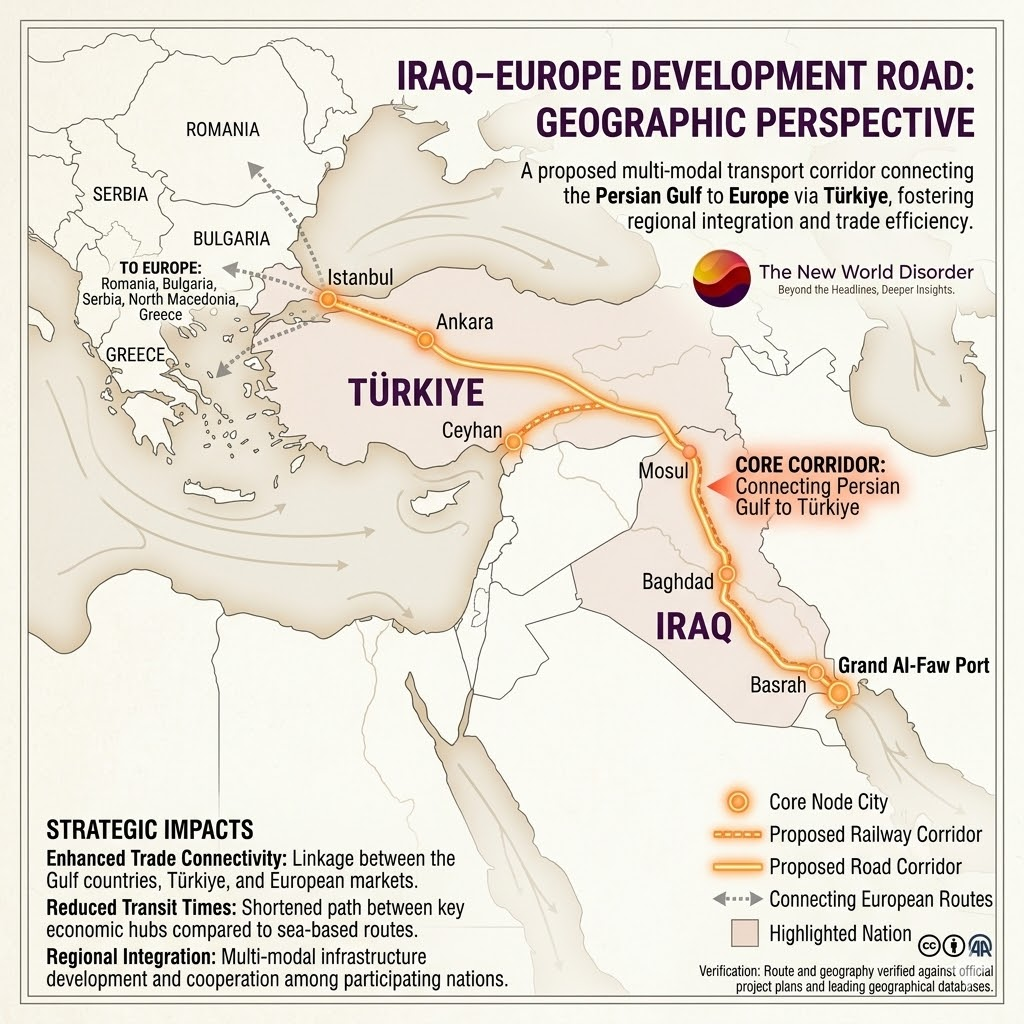
Syria’s evolving political structure plays a central role in this framework. Its transition away from proxy fragmentation toward a stabilized buffer state has allowed it to re-enter regional planning as a connective rather than disruptive space. In this configuration, Syria functions as a geopolitical hinge between Anatolia, the Arab interior, and the Levantine coast, reinforcing the depth required for long-term regional balance.
IV. Horn of Africa and the Contest for Maritime Depth
The Horn of Africa has emerged as a critical secondary theater in the broader Indo-Mediterranean competition. Israel’s recognition of Somaliland in late 2025 was strategically interpreted in Ankara as an attempt to create an alternative maritime surveillance and logistics node in proximity to Bab el-Mandeb and Red Sea shipping routes.
Türkiye’s response has been multidimensional and structured around maritime presence, economic engagement, and security cooperation frameworks. The evolving SOMTURK arrangement represents a hybrid model that integrates naval coordination, port access agreements, and maritime domain awareness systems with Somalia, effectively counterbalancing external attempts to reshape the Horn’s strategic alignment.
At the same time, Türkiye’s expanded presence in the western Indian Ocean is not limited to naval operations. It extends into satellite systems, intelligence infrastructure, and dual-use space capabilities designed to ensure persistent situational awareness across key maritime corridors. This reflects a broader doctrinal shift: control of sea lanes is no longer purely naval, but increasingly informational and orbital.
V. Defense Industrial Autonomy and Technological Thresholds
A defining feature of Türkiye’s 2026 strategic posture is the maturation of its indigenous defense ecosystem. This transformation is not incremental; it represents a structural threshold shift in technological autonomy.
The serial production of advanced platforms such as the KAAN fifth-generation fighter aircraft and the Kızılelma unmanned combat aerial system has fundamentally altered the regional airpower equation in the Eastern Mediterranean. These systems are not simply procurement milestones; they represent the consolidation of a domestic aerospace architecture capable of sustaining long-term operational independence.
In parallel, the integration of directed-energy systems, including high-energy laser defense platforms, reflects a shift toward layered defense architectures designed for multi-domain deterrence. This development is particularly significant in an environment where low-cost asymmetric systems, including drones and precision-guided munitions, have altered traditional cost-exchange ratios in conflict dynamics.
The strategic implication is clear: deterrence in 2026 is no longer defined solely by platform quantity, but by system resilience across air, sea, cyber, and space domains simultaneously.
VI. Structural Escalation and the Nagel Doctrine Threshold
The emergence of the Nagel Doctrine, which categorizes Türkiye as a systemic strategic threat within the broader Israeli security framework, has introduced a new level of structural tension into regional dynamics. From Ankara’s perspective, this represents a critical inflection point, not because of rhetoric alone, but because of what it signals about future intent framing.
When a NATO member state and a major G20 economy is reframed as an existential category threat, the underlying assumption of managed rivalry begins to erode. Strategic communication shifts from deterrence signaling to pre-emptive positioning, and crisis thresholds become significantly more compressed.
Within this environment, maritime encounters, surveillance operations, and corridor inspections acquire heightened sensitivity. The Eastern Mediterranean, in particular, becomes a dense operational environment where miscalculation risks increase due to overlapping claims, contested doctrines, and compressed decision cycles.
Türkiye’s position remains anchored in a doctrine of controlled escalation avoidance, but with clearly defined red lines tied to maritime sovereignty, airspace integrity, and infrastructure security within its declared zones of interest.
VII. Conclusion: The Restoration of Continental Balance
The emerging regional order is not characterized by the dominance of any single alliance system, but by the re-emergence of continental balance dynamics that predate the era of unipolar maritime optimism.
The Hexagon represents a technologically advanced, corridor-driven system of integration built around maritime efficiency and digital connectivity. The Sunni Shield represents a geographically anchored, demographically resilient system built around strategic depth, territorial continuity, and deterrence-based stability.
Neither system is capable of fully absorbing or eliminating the other.
The result is not convergence, but coexistence under tension.
In this evolving structure, Türkiye’s strategic role is neither peripheral nor reactive. It is central to maintaining systemic equilibrium across the Eurasian continuum.
The era of uncontested external hegemony is therefore giving way to a more complex condition: a structured contest over corridors, connectivity, and continental depth, where geography once again asserts its primacy over purely technological visions of order.
In this environment, sovereignty is no longer defined solely by borders, but by the ability to control the flow of energy, data, and movement across the spaces that connect civilizations.
IX. Pakistan, Türkiye, and the Strategic Depth Doctrine
As the Hexagon architecture expanded across maritime, digital, and logistical domains, a countervailing strategic doctrine began consolidating across parts of the Sunni world.
This doctrine was not based primarily on ideology or revolutionary identity.
It was based on strategic depth.
Where the Leviathan sought dominance through connectivity control, the Sunni Shield increasingly sought survivability through geography, military mass, demographic scale, and land-based alternatives.
At the center of this balancing framework stood two states:
Türkiye and Pakistan.
One provided industrial and geopolitical maneuverability.
The other provided escalation deterrence.
Together, they formed the backbone of a regional doctrine designed to prevent total infrastructural encirclement.
The Logic of Strategic Depth
The concept of strategic depth has historically carried immense importance in Eurasian geopolitics.
States with geographic depth possess:
- greater survivability during conflict,
- logistical redundancy,
- territorial flexibility,
- alternative supply corridors,
- demographic resilience.
Maritime powers often dominate trade.
But continental powers frequently endure longer during prolonged geopolitical confrontation.
This logic increasingly shaped Turkish and Pakistani strategic calculations after 2024.
Both Ankara and Islamabad recognized that the emerging Indo-Mediterranean order risked concentrating enormous geopolitical leverage within a highly networked maritime ecosystem dominated by:
- Israeli technological systems,
- Emirati logistics capital,
- Indian market scale,
- Mediterranean maritime integration.
If left uncontested, this architecture could gradually marginalize traditional land-based transit states across the broader Islamic world.
The Sunni Shield therefore emerged not necessarily to destroy the Hexagon, but to prevent monopoly control over regional connectivity.
Its objective is balance.
Not annihilation.
Türkiye’s Continental Counterstrategy
Türkiye’s response to the Leviathan system reflects deep historical memory.
For centuries, Anatolia functioned as the connective hinge between Europe, the Middle East, and Asia. Turkish strategists increasingly fear a future in which new maritime corridors permanently bypass this centrality.
The Israeli-Greek-Cypriot maritime triangle therefore represents more than an energy challenge to Ankara.
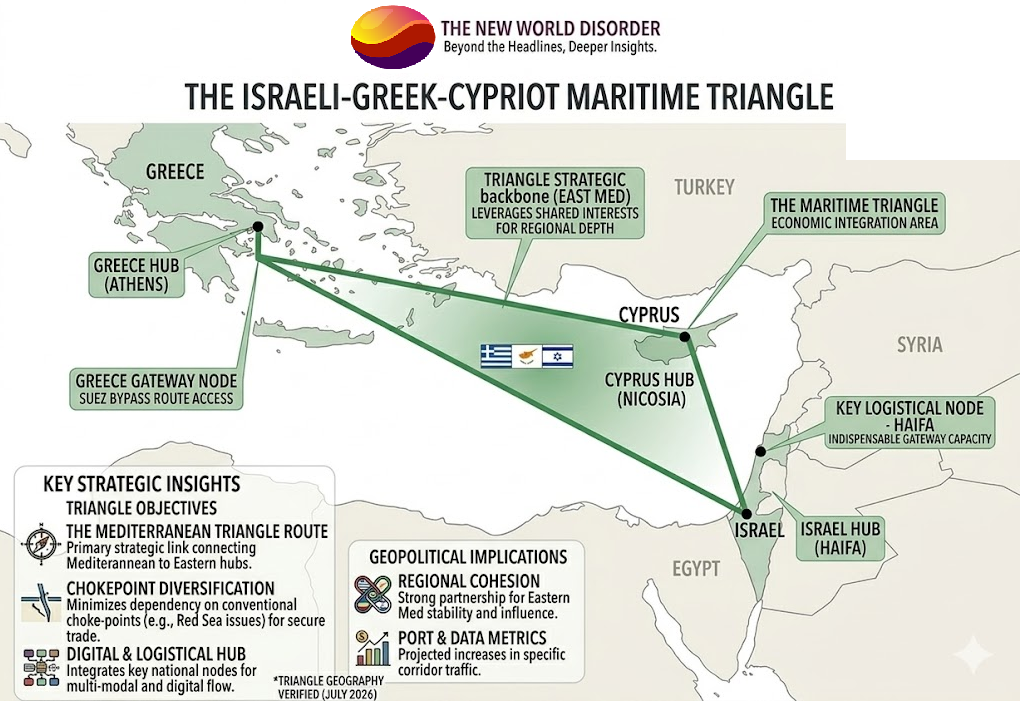
It represents a threat to Türkiye’s civilizational geography.
As a result, Ankara accelerated efforts to build alternative continental systems capable of preserving Turkish relevance within future Eurasian trade architecture.
The Iraq-Europe Development Road became one of the most important components of this strategy.
The corridor seeks to connect Gulf energy and trade flows northward through Iraq into Türkiye before linking onward into Europe.
Strategically, the project serves multiple purposes simultaneously:
- bypassing Israeli-controlled maritime systems,
- preserving Turkish transit centrality,
- stabilizing Iraq economically,
- reconnecting the Arab interior to Anatolia,
- reducing overdependence on vulnerable Red Sea routes.
The Development Road effectively represents the continental answer to IMEC.
One is maritime and digitally integrated.
The other is territorial and strategically buffered.
This emerging competition increasingly resembles the historical rivalry between sea powers and land powers that shaped earlier global eras.
Syria and Iraq as Geopolitical Buffers
The future of Syria and Iraq became central to the Sunni Shield doctrine.
Both countries occupy critical positions between the Gulf, Türkiye, and the Mediterranean.
Whoever shapes their reconstruction potentially shapes the future geography of regional trade itself.
Under the post-Assad order, Türkiye and Gulf states increasingly viewed Syria not merely as a reconstruction challenge, but as a strategic transit zone.
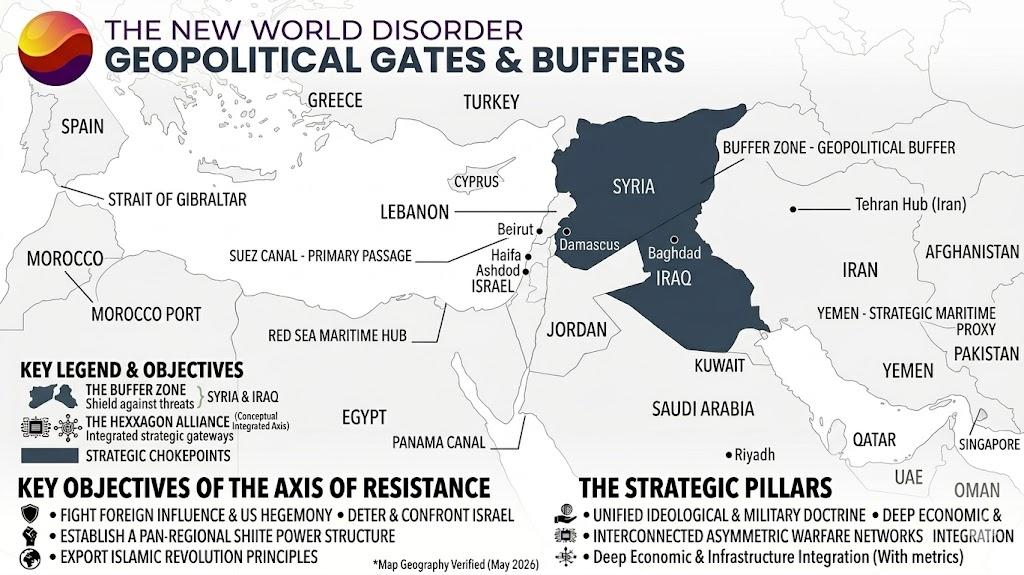
Rebuilding Syrian infrastructure allows the Sunni Shield to:
- restore continental connectivity,
- weaken maritime dependency,
- limit Israeli strategic depth,
- counterbalance Iranian remnants,
- reconnect Arab trade routes through land corridors.
Similarly, Iraq’s role evolved dramatically.
For years, Iraq functioned largely as contested territory between Iranian influence and American security presence. By 2026, however, Baghdad increasingly emerged as a potential logistical hinge between competing infrastructure systems.
This gave Iraq enormous geopolitical importance.
A stable Iraq integrated into Turkish-Gulf transit systems could fundamentally reshape regional trade flows.
Conversely, a fragmented Iraq would leave maritime systems relatively uncontested.
The struggle over reconstruction therefore became inseparable from the struggle over connectivity itself.
Pakistan and Escalation Deterrence
Pakistan’s role inside the Sunni Shield differs from every other regional actor.
Its importance lies not primarily in economics, technology, or maritime infrastructure.
Its importance lies in deterrence.
Pakistan remains one of the few states in the broader Islamic world capable of introducing strategic uncertainty into any large-scale regional confrontation.
Its nuclear arsenal fundamentally alters escalation calculations across the region.
This creates what may be called “deterrence depth.”
Even if Pakistan lacks the economic scale of India or the financial resources of the Gulf monarchies, its military capabilities ensure that no regional order can fully ignore Islamabad’s strategic relevance.
The growing India-Israel-UAE alignment intensified these calculations.
From Islamabad’s perspective, IMEC carries not only economic implications, but also geopolitical consequences:
- bypassing Pakistani geography,
- weakening Gwadar’s relevance,
- reducing transit leverage,
- reinforcing Indian maritime influence,
- tightening strategic pressure across the Arabian Sea.
This perception accelerated Turkish-Pakistani strategic cooperation.
Defense coordination expanded rapidly through:
- drone technology partnerships,
- naval exercises,
- intelligence sharing,
- aerospace collaboration,
- military-industrial integration.
Ankara increasingly views Pakistan as the strategic rear guard of the Sunni Shield.
Islamabad increasingly views Türkiye as the industrial and diplomatic spearhead of broader Sunni balancing.
Their partnership is therefore rooted in structural geopolitics rather than temporary alignment.
Gwadar, CPEC, and the Arabian Sea
Pakistan’s geographic position continues to provide long-term strategic relevance despite economic instability.
Gwadar sits near one of the most critical maritime regions on Earth:
the intersection of the Arabian Sea, Gulf energy routes, and the western Indian Ocean.
Although China’s Belt and Road Initiative initially framed Gwadar primarily within the context of Chinese connectivity strategy, the port increasingly gained importance within broader Sunni Shield calculations as well.
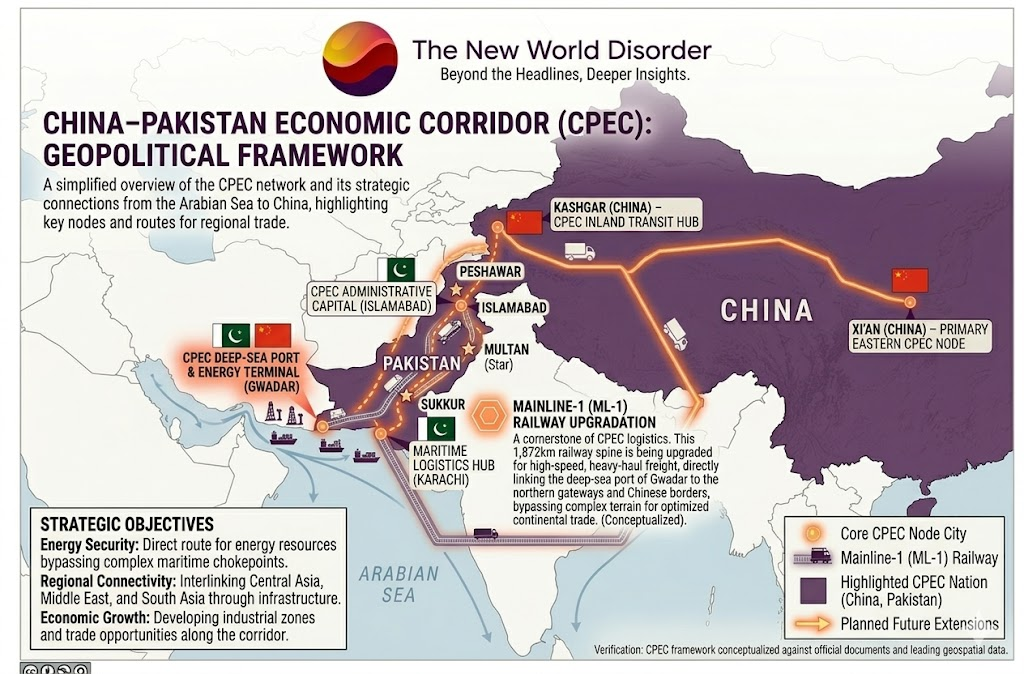
If IMEC seeks to create a Western-aligned Indo-Mediterranean architecture, then Gwadar potentially functions as an alternative southern node linking:
- China,
- Central Asia,
- the Gulf,
- the Arabian Sea,
- overland Eurasian systems.
This creates a layered geopolitical reality where Pakistan simultaneously intersects with:
- Chinese connectivity systems,
- Turkish strategic balancing,
- Gulf security frameworks,
- Islamic military networks.
Islamabad therefore occupies a uniquely complex position within the emerging multipolar order.
The Demographic Factor
One of the most overlooked dimensions of the Sunni Shield is demographics.
The Hexagon possesses enormous technological sophistication and financial integration. Yet much of its architecture depends on highly concentrated nodes vulnerable to disruption.
The Sunni world, by contrast, retains immense demographic and territorial scale.
Türkiye, Pakistan, Saudi Arabia, Egypt, and wider Sunni-majority populations collectively represent:
- vast labor pools,
- military recruitment bases,
- geographic depth,
- strategic redundancy.
In long-term geopolitical competition, demographic resilience often matters as much as technological superiority.
This is particularly important in prolonged infrastructure competition where maintaining:
- territorial stability,
- labor systems,
- military manpower,
- domestic legitimacy,
becomes increasingly difficult.
The Sunni Shield therefore seeks to leverage mass and geography against concentration and technological centralization.
The Strategic Dilemma of the Sunni Shield
Despite its advantages, the Sunni Shield also faces major internal weaknesses.
Unlike the tightly integrated technological ecosystem emerging around the Hexagon, the Sunni bloc remains politically fragmented and economically uneven.
Türkiye and Saudi Arabia maintain periodic rivalry.
Pakistan faces recurring fiscal crises.
Arab political systems remain cautious about overdependence on Ankara.
Military integration remains incomplete.
The bloc also lacks unified digital infrastructure and comparable AI ecosystems.
This creates a dangerous asymmetry.
The Hexagon increasingly dominates:
- data systems,
- cybersecurity integration,
- maritime finance,
- advanced logistics,
- technological scalability.
The Sunni Shield retains:
- geography,
- manpower,
- deterrence depth,
- territorial continuity.
The regional balance therefore increasingly resembles a contest between:
networked efficiency and strategic endurance.
And as both systems evolved simultaneously, the Middle East began entering an entirely new geopolitical condition:
the era of Multipolar Armed Peace.
X. The Multipolar Armed Peace
By late 2026, the Middle East no longer fits any classical model of international order.
It is not bipolar, because no two powers fully define the system.
It is not unipolar, because no single actor can enforce systemic dominance.
It is not even a stable multipolar balance, because alliances are fluid, overlapping, and often contradictory.
Instead, the region has entered what can best be described as a Multipolar Armed Peace.
This is a condition where:
- economic interdependence is deepening,
- infrastructure connectivity is expanding,
- but military distrust is simultaneously intensifying.
States are increasingly connected through trade routes, energy systems, digital infrastructure, and financial networks, while also preparing for disruption of those same systems.
This contradiction defines the new regional reality.
Integration and confrontation are no longer opposites.
They coexist within the same architecture.
Armed Connectivity as the New Normal
The defining feature of the current order is not open war or stable peace, but armed connectivity.
In this environment:
- ports are commercially active but militarily sensitive,
- undersea cables carry global data but are strategic targets,
- trade corridors remain open but heavily securitized,
- energy flows are continuous but politically weaponized.
Every major infrastructure system has become dual-use.
A logistics corridor is simultaneously:
- an economic artery,
- a surveillance grid,
- a potential chokepoint,
- a strategic bargaining tool.
This duality fundamentally reshapes state behavior.
Even allies increasingly prepare contingency plans against each other’s infrastructure dependencies.
The result is a system where cooperation and competition are structurally inseparable.
The Fragility of Interdependence
Modern globalization assumed that interdependence would reduce conflict.
The Middle East demonstrates the opposite dynamic.
Interdependence can also amplify vulnerability.
When states become deeply integrated into shared infrastructure systems, disruption in one node produces cascading effects across the entire network.
This creates a paradox:
The more efficient the system becomes, the more fragile it becomes under stress.
The Red Sea disruptions, cable security concerns, energy routing instability, and corridor competition all illustrate this principle.
States are therefore forced into a dual posture:
- expanding integration for economic survival,
- while simultaneously militarizing that integration for strategic protection.
This tension defines the Multipolar Armed Peace.
Corridor Sovereignty vs Corridor Dependency
At the core of this system lies a fundamental struggle over corridors.
Corridors are no longer passive trade routes.
They are active instruments of geopolitical influence.
Two competing models now define regional thinking:
1. Corridor Sovereignty Model
Advocated primarily by Türkiye, Pakistan, and parts of the Gulf:
- emphasize territorial continuity,
- diversify overland routes,
- reduce reliance on single maritime chokepoints,
- preserve national control over transit systems.
2. Corridor Integration Model
Advanced by the Hexagon architecture:
- prioritize seamless maritime connectivity,
- integrate digital and physical infrastructure,
- centralize logistics efficiency,
- embed states into shared technological systems.
Neither model is fully dominant.
Both are partially implemented.
This creates overlapping systems that are economically interwoven but strategically competitive.
The Return of Geography in a Digital Age
One of the most important paradoxes of 2026 is the return of geography as a decisive force in an increasingly digital world.
Despite advances in:
- AI,
- satellite communication,
- digital finance,
- quantum research,
- cloud infrastructure,
- Physical space still determines ultimate vulnerability.
Chokepoints cannot be digitized away.
Ports cannot be virtualized.
Energy routes cannot be abstracted.
Population centers cannot be replaced.
The Middle East demonstrates that even the most advanced technological systems remain anchored in physical geography.
This is why:
- the Eastern Mediterranean matters,
- the Red Sea matters,
- the Gulf matters,
- Anatolia matters,
- the Horn of Africa matters.
Infrastructure may be digital in function.
But it is always physical in location.
Systemic Instability Without Systemic Collapse
Despite repeated crises, the regional order has not collapsed.
Instead, it has stabilized into a tense equilibrium.
This equilibrium is unstable, but persistent.
Why?
Because no actor benefits from total breakdown.
- The Hexagon requires regional stability to maintain infrastructure flows.
- The Sunni Shield requires stability to preserve strategic depth.
- External powers require stability to protect global trade systems.
This creates a shared incentive to avoid full-scale systemic war.
Yet it does not eliminate localized conflict.
Instead, conflict becomes fragmented, continuous, and geographically distributed.
War no longer occurs as a single defining event.
It occurs as overlapping, persistent pressure across multiple theaters.
The Strategic Ceiling of the Hexagon
Despite its technological superiority, the Hexagon faces a structural ceiling.
Its core vulnerability is concentration.
Highly integrated systems depend on uninterrupted flow across:
- maritime chokepoints,
- digital cables,
- financial systems,
- energy corridors.
This creates systemic exposure.
Disruption in one segment can produce disproportionate effects across the entire network.
Additionally, political legitimacy remains uneven across key nodes of the architecture.
Infrastructure cannot fully substitute for sovereignty.
This places a limit on how far corridor-based hegemony can expand without encountering resistance.
The Leviathan can integrate systems.
But it cannot fully eliminate friction created by geography and politics.
The Strategic Ceiling of the Sunni Shield
The Sunni Shield faces an opposite limitation.
Its strength lies in:
- geography,
- manpower,
- deterrence,
- territorial continuity.
But it struggles with:
- technological integration,
- financial cohesion,
- unified command structures,
- digital infrastructure development,
- economic scalability.
It can resist fragmentation.
But it struggles to construct a fully integrated alternative system at global scale.
This creates a structural asymmetry between the two blocs:
One is highly advanced but concentrated.
The other is highly expansive but fragmented.
Neither can fully dominate the other.
The Result: Controlled Instability
The outcome is not peace.
It is not war.
It is controlled instability.
A system in which:
- tensions remain constant but contained,
- conflicts remain localized but persistent,
- alliances remain fluid but strategic,
- infrastructure remains functional but contested.
This is the defining geopolitical condition of the Indo-Mediterranean system in 2026.
It is not a failure of order.
It is a new type of order.
One built not on resolution, but on managed friction.
Final Transition: From Systems to Civilizational Competition
At a deeper level, what is emerging is no longer just a regional rivalry.
It is a competition between two models of civilization-building:
One model prioritizes:
- digital integration,
- infrastructure sovereignty,
- AI-driven governance,
- maritime connectivity.
The other prioritizes:
- territorial depth,
- demographic resilience,
- military deterrence,
- continental continuity.
The Leviathan and the Shield are therefore not simply geopolitical actors.
They are competing interpretations of how power itself should function in the 21st century.
And as this system stabilizes into a long-term equilibrium, the Middle East is no longer merely a region of conflict.
It has become the prototype of global geopolitical transformation in the age of infrastructure warfare.
XI. The Future Scenarios (2026–2035)
The emerging Indo-Mediterranean order is still in its formative phase. While current trajectories point toward a structured competition between the Hexagon architecture and the Sunni Shield, the system remains fluid, incomplete, and highly sensitive to shocks.
To understand the strategic direction of the region, it is necessary to move beyond linear prediction and instead map plausible scenario pathways based on existing structural forces.
By 2035, four broad outcomes become analytically credible.
Lebanon and Syria: The Emerging Fault Line of an Israel–Türkiye Confrontation
The collapse of the old Levantine security architecture has transformed Lebanon and Syria into the primary geopolitical fault lines of an increasingly direct confrontation between Israel and Türkiye. The fall of the Assad dynasty, combined with the systematic degradation of Iranian proxy networks after 2024, created a strategic vacuum across the Levant that neither Tel Aviv nor Ankara was willing to leave uncontested. Israel responded by aggressively expanding its northern security doctrine, attempting to establish a long-term “yellow line” buffer structure extending deep into Syrian and Lebanese territory. This strategy is designed not only to prevent the re-emergence of hostile proxy infrastructure, but also to cement Israeli military and intelligence primacy across the eastern Mediterranean corridor. Through persistent air operations, intelligence penetration, and forward security positioning, Israel has sought to reshape the Levant into a controlled defensive depth zone aligned with its broader Leviathan and Hexagon architectures.
Ankara, however, views this expansion not as a defensive necessity, but as the early phase of a permanent Israeli geopolitical restructuring of the Levant. As the strategic core of the emerging Sunni Axis, Türkiye has moved rapidly to counterbalance Israeli influence through the Ankara–Damascus corridor, leveraging military deployments, reconstruction agreements, intelligence coordination, and security partnerships with post-Assad Syrian structures. Simultaneously, Turkish engagement with Lebanon has intensified through diplomatic outreach, economic channels, and indirect security guarantees designed to prevent Beirut from collapsing entirely into an Israeli-managed security environment. This has effectively turned the geographical space between the Mediterranean coastline and the Euphrates basin into a direct theater of strategic friction, where competing visions for the future of the Levant are now colliding in real time.
A critical and often underestimated dimension of this confrontation is the Kurdish question. For Ankara, Kurdish militant and autonomous structures operating across northern Syria represent not merely a domestic security issue, but a strategic vulnerability that external actors could exploit to constrain Turkish regional influence. Turkish policymakers increasingly suspect that Israel views certain Kurdish formations as potential geopolitical leverage points capable of fragmenting the Sunni strategic depth stretching from Anatolia into Syria and Iraq. The existence of semi-autonomous Kurdish zones along Türkiye’s southern frontier is therefore interpreted within Turkish strategic circles as part of a broader containment architecture that could eventually sever Ankara’s overland influence into the Arab world. Israel, meanwhile, has historically viewed non-Arab minority alignments across the region through the lens of peripheral balancing strategies, seeing fragmented borderlands as buffers against hostile centralized powers. This creates a deeply combustible dynamic where Kurdish territories risk becoming overlapping zones of proxy competition, intelligence penetration, and covert influence operations between Israeli and Turkish strategic networks.
The danger lies in the fact that both powers increasingly perceive their actions as existentially defensive. Israel views Turkish forward positioning as the emergence of a conventional Sunni military umbrella capable of replacing the old Iranian threat with a far more industrialized and NATO-compatible rival. Türkiye, meanwhile, interprets Israeli attempts to dominate Syrian and Lebanese airspace, infrastructure corridors, and maritime approaches as part of a broader encirclement strategy intended to permanently marginalize Ankara from the Eastern Mediterranean order while simultaneously exploiting Kurdish fault lines to weaken Turkish strategic continuity. Unlike the shadow conflicts of the previous decade, the emerging friction is no longer limited to proxies or covert networks. It is gradually evolving into a structural state-on-state competition involving naval deployments, airpower projection, corridor control, intelligence warfare, Kurdish frontier politics, and competing security architectures. As both sides deepen their positions across the Levantine core, Lebanon and Syria are no longer peripheral battlegrounds. They are becoming the central collision zone for what many analysts increasingly view as the most consequential interstate rivalry in the modern Middle East.
Scenario 1: The Consolidated Hexagon Order
In this trajectory, the Hexagon Alliance succeeds in gradually stabilizing its infrastructural ecosystem and converting connectivity dominance into durable geopolitical influence.
Core Developments
- IMEC reaches full operational maturity.
- Israel becomes the primary security and digital hub of Indo-Mediterranean trade.
- India emerges as the central demand and manufacturing engine.
- UAE consolidates financial dominance across maritime logistics systems.
- Greece and Cyprus function as permanent European gateways into the system.
- AI-driven governance systems become integrated into corridor management.
Strategic Outcome
The Middle East evolves into a corridor-centric economic zone anchored in maritime infrastructure and digital sovereignty.
Traditional land-based balancing strategies weaken.
Türkiye becomes partially contained within alternative Eurasian routes.
Pakistan faces increased structural pressure due to bypassed transit relevance.
Iran, if partially reintegrated, becomes a managed energy and logistics node rather than an independent strategic pole.
Key Risk
Over-concentration of power within highly integrated systems creates systemic fragility. Any disruption in maritime chokepoints or digital infrastructure could produce cascading regional instability.
Scenario 2: The Sunni Shield Resurgence
In this pathway, the Sunni Shield consolidates into a more coherent strategic bloc capable of challenging the infrastructural dominance of the Hexagon.
Core Developments
- Türkiye successfully operationalizes the Iraq-Europe Development Road.
- Saudi Arabia reasserts control over Gulf alignment through energy diplomacy.
- Pakistan deepens military-industrial integration with Türkiye.
- Syria stabilizes as a transit buffer under Sunni-aligned reconstruction frameworks.
- Overland corridors regain relevance in Eurasian trade architecture.
Strategic Outcome
The region evolves into a dual-corridor system:
- Maritime Hexagon network in the Mediterranean and Red Sea.
- Continental Sunni Shield network across Anatolia, Iraq, and South Asia.
This restores a classical balance between sea and land power.
Key Risk
Internal divergence among Sunni actors limits full bloc coherence. Economic asymmetry and political fragmentation persist across members.
Scenario 3: Managed Multipolar Fragmentation
This is the most structurally probable scenario based on current trajectories.
Core Developments
- No single corridor system achieves dominance.
- IMEC and competing land routes both operate at partial capacity.
- Regional states maintain overlapping alliance structures.
- Infrastructure remains functional but politically contested.
- Proxy conflicts persist at low-to-medium intensity across multiple theaters.
Strategic Outcome
The Middle East stabilizes into a layered multipolar system characterized by:
- fragmented sovereignty,
- overlapping infrastructure networks,
- continuous but contained conflict zones,
- persistent geopolitical hedging.
States operate within multiple systems simultaneously rather than choosing exclusive alignment.
Key Risk
Chronic instability becomes normalized. Long-term economic growth is constrained by recurring geopolitical friction.
Scenario 4: Infrastructure Systemic Shock
This is the low-probability but high-impact scenario.
Core Developments
- Major disruption occurs in undersea cable systems or AI infrastructure networks.
- Maritime chokepoint conflict escalates beyond localized containment.
- Energy supply chains experience coordinated disruption.
- Financial routing systems face sustained cyber or kinetic interference.
- Global insurance and shipping systems undergo systemic recalibration.
Strategic Outcome
The Indo-Mediterranean order temporarily fragments into isolated regional systems.
Connectivity globalisation enters a rollback phase.
States revert to regional self-sufficiency strategies.
Infrastructure warfare shifts from competitive integration to defensive decoupling.
Key Risk
Global economic shock extending far beyond the Middle East, affecting Europe and Asia simultaneously.
Final Strategic Synthesis
Across all four scenarios, one structural reality remains consistent:
The Middle East is no longer defined by ideology, religion, or traditional bloc politics.
It is defined by infrastructure competition.
Whether through maritime corridors, digital systems, energy flows, or continental transit routes, the region is being reorganized around one central question:
Who controls connectivity?
The Hexagon represents a model of integrated maritime-technological sovereignty, built on digital infrastructure, AI systems, and global logistics coordination.
The Sunni Shield represents a model of continental strategic depth, built on geography, military deterrence, and alternative land corridors.
Neither system can fully eliminate the other.
Neither system can fully dominate alone.
This creates a long-term equilibrium defined not by resolution, but by managed tension.
Closing Thesis
The transformation underway in the Middle East is not a continuation of past regional rivalries. It is the emergence of a fundamentally new geopolitical operating system.
In this system:
- Ports matter as much as armies.
- Cables matter as much as borders.
- Corridors matter as much as capitals.
- Data matters as much as territory.
- Infrastructure matters as much as ideology.
The struggle between the Leviathan and the Shield is therefore not simply a regional contest.
It is the prototype of 21st-century geopolitical competition itself.
A world where power is no longer defined by who controls land alone, but by who controls the systems through which land, capital, energy, and information must inevitably pass.