
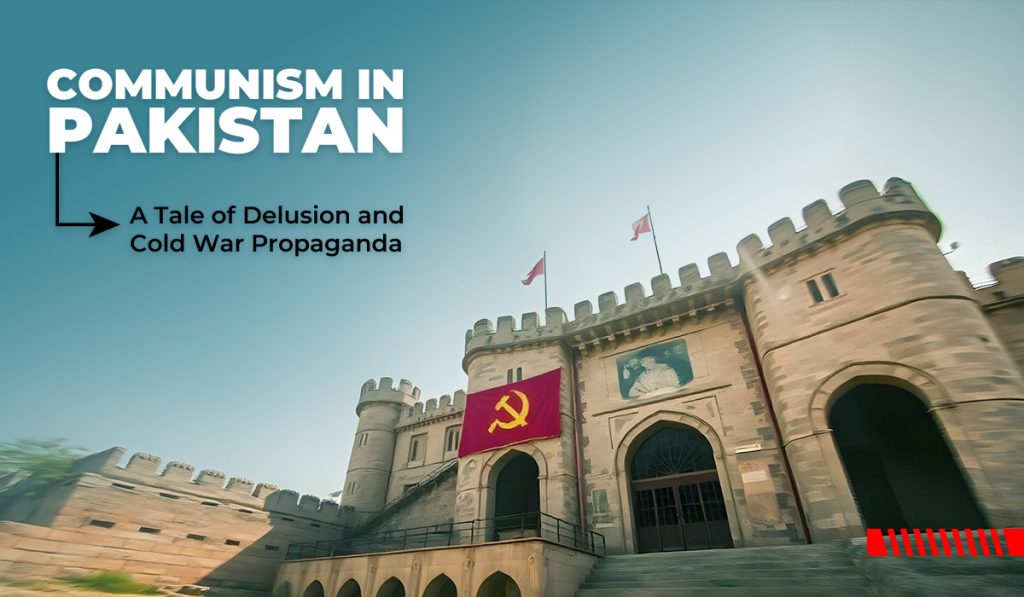
Communism, a political ideology that advocates for a classless society, has often been viewed with suspicion and hostility in Pakistan. This negative perception can be attributed to a complex interplay of factors, including historical events, geopolitical influences, and cultural biases.
The Cold War Legacy
One of the most significant factors contributing to the negative perception of communism in Pakistan is the legacy of the Cold War. During this period, the United States and the Soviet Union engaged in a bitter rivalry, vying for influence around the globe. Pakistan, as a strategically important country, became a key battleground in this ideological conflict.
The United States, fearing the spread of communism, invested heavily in supporting pro-Western governments and promoting anti-communist propaganda. In Pakistan, this led to the emergence of a powerful military establishment that was closely aligned with the West and viewed communism as a threat to national security.
The Role of Propaganda
The Cold War era was characterized by intense propaganda campaigns on both sides. The United States, in particular, employed various tactics to demonize communism and portray it as a totalitarian system that suppressed individual freedoms and led to economic hardship. These messages were disseminated through the media, educational institutions, and cultural channels, shaping public opinion in Pakistan and other parts of the world.
The Delusion of Communism
In addition to external influences, the negative perception of communism in Pakistan can also be attributed to the inherent flaws of the ideology itself. Communism, as envisioned by its proponents, is based on the utopian idea of a classless society where resources are distributed equally. However, in practice, communist regimes have often been characterized by authoritarianism, economic inefficiency, and human rights abuses.
The Soviet Union, which was the world’s largest communist state, served as a cautionary tale. Despite its initial successes in industrialization and social development, the Soviet Union eventually faced economic stagnation, political repression, and social unrest. These failures undermined the credibility of communism as a viable political system.
Conclusion
The negative perception of communism in Pakistan is a complex issue with deep historical roots. While the Cold War played a significant role in shaping public opinion, it is important to recognize that the inherent flaws of the communist ideology also contributed to its decline. As Pakistan continues to evolve, it is essential to critically examine the past and learn from the mistakes of the past to build a more just and equitable society.