
By Zohaib Ahmed | 13th September 2025
Trigger: 12 Pakistani soldiers killed and 4 injured in a Taliban ambush in South Waziristan, another bitter tally that proves this is not a law-and-order problem on paper but an active, lethal war on our soil. Multiple outlets confirm the attack and ensuing operations near the Afghan border.
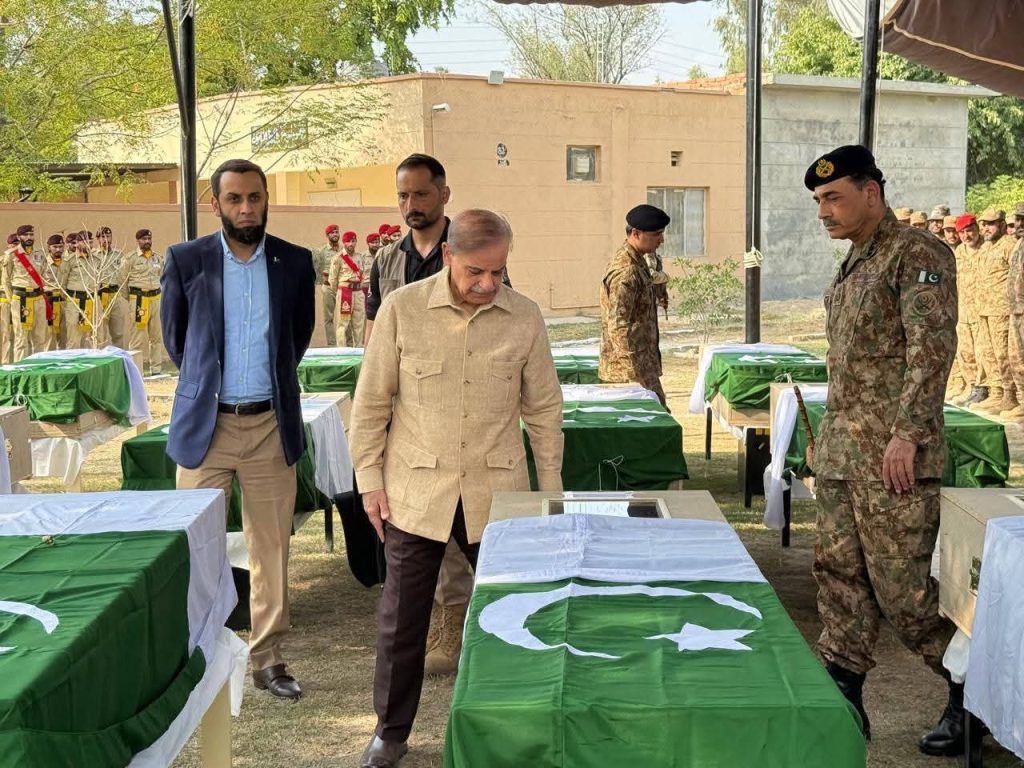
This blog combines prior rebuttals, a czar’s hard-edged assessment, and a clear operational posture the state must adopt immediately. I’ll be blunt: the State has given a last warning to Kabul. If Afghanistan’s leadership, whichever faction it may be, continues to tolerate or fail to police sanctuaries for the TTP, Islamabad must escalate across diplomacy, economics, information, and, if strictly necessary and legally justified, calibrated kinetic measures. Safe havens are not benign geography: they are force multipliers that allow the TTP to rebuild command nodes, move fighters and materiel, and launch high-casualty attacks inside Pakistan. That operational reality is what converted yesterday’s militancy into today’s strategic emergency.
1) Situation snapshot — why this is existential, not elective
The recent ambush in South Waziristan is symptomatic of a broader trend: a rising tempo of coordinated attacks, expanding TTP reach, and frequent use of cross-border sanctuaries. Pakistan’s security establishment views sanctuary tolerance as direct enabling: when militants enjoy safe areas, they regenerate faster than unilateral clearing operations can remove them. Past comprehensive campaigns (for example, Operation Zarb-e-Azb in 2014) had measurable tactical effects — they removed territorial sanctuaries and drove down large-scale attacks — but also created enormous humanitarian and governance problems that needed follow-up. Those lessons must inform today’s posture: strike the sanctuary, then hold and build.
2) The political problem — the anti-state narrative and why it matters
A damaging political narrative is circulating: that operations equal oppression and that the state is “attacking its own.” Former Prime Minister Imran Khan — even from detention — has publicly decried military operations and accused the military leadership of acting to appease an “anti-Taliban lobby,” warning against expulsions and calling for dialogue. Those statements have a political effect: they legitimize skepticism toward security operations, create confusion in KP’s political ecology, and give rhetorical space to narratives the TTP exploits.
A technical rebuttal to that narrative: operational counterterrorism is not blanket repression of a civilian population; it is intelligence-driven disruption of armed networks that target civilians and institutions. Civilian harm where it occurs must be investigated and remedied; accountability mechanisms and compensation programs are essential. But political theater that demands immediate cessation of all operations without presenting an alternative that removes sanctuary, command nodes, and logistics hubs will only deepen the security vacuum — and a vacuum is where the TTP thrives. In short: moral outrage without operational solutions equals strategic surrender. (This is consistent with prior analyses that stress pairing kinetic clearance with governance and reintegration measures.)
3) A calibrated cost-imposition strategy (sequenced, credible, reversible)
Phase 0 — Diplomacy and multilateral pressure (immediate):
Multilateralize the problem. Take documented intelligence and evidence to the UN, SCO, OIC, and key capitals (Beijing, Moscow, Gulf capitals, Washington) to delegitimise sanctuary tolerance and win diplomatic cover. Publicly name the problem sets and the demands: interdiction of TTP sanctuaries, handover of identified leaders, and verifiable closure of logistics corridors. Internationalise the pressure to raise the political and reputational cost for Kabul.
Phase 1 — Economic levers & border controls (short window):
Tighten customs, temporarily suspend certain trade channels, and condition cross-border economic flows on demonstrable Afghan action. Apply targeted financial restrictions on specific entities and actors credibly linked to sanctuary infrastructures while preserving humanitarian channels and civilian trade where feasible. Use intelligence to disrupt remittance and procurement pipelines that sustain the TTP.
Phase 2 — Information operations & legal narrative (parallel):
Run an evidence-based strategic information campaign exposing sanctuaries, presenting forensic evidence of cross-border planning, and framing Pakistan’s actions as self-defence under international law — not aggression. Simultaneously prosecute apologists who materially support terror; counter political narratives with transparent data on military objectives, civilian protection measures, and post-clearance governance plans.
Phase 3 — Controlled, legally verifiable kinetic options (only if non-kinetic steps fail):
Currently Pakistan is here. If diplomacy and economic pressure fail to change Kabul’s calculus, the State must preserve a calibrated military option as credible deterrence. This is not carte blanche: any kinetic step must be narrowly defined, legally vetted, limited in scope, and designed to achieve discrete objectives (e.g., disrupt a confirmed cross-border command node). Include independent verification (third-party observers when possible), mechanisms to mitigate and account for civilian harm, and clear exit ramps tied to political outcomes (handovers, closures, verifiable disbandment). The point is deterrence: kinetic action should be a costly signal — not a prolonged quagmire.
These phases should be run in tandem with accelerated border security modernization, intelligence fusion centers, and rapid civil-military governance teams to secure cleared areas and prevent a return of militants.
4) Operational design (high-level, non-tactical)
Operations must follow the classical “clear, hold, build, reconcile” arc:
- Clear: surgical, intelligence-driven raids to remove command nodes; prioritized on high-value targets and supply chains rather than broad punitive sweeps.
- Hold: immediate security and policing deployments to prevent re-infiltration and to stabilize key transit routes and population centers.
- Build: fast-tracked reconstruction, credible local administration, services restoration, and livelihoods support to erode the recruitment vector of economic desperation.
- Reconcile: vetted disengagement programs for low-level fighters, community reconciliation, and reintegration pathways for those ready to renounce violence.
Note: this is a strategic architecture, not a playbook — it deliberately avoids granular tactical instructions.
5) Accountability, civilian protection, and post-operation legitimacy
If the State is to “go hard,” it must also go honest. Transparency mechanisms (independent casualty investigations, rapid compensation funds, and public reporting) are the political oxygen that legitimizes tough action. Failure to account for civilian harm fuels the same grievance cycle we are trying to break. Rebuild trust in cleared areas by delivering visible services and security quickly — that’s how you turn tactical success into strategic victory.
6) Political counter-measures at home — blunt and precise
Domestic political actors who amplify anti-state narratives must be confronted through facts and law: expose any rhetorical overlap between political messaging and the TTP’s propaganda, demand accountability for public figures who undermine operational security during active campaigns, and prosecute direct material support to banned organisations. Debate is healthy — but when public messaging erodes operational coherence in a theatre of war, the state has the duty to defend its monopoly of force and public safety.
7) Closing — hard, but smart
Safe havens = war. That is not bellicose rhetoric; it is the operational truth. The State must impose unbearable political, economic and reputational costs on any actor — state or non-state — that tolerates sanctuary for the TTP. Escalation should be credible, proportional, and tied to clear, verifiable objectives. Kinetic options remain part of the toolbox, but they are neither a substitute for diplomatic pressure nor an excuse for poor governance.
To those who say “stop operations” without showing how to remove sanctuaries, I repeat the technical rebuttal: ending operations without an alternative plan to dismantle cross-border sanctuaries hands the initiative back to terrorists. We must demand better safeguards and accountability for civilian protection — but not at the cost of surrendering territory, institutions, or lives to militant rule.
Sources & Further Reading (key load-bearing references)
- Reporting on the South Waziristan ambush and associated operations.
- Imran Khan’s public statement (10 Sept 2025) criticizing operations and raising refugee concerns.
- Historical lessons: Operation Zarb-e-Azb and the importance of follow-on governance.
- Independent reporting on rising TTP violence and threats to military and civic infrastructure.