
By Zohaib Ahmed | 17th September 2025
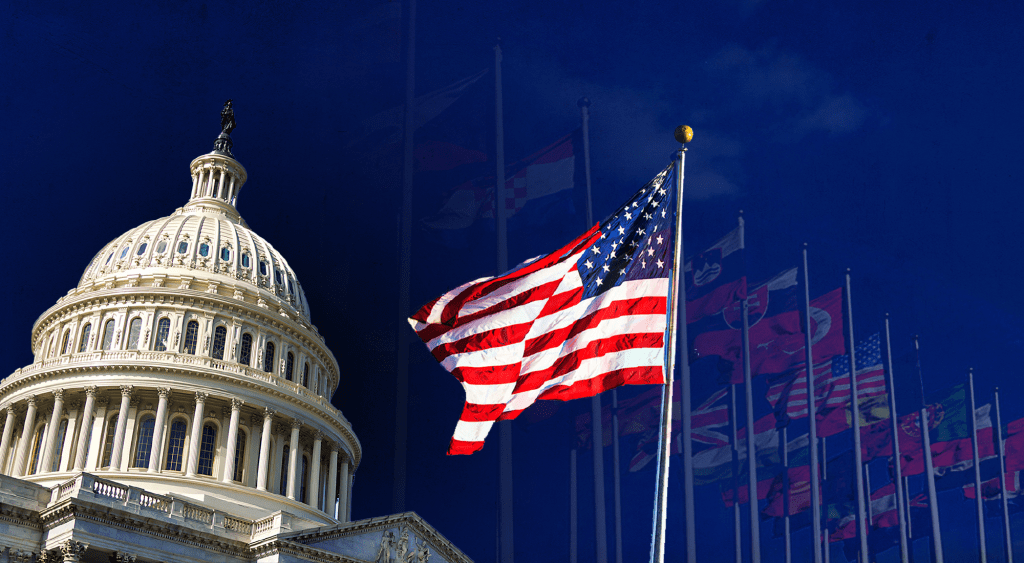
The End of the American Century
The czars of history and geopolitics often remind us: empires do not end with a bang, but with the slow exhaustion of overreach. The “American Century,” as Henry Luce so famously described in 1941, has run its course. While the United States remains unmatched in raw military might and significant economic weight, the world has shifted. Power is now multipolar, fluid, and increasingly resistant to unilateral dominance. The czars of strategy see this moment not as the fall of America, but as the decline of its ability to dictate terms in Asia, the Middle East, or even Latin America—the very regions it once reshaped through force. General Omar Bradley once warned during the Korean War, “In war, there is no victory at bargain prices.” America has discovered this the hard way in Vietnam, Iraq, and Afghanistan.
The Burden of Exceptionalism
The czars of ideology recognize that America’s self-perception is rooted in exceptionalism—a belief in divine destiny, echoed from John Winthrop’s “city on a hill” to Ronald Reagan’s shining vision of a redeemer nation. Madeleine Albright crowned it the “indispensable nation.” Yet, as czars of reality point out, what once inspired confidence now fuels arrogance. This “civic religion” has justified 280+ military interventions and countless regime-change operations. Historian Harry Stout concluded bluntly: “The norm of American national life is war.” But in today’s interconnected world, war as divine instrument is no longer strategic; it is self-destructive.
Trump’s America First: Populism as Policy
The czars of politics analyze Donald Trump’s “America First” as a radical distortion of traditional exceptionalism. On one hand, it stoked domestic populism and promised economic revival; on the other, it risked tearing apart the very fabric of American society. Former Secretary of Defense James Mattis once cautioned, “Nations with allies thrive, nations without allies wither.” Yet Trump’s foreign policy alienated partners, emboldened adversaries, and paradoxically strengthened China, the very rival it sought to weaken. The czars of economics further argue that protectionist policies have not reversed America’s relative decline but accelerated it in the face of China’s Belt and Road Initiative and Europe’s green transition.
Endless Wars: A Costly Addiction
The czars of military history trace America’s addiction to regime change across generations: Latin America in the early 20th century, Southeast Asia from the 1950s to 70s, and the Middle East since the 1980s. These interventions were rarely wars of necessity, but rather wars of choice—choices that produced chaos. As Barack Obama admitted regarding Libya, “It didn’t work.” The czars underline the irony: every attempt at remaking the world through force only made America less secure, more indebted, and strategically overstretched.
Global Threats Require Global Solutions
The czars of environment and science step into the debate: the 21st century is not defined by ideology or borders, but by existential threats. Climate change, pandemics, mass migrations, and resource depletion cannot be fought with aircraft carriers or sanctions. António Guterres, UN Secretary-General, warned, “Humanity is waging war on nature. This is suicidal.” What is required is not nationalism or nostalgic dreams of past glory, but a reinvigorated United Nations and a global commitment to sustainable development. Nationalism blinds leaders; cooperation empowers nations.
The Principle of Subsidiarity: Governance at the Right Level
The czars of governance highlight the doctrine of subsidiarity: solve problems at the lowest effective level. City councils for local issues, national governments for broader ones, regional blocs for cross-border challenges like energy grids or pandemics, and global diplomacy for planetary-scale crises like climate change and biodiversity loss. The European Union’s handling of renewable energy transitions and the African Union’s health initiatives during epidemics illustrate how regional cooperation often outperforms isolated national efforts.
Two Futures Before Us
The czars of philosophy frame the dilemma starkly: the world stands between two futures—conflict, potentially even nuclear devastation, or peaceful cooperation built on diversity and shared progress. Albert Einstein once warned, “I do not know with what weapons World War III will be fought, but World War IV will be fought with sticks and stones.” That warning resonates deeply in a time when U.S. foreign policy still flirts with the dangerous logic of militarism and narcissism.
Final Analysis by Zohaib Ahmed
As I look through the lenses of these czars—military, economic, political, and environmental—the conclusion is clear: American exceptionalism is an outdated myth that blinds policymakers to the reality of a multipolar world. A new foreign policy must move beyond the arrogance of unilateralism and embrace the humility of cooperation. America’s strength today lies not in the number of aircraft carriers it can deploy but in its ability to lead global efforts in technology, climate action, and sustainable development. The future belongs to those who build alliances across nations, regions, and peoples, not those who cling to outdated illusions of supremacy. We are at a crossroads: one path leads to endless conflict and decline; the other, to renewal through diversity, diplomacy, and global solidarity. For America to remain relevant in the 21st century, it must choose the latter—and the time to choose is now.