
By Zohaib Ahmed | 6th November 2025 | The New World Disorder
There comes a point in every nation’s strategic evolution where ambiguity becomes unsustainable, and for Pakistan, that moment has arrived. For two decades, Islamabad walked the tightrope between ideology and security, faith and pragmatism, restraint and retaliation. But after years of cross-border attacks, diplomatic duplicity, and silent betrayals, Pakistan’s patience has bled out in the dust of its western frontier.
There is a subtle but seismic shift taking place in Pakistan’s strategic temperament, one born of weariness, evidence, and an uneasy clarity about what toleration has cost us. Over the last year the argument has moved from whether Afghanistan’s ruling order is a partner or a problem, to a harder set of questions: can Kabul dismantle the sanctuaries that have been used to attack Pakistan, and will it do so in a way that is verifiable, enforceable, and permanent? The answer, as the last few months have made painfully clear, is still not assured. And that uncertainty is why the current moment, the Istanbul talks, the ceasefire architecture, and the public fury in Islamabad, matters so much
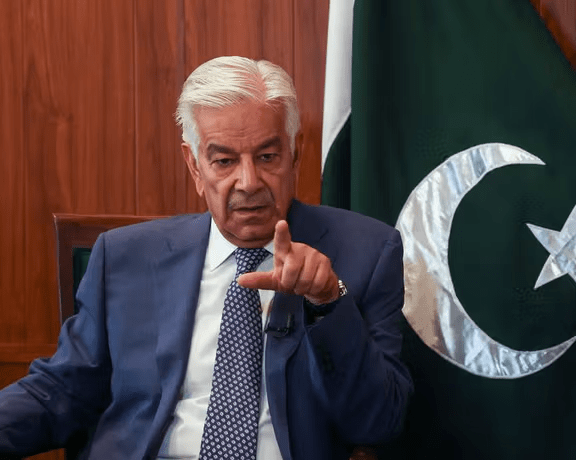
This is no longer about managing a difficult neighbor; it’s about reclaiming sovereignty from those who mistake goodwill for weakness.
Appeasement has failed; decisive pressure is now required.
Institutional Introspection: The Domestic Lesson
A senior retired commander, Lt Gen (Retd) Tariq Khan’s, recent public reflections contain a truth Pakistan’s policy community has been slow to digest: kinetic force alone will never solve identity-driven insurgencies inside our own borders. The problem in places like Balochistan and Khyber-Pakhtunkhwa is not principally a shortage of firepower; it is a shortage of an integrated political narrative that reabsorbs marginalized identities into the state. That insight matters for our western policy too. If we tackle Afghanistan only with bombs and deportations, we will at best push the problem around and at worst produce new cycles of grievance.
This is not an argument for appeasement; it is an argument for strategy. Pakistan’s long-term security depends on combining hard deterrence with institutional reforms at home: better governance, inclusive economic policies for the Pashtun belt, and a credible political narrative that makes extremism unattractive. The recent emphasis on political reintegration is a welcome maturation of Pakistan’s strategic thinking, it moves us from pure warfighting toward nation-building, and that broadening of tools must continue.
Operational Reality: Sanctuary, Shielding and the Limits of Kabul’s Control
But realism demands we also confront the operational facts. Independent open-source assessments and intelligence indicators point to a reconstituted cross-border insurgent ecosystem: an estimated 6,000–6,500 TTP fighters operating with sanctuaries in Afghanistan; reports of a roughly 500% rise in terrorist attacks since 2021; transfers of captured U.S. equipment (valued in the billions); and signals that up to three quarters of recent suicide attackers were Afghan nationals. These are not academic figures, they are the raw inputs of battlefield calculus.
The Taliban leadership’s structural constraints are real. The appointment of Sirajuddin Haqqani as Interior Minister matters: bloodlines, clan ties, and patronage networks run deep, and they complicate clear central control. If the chief enforcer in Kabul has personal, historical connections to elements ideologically or operationally linked to the TTP and global jihadist networks, orders from the center are filtered through dense interpersonal and tribal layers. That reality explains why Kabul’s public denials ring hollow to Islamabad and why a laundry list of verbal assurances will no longer suffice.
The Collapse of a Compact
For two decades, Pakistan’s calculus was built on faith, that ideological kinship and shared history would translate into mutual security. When the U.S. withdrew from Afghanistan in 2021, Islamabad hoped a stable, friendly Kabul would finally emerge, ending decades of foreign manipulation along its western border.
Instead, Afghanistan has turned from a buffer into a base. The TTP, long fractured and hunted, found in Taliban-ruled Afghanistan not just refuge but rejuvenation. They reorganized, rearmed, and reasserted themselves, carrying out hundreds of attacks inside Pakistan while enjoying ideological sanctuary across the Durand Line.
The Afghan Taliban have offered the same hollow reassurance over and over, that they “do not allow their soil to be used against others.” But facts on the ground, verified by intelligence and human sources alike, tell another story. The TTP’s leadership operates openly in Afghan provinces, coordinates logistics across Kunar and Nangarhar, and recruits through online networks unimpeded by Kabul’s security apparatus.
This is not negligence; it is indulgence.
A Broken Compact
Pakistan’s relationship with the Taliban was built on a shared past and a fragile hope: that once in power, Kabul’s rulers would respect our red lines, control the Tehrik-i-Taliban Pakistan (TTP), and build a peaceful border regime. Instead, Afghanistan has transformed from a strategic buffer into a sanctuary of insurgency.
Intelligence intercepts and ground reports confirm what Islamabad long suspected, the TTP operates freely inside Afghan territory, with training camps, logistical corridors, and ideological safe havens under the Taliban’s watch. The attacks that have killed Pakistani soldiers and civilians are no longer random, they are systematic, coordinated, and politically shielded.
When Defense Minister Khawaja Asif recently declared that “Afghanistan has become a safe haven for those killing our people,” he wasn’t engaging in political theater. He was stating what the entire national security apparatus already knows, that the Afghan Taliban’s inaction, and at times tacit approval, has crossed into complicity.
Why Pakistan Is Angry
This anger isn’t born of betrayal alone, it’s rooted in strategic exhaustion. Pakistan spent years facilitating peace talks between Washington and the Taliban, absorbing international pressure, defending Kabul’s legitimacy in global forums, and offering generous trade and humanitarian gestures even after the 2021 withdrawal.
Since 2021 more than 400 Pakistani servicemen have been killed in cross-border attacks tied to Afghan sanctuaries; hundreds of civilians have perished; billions in investment, including Belt and Road linked projects, are put at risk with every major strike; and public patience, already thinned by economic stress, has snapped. When our top defense leadership says, plainly, that “Afghanistan has become a safe haven for those killing our people,” that is not sabre-rattling, it is the state articulating the limits of its toleration.
And yet, in return, the TTP, the ideological twin of the Taliban, has launched hundreds of attacks from Afghan soil. Our soldiers in Waziristan and Bannu are fighting an enemy that hides behind the very border we once guarded as a fraternal line.
The economic cost is staggering. Every terror wave destabilizes CPEC investments, rattles foreign confidence, and drains a nation already battling inflation and political fatigue. The emotional cost is even deeper, a sense of betrayal by those we once helped survive.
Pakistan’s anger, therefore, is not impulsive, it is cumulative. It is the anger of a state that has exhausted every diplomatic, military, and humanitarian option, only to find its goodwill weaponized against it.
The attacks on Pakistani soldiers, police, and civilians have become routine. Each time, the pattern repeats: Kabul condemns the violence in vague terms, denies TTP presence, and pleads for “dialogue.” Meanwhile, the militants regroup and strike again.
This anger is not directed toward the Afghan people, our bonds are cultural, historical, and human. But a government that shelters those spilling Pakistani blood cannot expect infinite forbearance. The national mood is simple: enough of dry guarantees, public promises, and private pleas. We now require written, verifiable commitments, or we will change our posture.
The New Doctrine: Strategic Enforcement
The doctrine has changed.
For years, Pakistan’s security posture toward Afghanistan was guided by strategic restraint, a belief that diplomacy, religious fraternity, and shared trade could normalize ties. That restraint is now being replaced by strategic enforcement.
For years, Islamabad maintained what it called strategic restraint, a policy shaped by the belief that engagement could moderate extremism. That calculus has now shifted to strategic enforcement. The message is unambiguous: Pakistan will no longer absorb aggression in silence.
The deportation of illegal Afghan residents, the tightening of trade routes, and the reactivation of border defenses are not acts of hostility, they are calibrated instruments of leverage. Islamabad has understood that pressure, not persuasion, moves Kabul.
But Pakistan’s goal is not war. Unlike our eastern border with India, Afghanistan is not and should not become an enemy front. The Afghan people are our brothers, and their stability is tied to ours. Our desire is for a stable, friendly, and cooperative Afghanistan. Yet friendship cannot be built on deceit.
We are trying, hard, to preserve peace, to avoid escalation, to keep dialogue open. But the Taliban mistake this patience for fear. They are playing a dangerous game of brinkmanship, believing Pakistan’s restraint is infinite. It is not.
Yet, contrary to hawkish interpretations, Pakistan does not seek to treat Afghanistan as an adversary. India is the rival; Afghanistan is supposed to be family. But family cannot function when one side harbors a knife behind its back.
We desire a stable and cooperative western neighbor. We seek peace, trade, and security. But peace cannot coexist with deceit. The Taliban regime must decide: will it act as a responsible government or remain an ideological movement sheltering extremists?
A Written Guarantee, or a Breaking Point
Words are no longer enough. Pakistan does not seek another round of hollow assurances or back-channel apologies. What is required now is clarity, not in secret, but in public.
Islamabad demands a written guarantee from the Afghan government, or at the very least, a formal declaration from their supreme leader: the Tehrik-i-Taliban Pakistan must be denounced as terrorists and Khawārij (rebels against Islamic law).
Why public and written? Because verbal commitments have been the currency of evasion. A written declaration has both legal and moral force inside the Muslim world, it delegitimizes the TTP ideologically while giving Pakistan the diplomatic rope it needs to mobilize partners if Kabul reneges.
This is not mere semantics. A written statement would carry the moral and religious weight necessary to isolate the TTP ideologically. Without it, every private promise remains meaningless.
Pakistan has been burned too many times by “verbal assurances.” It now seeks enforceable commitments. Silence, at this stage, will be read as complicity.
If they refuse, Islamabad will have no choice but to treat the TTP and their protectors as a single entity, and act accordingly.
The joint Istanbul communiqué’s commitment to a monitoring-and-verification mechanism, and to penalties for violations, is a useful tactical step, but it is fragile. Treat the ceasefire as a tactical pause, not a political solution. The verification body must be backed by regional guarantors (Turkey, Qatar, China, Saudi Arabia) with real political will and teeth. Without enforceability, the “mechanism” will be a fig leaf.
Diplomacy, Deterrence, and the Two-Front Reality
Pakistan’s strategic environment has evolved into a two-front reality, Indian hostility on the east, Afghan instability on the west. This twin pressure requires a hybrid doctrine blending military readiness, intelligence depth, and diplomatic alignment.
Islamabad’s next moves will not be reckless. They will be synchronized with regional powers, Beijing, Riyadh, Ankara, and even Washington, all of whom understand that an unstable Afghanistan threatens the heart of the Belt and Road, the Gulf’s security architecture, and global counterterrorism networks.
This is why Pakistan’s recalibration is not isolationist, it’s a coalition of stability strategy. We seek partners who share our interest in peace, not proxies who exploit it.
Diplomacy and the Coalition of Stability
While the military recalibrates, diplomacy is quietly moving in parallel. Pakistan is aligning its position with Beijing, Riyadh, and Tehran, emphasizing that instability in Afghanistan threatens everyone’s interests, from the Belt and Road to Central Asian energy transit.
Beijing’s concerns about CPEC’s western corridor mirror Islamabad’s. Riyadh, too, understands that unchecked extremism can spill into the Gulf’s fragile sectarian balance. The message to Kabul is unified: the world’s tolerance is thinning.
In Washington, despite tensions, there is a growing realization that Pakistan remains indispensable for regional counterterrorism. The irony is not lost, those once criticized for “harboring” the Taliban are now the last bulwark against their regional mutation.
This is Pakistan’s new diplomatic reality, less about dependence, more about convergence. A coalition of stability, anchored not in loyalty but in shared necessity.
A Calculated Resolve
To act with resolve is not to act with haste. Pakistan’s challenge now is precision, to apply pressure without collapsing the region into chaos. We must differentiate between the Afghan people, who have suffered enough, and the power brokers in Kabul who have turned religious legitimacy into political leverage.
No pivot comes without peril. Pressuring Kabul risks fragmentation within the Taliban’s leadership. A power struggle could ignite civil war, sending new refugee waves across our borders. Heavy-handed action could invite Western sanctions or alienate public sentiment among Afghan sympathizers.
Pakistan’s challenge, therefore, is precision, to strike without breaking, to compel without collapsing the regional order. This demands a level of strategic discipline rarely sustained in South Asian geopolitics.
But the alternative, continued appeasement, is worse. Every attack ignored, every promise unfulfilled, weakens Pakistan’s deterrence and emboldens those who believe the state lacks resolve.
But make no mistake, the era of ambiguity is over.
The State can no longer tolerate sanctuaries, excuses, or selective amnesia. National unity demands clarity; survival demands enforcement. The doctrine has shifted from patience to posture, from persuasion to preemption.
As one senior intelligence official put it privately, “We gave them twenty years of trust. They gave us twenty years of attacks.”
A Calibrated Toolkit, Kinetics, Intelligence, Sanctions, and Diplomacy
If written guarantees are not forthcoming, Islamabad must be ready with a calibrated toolkit that mixes non-kinetic pressure and precise, legally grounded kinetic action. The lessons are clear:
• Precision, not mass bombardment. Indiscriminate strikes into population centres are both illegitimate and counterproductive; they fuel anger, displacement, and recruitment. The recent surgical takeout of a named militant (Mullah Muzahim) demonstrates how high-value, intelligence-led operations can achieve strategic results without indiscriminate bloodletting. Surgical targeting of key leaders, trainers, and logistics nodes, carried out with legal and operational clarity, should be the model.
• Choke the networks. Financial and logistical choke points matter. Freeze the revenue streams, prosecute transnational facilitators, harden border interdiction, and expand HUMINT and SIGINT fusion. Target money launderers, smugglers, and corporate fronts that enable militant financing.
• Multilateral enforcement. Mobilize China, Turkey, Qatar, Saudi Arabia, and if feasible, multilateral institutions, to deny sanctuary and to constrain material transfers. Beijing’s interest in CPEC security aligns with Islamabad’s imperatives; Riyadh and Ankara can provide diplomatic heft and pressure. A coordinated sanctions regime or targeted economic penalties for violators must be on the table.
• Visible deterrent. Maintain forward reserves and public readiness so sanctuary yields consequences. Deterrence isn’t about immediate invasion; it’s about making the cost of sheltering militants greater than any perceived diplomatic or political advantage.
• Strategic patience in the medium term. Combine pressure with carrots for cooperation, conditional economic and development packages that reward verifiable Afghan action. Diplomacy and punishment should be two sides of the same ledger.
The Long Game: A New Frontier of Strategy
This pivot is not a momentary outburst, it’s the beginning of a long, deliberate recalibration. Pakistan’s western policy will define its security architecture for the next decade. Whether through diplomatic compulsion or strategic action, the goal remains constant: a peaceful border secured through mutual respect, not manipulation.
But for that to happen, Kabul must choose. They can either stand with Pakistan against the TTP, or stand with the TTP against Pakistan. There is no middle ground left.
The India Question, Airframes, and Regional Complications
The strategic environment is complicated by great-power and regional maneuvers. Reports that attack-capable assets, such as Mi-35 helicopters, are appearing in Kandahar raise alarms in Islamabad. Allowing such platforms and lethal transfers to stand unchallenged is to gift the Taliban air capability that could be used against frontier posts and to facilitate broader infiltration. Tracing how such assets arrived also prompts uncomfortable questions about overflight routes and third-party facilitation, if India’s equipment found its way to Kandahar, which air corridors, state permissions, or transits enabled that transfer? Iran is being whispered about as a possible conduit, and those rumors, whether fully verified or not, increase the stakes dramatically.
Pakistan cannot afford to let these capabilities consolidate. If these assets become operational against our frontier, Islamabad must have both a plan to neutralize them and the diplomatic posture to expose and isolate their suppliers. The calculus must be simple: strategic investments that threaten our homeland will be made to costlier.
The Role of Mediators and the Politics of Pragmatism
Qatar and Turkey are not our adversaries; they are pragmatic intermediaries enabling pause and leverage. Criticizing mediators for doing their job, keeping channels open and creating tabled options, is counterproductive. These states offer Pakistan strategic utility: they can host talks, provide monitoring personnel, and act as honest brokers when direct Pakistan–Afghan diplomacy is politically toxic. Use them; do not vilify them. If the talks fail, their role will still have been valuable: they gave Pakistan the political cover to prove to the world that it sought a negotiated fix before escalating.
Worst-Case, Best-Practice: Avoiding the Escalation Spiral
Pakistan must always calibrate the cost of action against the risk of escalation. Full-scale war with Afghanistan would be a regional tragedy: it would empower exactly the transnational jihadi tendencies Islamabad fears, unleash a mass refugee tide, and fracture alliances. Hence, the strategy must emphasize coercion over conquest. Tighten the screws, sanctions, interdiction, legal prosecutions, targeted takedowns, until Kabul has a stark choice: cooperate credibly or face increasing isolation and targeted measures.
A Final, Unambiguous Demand
Let me be explicit about Pakistan’s minimal threshold for returning to the pre-crisis footing: a public, written, verifiable Afghan commitment that categorically denounces the TTP as terrorists and Khawārij; a concrete plan for dismantling their camps and leadership layers; and a monitoring mechanism with regional guarantors empowered to impose penalties for violations. Anything less will be read, rightly, as evasion.
Diplomacy must be given every possible chance. But patience without leverage is surrender. Pakistan’s strategic objective remains unchanged: a stable, friendly Afghanistan and a peaceful, secure western border. But friendship must be earned. Shelter for those killing our people cannot be tolerated, and a nation’s patience is not an infinite resource.
Conclusion: The End of Ambiguity
Pakistan does not seek to dominate Afghanistan. It seeks to coexist, peacefully, securely, and on equal terms. But peace cannot be one-sided.
Islamabad has made its final offer clear: cooperation through credibility, not convenience. A formal declaration against the TTP, or the risk of strategic isolation.
The choice, ultimately, lies in Kabul’s hands.
The era of soft diplomacy is over. The age of strategic enforcement has begun.
And in this unforgiving calculus of geopolitics, silence, too, will be treated as a statement.
History offers no prizes for delay. The time to convert introspection into enforceable policy is now.
Islamabad’s message to Kabul is now written in the clearest language possible:
“We extended friendship. You returned fire. Now we seek accountability, not apology.”
The lines are drawn, not in emotion but in policy.
The time for illusions is over.
The time for enforcement has begun.