
By Zohaib Ahmed | 19th December 2025
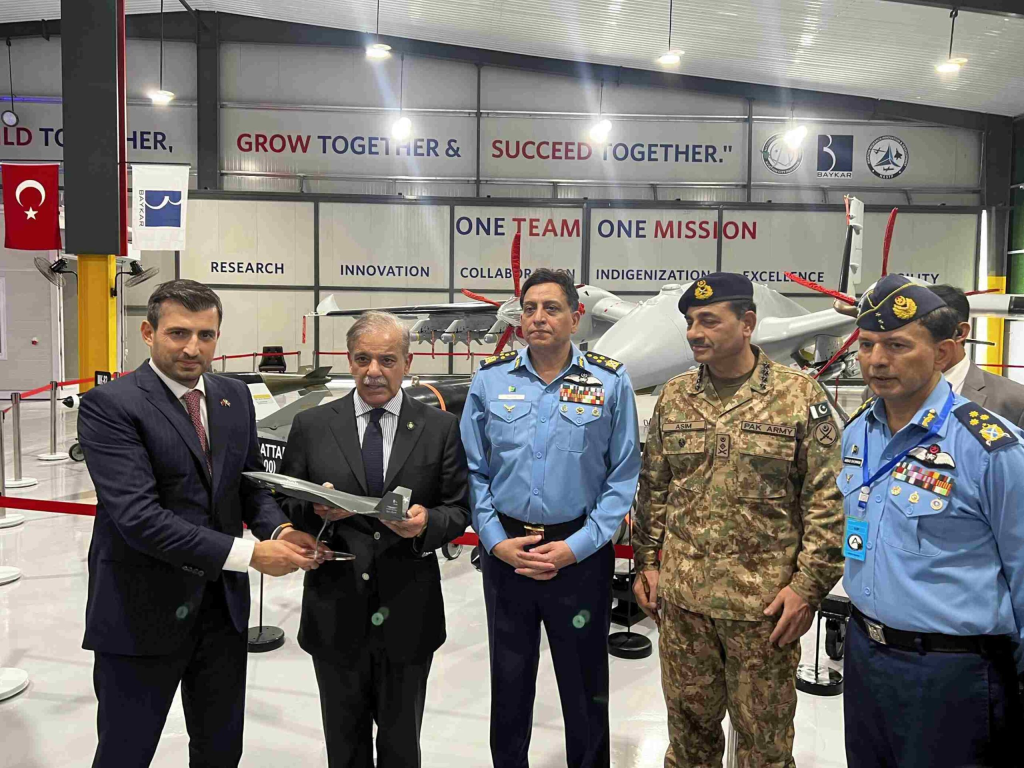
Pakistan is entering a new phase in unmanned aerial warfare as Baykar, Turkey’s premier UAV developer, engages in advanced exploratory talks to establish a dedicated drone manufacturing and integration facility in Pakistan. This move is catalyzed by Pakistan’s rapid progress through GIDS, NESCOM, and private-sector labs in UCAVs, electronic warfare pods, AI-enabled mission systems, and swarm-capable munitions.
Why Pakistan Matters for Baykar
Pakistan offers capabilities no other partner provides:
- Indigenous Flight-Control Computers: Fully operational, locally developed avionics for tactical and strategic drones.
- Data Links & SATCOM Modules: Secure, long-range communication and control for UAVs.
- Loitering Munitions in Serial Production: Proven production lines for kamikaze drones and micro-UAVs.
- Sensor & Payload Integration: Platforms like Kızılelma-class and TB3-class UCAVs can be adapted with Pakistani electronics and AI stacks.
For Baykar, this partnership allows adaptation of their jet-powered UCAVs and stealth airframes to a proven, fully-integrated local ecosystem. For Pakistan, it accelerates co-development in:
- Jet-powered UCAV platforms
- Composite airframes and stealth shaping
- AI-enabled swarm control architectures
- Naval UAV integration for future Pakistan Navy carriers
Strategic Implications
- Pakistan transitions from drone importer to regional manufacturing hub.
- Fusion of Turkish airframe expertise with Pakistani electronic and autonomous systems creates a platform that could outpace Indian or GCC capabilities before 2030.
- Indigenous AI-driven UAV ecosystem allows scalable deployment and potential export.
Current Indigenous Drone Capabilities
| Platform / System | Type | Features | Status |
|---|---|---|---|
| Loitering Munitions | Kamikaze Drone | AI-guided, anti-armor payloads, man-portable | Prototype / Limited Deployment |
| Micro-Kamikaze Drones | Quad / Hexacopter | FPV control, top-armor penetration, 1–3 kg payload | Prototype / Closed Trials |
| Bullet Drones | Micro UAV | High-speed, reconnaissance & attack roles | Testing Phase |
| Swarm-Capable Quadcopters | Tactical UAV | AI-enabled autonomous swarming, coordinated attack | Validation Phase |
| Long-Range Strike UCAVs | Jet-powered | 300–500 km range, composite airframes, multi-sensor integration | Early Development |
What This Means for Pakistan
- Mass Production Readiness: Once prototype cycles and testing are complete, Pakistan will begin large-scale production.
- Export Potential: Platforms could be marketed regionally to countries seeking low-cost, high-tech unmanned solutions.
- Operational Advantage: AI-first drones provide faster reaction times, coordinated swarm attacks, and reduced personnel exposure.
- Industrial Deepening: Boosts domestic aerospace manufacturing, software development, and high-tech job creation.
Bottom Line
For Baykar, Pakistan offers something no other partner does: a mature drone ecosystem with indigenous flight-control computers, data links, SATCOM modules, and loitering-munitions already in serial production, meaning Kızılelma-class and TB3-class platforms can be locally adapted with Pakistani sensors, weapons, and autonomy stacks rather than remaining off-the-shelf imports.
For Pakistan, the entry of Baykar would deepen co-development in jet-powered UCAVs, composite airframes, and stealth shaping, while giving the country access to Turkish AI-based swarm control architectures and naval UAV integration for future PN carriers.
If finalized, this would mark Pakistan’s shift from a drone importer to a regional manufacturing hub, fusing Turkish flight platforms with Pakistani electronic brains, a combination that will outpace anything India or the GCC fields before 2030.
Pakistan’s UAV ecosystem is quietly one of the most advanced in the region. Baykar’s entry will accelerate production, co-development, and deployment of next-generation UCAVs. This is not a pursuit of optics but a calculated strategic leap. By 2030, Pakistan could field drone capabilities that rival or surpass India, GCC nations, and many regional powers.