
By Zohaib Ahmed | 19th December 2025
Executive Summary
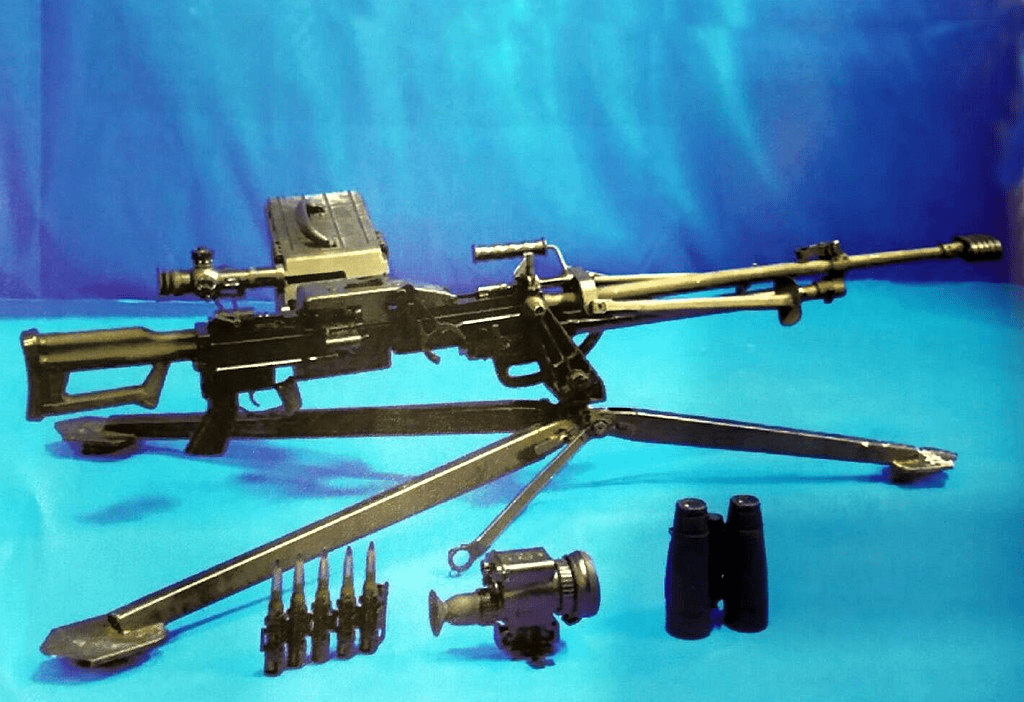
The Pakistan Army’s acquisition and operational deployment of the Chinese QJZ‑171 marks a qualitative leap in dismounted firepower for its infantry units. Far beyond a routine small‑arms replacement, this integration signifies an alignment with modern Western and PLA small‑arms mobility doctrines and reflects deep defense industrial trust between Islamabad and Beijing. The QJZ‑171’s ultralight architecture, extended effective range, and optics readiness fundamentally reshape Pakistan’s infantry and special operations fire support capabilities, particularly in high‑altitude theaters, counter‑terrorism environments, and rapid border interdiction missions.
1. Strategic Context
1.1. The Fire Support Gap in Infantry Doctrine
Traditionally, heavy machine guns (HMGs) like the Soviet DShK, American M2HB, and Russian NSV provide critical anti‑materiel and sustained suppression capability but at significant weight penalties. Pakistan’s conventional infantry formations have historically employed:
- Vehicle‑mounted HMGs (on armored personnel carriers, technicals) for mobility.
- Tripod‑emplaced HMG teams for static defense or deliberate fire missions.
- Support weapons that suffer from limited portability in rugged terrain.
In contrast, modern engagements demand rapidly deployable precision fire support capable of keeping pace with dismounted maneuver elements.
2. QJZ‑171: Technical and Operational Advantages
2.1. Ultralight Architecture
At approximately half the weight of traditional 12.7 mm heavy machine guns, the QJZ‑171 represents a decisive reduction in the weight‑to‑effect ratio. The benefits include:
- Enhanced infantry mobility: Teams can reposition without vehicle dependence.
- Rapid reaction capability: Quick repositioning under fire or on fluid battlefields.
- Reduced logistic footprint: Lighter spares, transport, and carriage loads.
This way, Pakistan’s infantry gains a fire support system that mirrors the design philosophy of modern Western squad‑level support weapons while retaining the terminal effects of .50‑caliber ballistics.
2.2. Optics and Fire Control Integration
One of the QJZ‑171’s defining strengths is its native compatibility with modern optical systems and ballistic computing sights. This dramatically improves:
- First‑round hit probability: Precision engagement beyond 1,200 m, critical in open‑terrain and high‑altitude zones.
- Target identification and engagement speed: Thermal and low‑light optics expand operational windows.
- Fire discipline and ammunition economy: Enhanced ranging tools reduce wasted fire.
Optics integration transitions the QJZ‑171 from a pure volume suppressor to a precision‑capable, semi‑direct‑fire asset.
3. Doctrinal Shifts Enabled
3.1. High–Altitude and Rugged Terrain Operations
In environments like the Siachen glacier, Karakoram corridors, or Rakhshan Frontier, traditional HMGs:
- Are cumbersome to deploy.
- Rely on vehicles that lack cross‑country mobility.
- Demand larger crews for sustained fires.
The ultralight QJZ‑171 changes that calculus by enabling small teams to establish effective stand‑off fires with minimal setup time, directly supporting maneuver elements.
3.2. Urban Counter‑Terrorism and Border Interdiction
Urban CT operations prioritize:
- Quick target acquisition
- Selective engagement
- Collateral damage mitigation
Here, optics‑assisted 12.7 mm fire provides Pakistan’s forces the ability to:
- Neutralize fortified positions
- Disable lightly armored threats
- Provide overwatch with precision suppression
Without the mobility penalties of legacy HMGs.
4. Strategic Significance of First Foreign Operator Status
Pakistan’s position as the first foreign operator of a non‑export downgraded QJZ‑171 variant has multiple implications:
- PLA Trust & Technology Transfer: Islamabad gains access to China’s latest generation, not surplus or legacy systems.
- Defense Industrial Partnership: Opens pathways for co‑development, localized support infrastructure, and future joint research.
- Competitive Edge vs. Regional Rivals: While India continues to field heavy machine guns rooted in older designs (NSV, M2 variants), Pakistan’s infantry benefits from a modern, mobility‑centric approach.
5. Comparative Technical Analysis
The following table benchmarks the QJZ‑171 against its closest functional peers in terms of weight, mobility, effective range, and optics integration readiness.
| Feature / System | QJZ‑171 (China) | M2HB “Ma Deuce” (USA) | NSV (Russia) | DShK (Soviet) | QJZ‑89 (China) |
| Caliber | 12.7×108 mm | .50 BMG (12.7×99 mm) | 12.7×108 mm | 12.7×108 mm | 12.7×108 mm |
| Weight (Gun Only) | ~25–27 kg (ultralight) | ~38 kg | ~32 kg | ~34 kg | ~35 kg |
| Effective Range | 2,000 m (optics assisted) | ~1,800 m | ~1,800 m | ~1,800 m | ~1,800 m |
| Portability | High (Disassembled / Crew‑portable) | Low (tripod/vehicle) | Moderate | Moderate | Moderate |
| Quick‑Change Barrel | ✔ | ✘ | ✘ | ✘ | ✘ |
| Recoil Mitigation | Advanced buffer system | Basic recoil impulse | Standard | Standard | Standard |
| Optics & Fire Control Ready | Native / Modular | Aftermarket | Aftermarket | Aftermarket | Aftermarket |
| Primary Role | Anti‑materiel + precision fire support | Sustained HMG & vehicle mount | Sustained HMG | General fire support | General fire support |
| Deployment Concept | Dismounted squads & vehicles | Vehicle & fixed emplacements | Vehicle & fixed | Vehicle & fixed | Vehicle & fixed |
6. Conclusion: Operational and Strategic Value
The QJZ‑171’s induction is not a marginal upgrade; it’s a doctrine‑reshaping capability:
- It bridges the gap between traditional heavy machine guns and next‑generation fire support weapons.
- It institutionalizes high‑mobility firepower across Pakistan’s varied theaters of operation.
- It strengthens the PLA‑PAK strategic axis at a time of intense regional competition.
- It gives Pakistan a capability edge in engagements where dismounted precision and tactical mobility are decisive.
For Pakistan’s defense planners, the QJZ‑171 is more than a weapon, it’s a force multiplier enabling a leaner, more responsive, and more lethal infantry paradigm.