
Prepared by Zohaib Ahmed
Founder, The New World Disorder Think Tank
September 12, 2025
Executive Summary
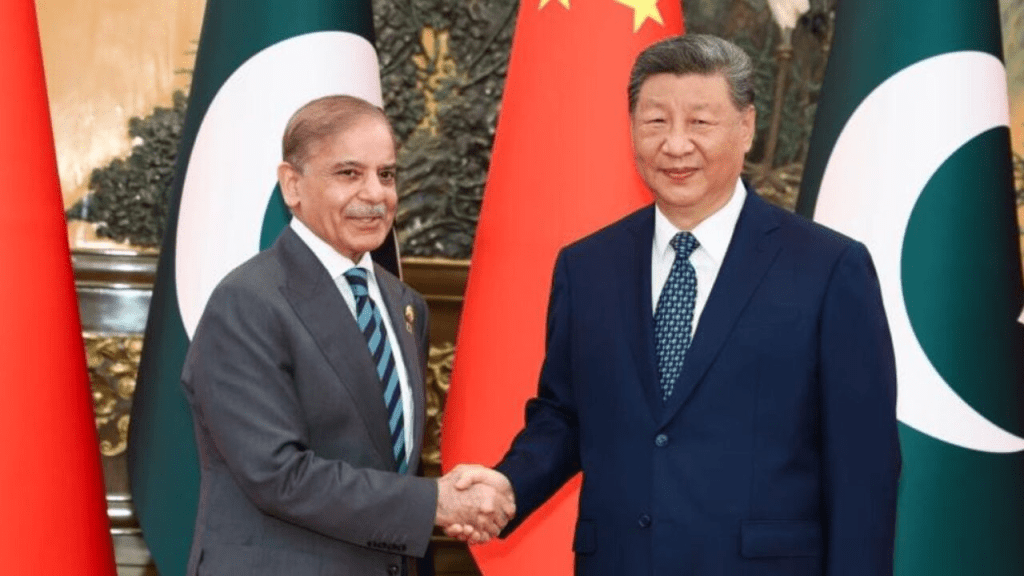
On September 9, 2025, Pakistan and China signed the Joint Action Plan 2025–2029, a comprehensive roadmap that expands cooperation across politics, security, economics, infrastructure, technology, and culture.
This white paper argues that the Plan is not a routine policy framework but a geostrategic manuscript. It marks Pakistan’s pivot toward China as its principal guarantor of stability, growth, and deterrence, while providing Beijing with an uninterrupted western flank for its Belt and Road Initiative (BRI).
In the words of Henry Kissinger: “Every international order must sooner or later face the impact of the rise of new powers.” This Action Plan situates Pakistan and China as co-authors of the new Asian order, filling the vacuum left by a fragmented West.
I. Historical Context: A “Higher than Himalayas” Bond
Pakistan was the first Muslim country to recognize the People’s Republic of China in 1950. Over the decades, the partnership has evolved through several defining milestones:
- 1963 – Pakistan and China signed a boundary agreement, solidifying trust.
- 1971 – Pakistan acted as the bridge for Kissinger’s secret trip to Beijing, opening US–China relations.
- 1980s – Defence cooperation deepened, with joint fighter projects (JF-17 Thunder’s origins trace back here).
- 2015 – The launch of CPEC (China–Pakistan Economic Corridor), valued at $62 billion, positioning Pakistan as the flagship corridor of the BRI.
- 2020s – Amid US “Indo-Pacific” containment strategy, China leaned more on Pakistan for both Indian counterbalance and Arabian Sea access.
Thus, the 2025–2029 Action Plan is the institutional continuation of a relationship that has historically blended hard security with economic statecraft.
II. Geopolitical Context in 2025
The Action Plan emerges in a moment of unprecedented global flux:
- Middle East War Expansion – With Israel’s war spilling across the region, Gulf monarchies are reconsidering Western protection.
- Europe’s Uncertainty – Poland invoked NATO Article 4 in 2025 amid Russian escalations, showing European security fractures.
- US Retrenchment – Washington’s “pivot to Asia” stretches thin against multiple crises, reducing its footprint in South Asia.
- India is no longer the confident Quad pillar it once imagined itself to be. After losing the 2025 border conflict to Pakistan — a war in which even Donald Trump bluntly stated that “India lost six planes” — New Delhi has been exposed as a power with more bravado than capacity. Its policy of overhedging between Washington, Moscow, and Beijing has left it distrusted by all.
- United States sees Pakistan’s tilt toward China with concern, but Washington’s credibility in South Asia has collapsed. Its sanctions threats carry weight but lack allies to enforce them.
- Middle East interprets Pakistan’s embrace of China as a model for resisting Western over-dependence. Gulf states are increasingly hedging toward the Beijing–Islamabad axis.
- Russia cautiously welcomes the plan, seeing Pakistan as a bridge into South Asia, but remains wary of China’s dominance.
- Optically, the Joint Action Plan underscores the new reality:
- Pakistan and China are ascending as co-architects of a multipolar Asia.
- India, once projected as the counterweight, is diminished, penalized, and strategically confused.
- The Quad itself looks hollow without India’s credibility, and Washington is recalibrating accordingly.
- Afghanistan – The Taliban’s governance fragility fuels cross-border militancy, threatening CPEC projects.
Against this backdrop, Pakistan–China cooperation is framed not as choice, but necessity.
III. The Joint Action Plan: Key Pillars and Strategic Value
The Geopolitical Backdrop: A Century’s Storm
We live in an age where the “global transformations unseen in a century” — a phrase repeated in Beijing’s lexicon — are not mere rhetoric but lived reality. The West is consumed by internal divisions, the Middle East teeters on the brink of a regional conflagration, and Russia’s confrontation with NATO has destabilized Europe’s old equilibrium.
For Pakistan, hemmed in by economic fragility, Indian assertiveness, and a volatile Afghan frontier, China’s embrace is not simply welcome; it is existential. For Beijing, Pakistan remains the western flank of its Belt and Road vision — a corridor that connects the Pacific economy to the Arabian Sea, bypassing the chokepoints dominated by American fleets.
Thus, the 2025–2029 Action Plan is not an isolated pact. It is the Asian answer to the crisis of global governance — a compact of resilience, trust, and shared ambition.
Key Pillars of the Joint Action Plan
1. Political Synchronization: Toward a Shared Strategic Vocabulary
Political alignment is framed not just in terms of meetings and anniversaries. It is an attempt to institutionalize mutual strategic trust at a time when Pakistan’s Western partnerships are transactional and fragile. The 75th anniversary of diplomatic relations in 2026 will not be a ceremonial exercise but a statement of continuity: that Islamabad and Beijing remain unshaken by the winds of regime change or ideological shifts.
2. Economic and Infrastructure Convergence
Here lies the beating heart of the plan. The alignment of the China–Pakistan Economic Corridor (CPEC) with Pakistan’s URAAN Program is not just about railways and ports — it is about knitting Pakistan’s future into China’s rise. The ML-1 railway, the Karakoram Highway expansion, and the elevation of Gwadar Port into a regional hub form a triad of connectivity that could recast Pakistan from aid-recipient to Asian gateway economy.
This is geoeconomics as statecraft — a blend of infrastructure, industrial parks, and digital corridors designed not merely to generate trade, but to anchor loyalty.
3. Defence and Security Convergence
The plan elevates defence cooperation beyond routine military drills. Counter-terrorism, military technology transfers, and joint training are framed as strategic guarantees in an era where Pakistan faces both insurgent threats at home and a hostile India abroad.
For China, ensuring the security of its investments and personnel in Pakistan is paramount; for Pakistan, Beijing’s deterrence partnership is a shield against both isolation and encirclement. Together, they project an image of dual nuclear-armed guardians of regional equilibrium.
4. Science, Technology, and Space: The Future Axis
What makes this Action Plan visionary is its recognition that power in the 21st century is technological. Joint laboratories, digital economy corridors, and even cooperation in lunar and deep-space exploration show that this is not a backward-looking alliance. It is future-oriented, with Pakistan positioned to rise from peripheral actor to space-faring partner.
5. People-to-People and Cultural Diplomacy
The 3,000 scholarships offered by China are more than educational opportunities; they are civilizational investments. Pakistan’s youth, trained in Beijing’s academies and labs, will become the intellectual scaffolding of this partnership. Media collaborations, cultural exchanges, and think-tank dialogues are designed to embed the alliance in the imagination of future generations.
6. Multilateral Synchronization
On Palestine, Kashmir, and Afghanistan, the Action Plan codifies a shared diplomatic stance that contrasts sharply with Western double standards. Within the UN, SCO, and other forums, the Pakistan–China axis positions itself as a moral counterweight to Western interventionism and a driver of a multipolar order.
Why This Matters: Beyond Bilateralism
To reduce this Action Plan to the scale of roads, ports, or labs is to miss its deeper significance. It is, at its core, an attempt to answer the timeless question: how do middle powers survive when empires decline?
For Pakistan, this plan is an anchor against the whirlpool of IMF dependency and Indian hegemony. For China, it is a geopolitical insurance policy — a trusted ally at the edge of the Indian Ocean, ensuring the continuity of its Belt and Road.
The symbolic value is as critical as the substance: in a time when alliances are fraying and Western guarantees are unreliable, Pakistan and China are writing their own security covenant.
1. Political Synchronization
- Institutionalized high-level exchanges (e.g., Pakistan’s 75th anniversary of ties in 2026).
- Strategic Value: Signals continuity regardless of regime change in Pakistan, countering its history of policy reversals.
2. Economic & Infrastructure Convergence
- CPEC 2.0 aligned with Pakistan’s URAAN program.
- Flagship projects: ML-1 railway ($9.8B), Karakoram Highway expansion, Gwadar Port modernization.
- Stats: CPEC investments already created 236,000 jobs in Pakistan since 2015 (source: Pakistan Planning Ministry).
- Strategic Value: Transforms Pakistan into regional connectivity hub while giving China direct Arabian Sea access.
3. Defence & Security Cooperation
- Joint counter-terrorism, technology transfers, and naval modernization.
- Example: Pakistan Navy’s Type 054A/P frigates (delivered from China, 2022–2024) already boosting maritime reach.
- Strategic Value: Provides China with security for its investments; gives Pakistan deterrence against India.
4. Science, Technology & Space
- Joint labs, AI cooperation, and satellite/space exploration projects.
- Example: Pakistan’s PRSS-1 satellite (2018) was launched from China. This plan extends such collaboration.
- Strategic Value: Elevates Pakistan from technology consumer to partner in frontier domains.
5. People-to-People Diplomacy
- 3,000 Chinese scholarships for Pakistanis by 2029.
- Expansion of cultural exchanges, think tank dialogues, media partnerships.
- Strategic Value: Secures long-term societal buy-in for Sino-Pak alignment.
6. Multilateral Coordination
- Shared positions on Palestine, Kashmir, Afghanistan.
- Strategic Value: Pakistan–China axis projects moral legitimacy against Western selective diplomacy.
IV. Strategic Optics: Global and Regional Perceptions
- India sees this as an encirclement strategy, deepening its paranoia of a “two-front challenge.”
- US views the plan as Pakistan’s drift away from Washington, potentially triggering sanctions risks under CAATSA.
- Middle East sees Pakistan as China’s South Asian anchor, possibly reshaping Gulf investment patterns.
- Russia cautiously welcomes the move as complementary to its Eurasian strategy.
Symbolically, the plan communicates that Pakistan has chosen its camp in the emerging multipolar order.
V. Risks & Challenges
- Debt Dependence – Pakistan’s external debt ($130B, IMF 2025 data) may deepen with more Chinese loans.
- Security Threats – Baloch insurgent attacks on Chinese nationals continue to endanger CPEC projects.
- Domestic Political Volatility – Regime changes in Islamabad risk implementation delays.
- Western Backlash – Sanctions or diplomatic isolation could arise if Pakistan leans too far from US/IMF orbit.
VI. Strategic Value
For Pakistan:
- Economic survival through CPEC 2.0.
- Military modernization via Chinese transfers.
- Diplomatic shield against Indian aggression and Western pressure.
For China:
- Access to Arabian Sea and energy security bypassing Malacca Strait.
- Containment of India within South Asia.
- Protection of BRI’s flagship corridor in an otherwise hostile global climate.
VII. Conclusion & Policy Recommendations
The Joint Action Plan 2025–2029 is not merely bilateral cooperation — it is a civilizational alignment designed to withstand global upheavals.
For Pakistan, the opportunity lies in efficient execution:
- Strengthen internal security to protect Chinese assets.
- Diversify financing models to avoid debt traps.
- Build national consensus around the China partnership beyond political cycles.
For China, the imperative is to invest in Pakistan’s stability, ensuring that the corridor is not only about infrastructure, but about human capital and resilience.
If implemented faithfully, this plan could recast Pakistan from a “perennial frontline state” into a strategic gateway of Asia’s future — and cement China’s rise as the geopolitical anchor of Eurasia.