
By Zohaib Ahmed | 5th March 2026
On Day 5 of the Iran–Israel war, the first clear geopolitical truth is already visible: this conflict is not merely another Middle Eastern flare‑up. It is the moment when the assumptions that defined U.S. global primacy in the post‑Cold War era begin to unravel. The idea of a decisive American military hegemony capable of managing multiple theaters of conflict simultaneously, often referred to as the American Century, has collided with structural limits that this war has mercilessly exposed.
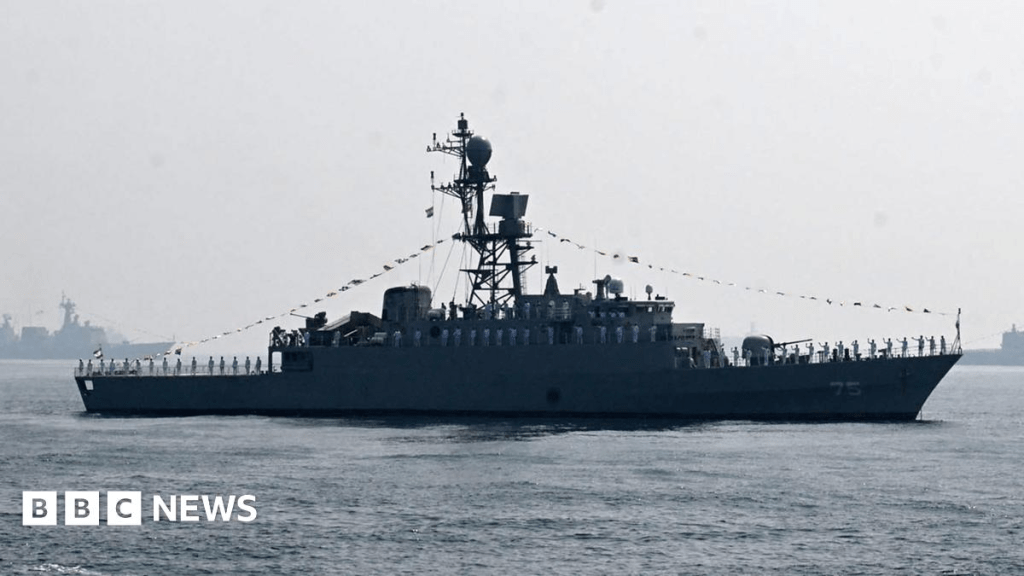
The sinking of the Iranian frigate IRIS Dena by a U.S. fast-attack submarine, the first Mark 48 torpedo kill in combat since the Falklands, was supposed to be a signal of American dominance. Instead, it has become a monument to a looming strategic bankruptcy. From the boardrooms of Riyadh to the GHQ in Rawalpindi, the consensus among “narrative architects” is shifting: the U.S. is winning the battles but losing the architecture of the 21st century.
US-ISRAELI ATTACK ON IRAN, IRANIAN COUNTERSTRIKES: LATEST UPDATES
Trump’s promised ‘2-3 day’ campaign in Iran could take ‘4-5 weeks’, he now says, moving his timetable amid fierce and unprecedented Iranian resistance.
Here’s the latest.
- Tucker Carlson reported on possible Mossad false flag attacks against Gulf countries, and characterized the whole war as an Israeli plot to destroy the kingdoms
- Netanyahu appeared on US TV to claim Trump started planning the war before even returning to office. The IRGC said it has intel on his whereabouts.
- Ex-CIA analyst Larry Johnson detailed the folly of murdering Khamenei, who staunchly opposed Iran’s nuclearization
- Air power expert Robert Pape declared the US and Israel’s aerial blitzkrieg has failed
- High chances of how aggression on Iran could trigger a revolution in Bahrain, and the bitter lesson other Gulf powers got after America abandoned them
- A top IRGC commander confirmed that the Hormuz Strait is closed and any ships trying to pass will be “set on fire”. However Chinese and KSA related ships are allowed to pass.
- Major shippers shut out of the Gulf cancelled shipping via the Red Sea, fearing Houthis. That’s 2 of 5 major shipping arteries closed thanks to Operation Epstein Fury
- Israel launched full-scale aggression against Lebanon, threatening to kill everyone suspected of supporting Hezbollah. The militia is retaliating
- Satellite footage showed the dramatic extent of damage to US bases targeted by Iran
- Iranian media announced the launch of new super-heavy missiles, while an Iraqi resistance group unveiled a long-range weapon that can pound targets as far as Israel
- Trump downplayed reports of ammo shortages, claiming the US had enough to fight “forever.” Rubio admitted Israel effectively trapped the US into attacking. Thomas Massie warned Americans will pay the price for letting Israel drag the US into war
- Iran’s top diplomat stressed Iran entered negotiations with the US in good faith to “prove to the whole world” that Washington, not Tehran, is the one seeking escalation.
The Myth of the Five-Day War
In the initial planning stages inside Washington and Tel Aviv, the conflict was envisioned as a “surgical decapitation.” The timeline discussed privately in policy circles suggested a campaign lasting roughly five days. The assumption was simple: overwhelming technological superiority would produce rapid political collapse.
By Day 5, that assumption lies in ruins. Analysts from the Middle East Institute and the Atlantic Council note that the war has highlighted the profound limits of conventional military power against a state that has spent forty years preparing for this exact moment. Iran’s “War System”, a subterranean, decentralized, and highly redundant network, has absorbed the initial coalition shock and begun a terrifying process of adaptation.
War Statistics & Economic Indicators
| Metric | Value |
| Conflict Duration | Currently modeled at 64 days (approaching 100-day threshold) |
| U.S. Operational Cost | ~$1B/day |
| Munition Depletion | 40% interceptor capacity remaining |
| Iranian Naval Losses | 5/40 missile-capable frigates/corvettes |
| Coalition Strike Data | 1,200 sorties; 400 mobile launchers targeted (30% verified destruction) |
| Energy Impact | Brent crude $83–$105/barrel; 70% air traffic reduction |
These figures reflect the enormous economic drag of limited tactical success, highlighting the strategic misalignment between short-term battlefield victories and long-term geopolitical objectives.
From Shock and Awe Miscalculations to Strategic Fatigue
U.S. and Israeli planners envisioned a short, tactical campaign aimed at crushing Iran’s missile, nuclear, and command infrastructure. But the realities of the campaign have already belied those assumptions. Operational setbacks and unexpected Iranian resilience are forcing strategic recalibrations: what was meant to last days has entered a much more uncertain trajectory.
Iran’s decentralized military posture, integrating ballistic missiles, drones, underground launch networks, and proxy forces, has mitigated the early effectiveness of U.S./Israeli air power. The coalition’s claims of degrading Iranian capabilities are increasingly contested, and real battlefield effects are slower and more costly than anticipated.
The Deadlock: Operational, Economic, and Strategic Pressures
By Day 5, coalition forces face mounting operational and financial stress:
- U.S. operational cost: $1B/day.
- Interceptor depletion: THAAD, SM-3, and Iron Dome ~40% capacity remaining.
- Energy markets: Brent crude $83/barrel, spikes to $105; LNG freight +40%, 70% reduction in air traffic over Gulf.
- Iranian Naval Losses: 5 missile-capable frigates/corvettes lost of 40.
- Coalition sorties: 1,200 flown; 400 mobile launchers targeted, 30% verified destruction.
Analysts argue that kinetic gains alone are insufficient. The coalition’s success is tempered by the economic consequences of energy disruption and the sustainability limits of munitions and personnel.
This early mismatch between expectations and outcomes reveals a deeper structural issue: the limits of conventional military power against asymmetric systems with deep strategic depth. The United States, historically able to project force rapidly and decisively, now faces an adversary with both the will and infrastructure to endure and adapt.
The Oil Chessboard: Economic Warfare as Strategic Instrument
While military clashes dominate headlines, the realshock from this war has been economic, especially in global energy markets.
The effective closure of the Strait of Hormuz, a vital chokepoint handling a large portion of global energy exports, has sent shockwaves through global markets. Analysts estimate that disruptions in Persian Gulf oil and LNG shipments have cost global markets trillions in equity value within mere days of escalation.
This is not a peripheral issue. Energy security now sits at the heart of geopolitical strategy:
- Asian economies, particularly energy‑intensive ones like China, India, Japan, and South Korea, face immediate supply vulnerabilities.
- GCC states, whose national budgets depend heavily on oil and gas revenue, are confronting sharp export stagnation, potentially destabilizing domestic political and economic structures.
- Global shipping patterns are being redrawn, with rerouted oil carriers traveling via the Cape of Good Hope, adding time and cost to the world’s supply chain.
These energy shocks are not temporary; they carry longer‑term systemic risks to inflation, supply chains, and geopolitical leverage, reinforcing why modern conflict is as much about economics as about missiles.
The Attrition of the High-Tech Shield
The sheer scale of hardware loss in just 120 hours of combat is staggering. Pentagon and CENTCOM reports indicate that while 20 Iranian Navy and IRGC vessels have been neutralized, including the drone carrier Shahid Bagheri and the forward-base ship IRINS Makran, the cost to the coalition is mounting in ways that cannot be easily replenished.
The U.S. has confirmed the loss of four F-15E Strike Eagles: one downed over the heavy thermal defenses of Tehran and three lost in a chaotic “friendly fire” incident over Kuwaiti airspace. More critical than the airframes, however, is the depletion of the “Digital Eye.”
The destruction of the AN/FPS-132 Early Warning Radar at Al Udeid Air Base in Qatar is being whispered about in Washington as a $1.1 billion catastrophe. This strike, executed by a maneuverable Iranian ballistic missile, has effectively blinded U.S. long-range detection in the northern Gulf. When coupled with the claimed destruction of a THAAD AN/TPY-2 radar in the UAE, the coalition’s “missile shield” is becoming increasingly porous.
The Decapitation Paradox
The coalition’s “Round 1” achieved what many thought impossible: the elimination of the top tier of the Iranian state.
- Supreme Leader Sayyid Ali Khamenei: Confirmed killed in a precision bunker-buster strike on his Tehran compound.
- Mohammad Bagheri: The Chief of Staff of the Armed Forces, neutralized alongside the leadership of the IRGC.
- Abdolrahim Mousavi: Commander-in-Chief of the Army.
In any other state, this would signal surrender. In Iran, it has triggered a “Pre-Programmed Response.” The IRGC’s decentralized command structure has shifted power to regional commanders who are now operating under standing orders to “inflict maximum economic pain.” This was evidenced by the March 3rd strike on Netanyahu’s office in Tel Aviv and the first recorded use of ballistic cluster munitions over Israeli civilian centers.
Strategic Overstretch: What Modern Conflict Reveals
This isn’t a failure of tactics. It’s a failure of strategic modeling.
U.S. military interventions since the Gulf War were predicated on several assumptions that this conflict has already upended:
- Air Supremacy Equals Strategic Success. The Iran war has shown that controlling the skies doesn’t guarantee control of outcomes when adversaries can disperse, decentralize, and strike asymmetrically.
- Economic Collateral Is Manageable. Disruptions in the Strait of Hormuz have already removed a significant portion of global energy flows, with shipping virtually halted and prices spiking, a strategic shockwave far beyond what planners envisioned.
- Global Attention Is Elastic. The U.S. can no longer manage a large‑scale Middle Eastern war while sustaining deterrence or competition in other theaters, especially vis‑à‑vis China.
This last point strikes at the very heart of what once defined the American Century: the capacity to simultaneously shape outcomes across multiple regions. Today, the United States faces a stark choice between prioritizing the Iran conflict or maintaining its deterrent posture in the Indo‑Pacific, and both priorities cannot be reliably upheld at once.
The Great Exhaustion Defined
What strategists now call The Great Exhaustion is not just battlefield attrition, it’s the depletion of strategic flexibility. It manifests in several ways:
- Interceptor and munitions depletion from sustained defense operations raises real questions about sustainment over months rather than weeks.
- Domestic political fatigue as U.S. public support for wars abroad has plummeted over the past decades, now evidenced by historically low approval for the current conflict.
- Economic shock transmission, with energy markets destabilized by closures and attacks that ripple through global supply chains.
- Diplomatic fragmentation, as regional partners such as Gulf states hedge or restrict cooperation based on their own threat calculus.
In effect, the war has become a mirror: it reveals the limits of U.S. soft power and hard power simultaneously.
The Strategic Plateaus: Hard Power Meets Hard Reality
For two decades, U.S. forces fought with relative freedom: slow ground campaigns in Iraq and Afghanistan, airstrikes against ISIS, and sanctions against Iran without kinetic escalation. This new war has exposed a stark truth: when the United States commits decisive military force against a peer‑competent regional adversary, strategic costs escalate faster than tactical successes accumulate.
Iran’s ability to sustain missile and drone launches even under intense pressure, and to extend its retaliation across the Gulf, has turned the conflict into something more than air operations against surface targets. It is now a test of endurance across multiple arenas: economic, military, political, and informational.
Strategic observers now talk about “the elasticity of conflict duration”, the notion that protracted battles induce political and economic repercussions far heavier than initial plans assume. The Great Exhaustion is a symptom of the U.S. having stretched its elastic limit.
We are witnessing the “Riyadh Mandate”, a sophisticated orchestration where Saudi Arabia has transitioned from a participant to the silent director of regional escalation. As the Iran-Israel war enters its fourth and most fatiguing round, the “destined sequence” of events is moving toward a conclusion where there are no outright winners, only a total realignment of the global order.
The Strategic Rapprochement: Riyadh’s Hidden Hand
The pattern of Iranian retaliation since the start of March 2026 provides undeniable evidence of a back-channel understanding between Riyadh and Tehran. In the “True Promise 4” campaign, Iranian strikes have disproportionately targeted the UAE and Bahrain, the core of the Abraham Accords, while Saudi Arabia’s crown jewels, such as the Ras Tanura refinery, remain largely untouched.
This is not a failure of Iranian targeting; it is strategic discipline enforced by Riyadh. By directing Iranian kinetic energy toward states that attempted to hedge with Israel, Saudi Arabia is enforcing a brutal regional lesson: autonomy or hedging toward Tel Aviv invites catastrophic risk. The UAE, once the vanguard of a new Arab-Israeli security architecture, is now undergoing a “strategic reckoning,” forced to consider a pivot back toward the emerging Saudi-Turkish-Pakistan (STP) axis.
The Sunni Axis: A Triad of Capability
While the U.S. remains trapped in the tactical weeds of “Operation Epic Fury,” a new power center has consolidated. The STP Axis, Saudi Arabia, Türkiye, and Pakistan, is no longer a theoretical construct. It is an operational reality capable of managing escalation independent of Washington.
- Saudi Arabia: The Financier and Political Director.
- Türkiye: The Technological and Levant Architect.
- Pakistan: The Strategic Depth and Kinetic Guarantor.
This axis is currently policing both ends of the spectrum. The recent arrests of Mossad operatives in Qatar and Saudi Arabia, aimed at provoking an escalation that would favor Israel, demonstrate that Riyadh has achieved operational autonomy. Saudi intelligence is now policing Israeli covert operations with the same vigor it uses to monitor Iranian proxies.
Pakistan: The Kinetic Anchor and “Sunni Shield”
To understand the future, one must look at the role of Pakistan beyond the “basic” narratives of domestic sectarianism. In the current conflict, Pakistan has moved into a role of Advanced Strategic Integration.
- The Mutual Defence Invocation: By formally activating the 2025 Mutual Defence Agreement with Riyadh, Pakistan has provided the “Sunni Axis” with a nuclear-backed security umbrella. This has effectively neutralized Iran’s “escalation dominance” over the Gulf.
- The “Sunni Shield” Logistics: Pakistani SSG and technical cadres are currently managing the “deep-tier” defense of Saudi Arabia’s Western and Eastern provinces. This allows Riyadh to maintain its “strategic calm” while the U.S. and Israel burn through their interceptor stockpiles.
- Intelligence Counter-Surveillance: Pakistani signals intelligence (SIGINT) is playing a critical role in decoding the “Gray Zone” operations of both the IRGC and Israel’s clandestine units. Islamabad is not merely a participant; it is the intelligence filter through which Riyadh views the battlefield.
The Great Exhaustion: No Outright Winners
As Round 4 of the war drags on, the primary outcome is “The Great Exhaustion.” Both Israel and Iran are severely fatigued. Israel is facing a “strategic losing streak,” with its influence in Sudan rolled back, its freedom of action in Syria limited, and the “David Corridor”, once its logistics lifeline, compromised by STP oversight.
The U.S., meanwhile, has fallen into an Israeli trap. By prioritizing Israeli survival over Gulf stability, Washington has lost its status as the neutral guarantor. With a daily war cost of $1 billion and interceptor stocks at 40%, the U.S. is reaching a point of Strategic Cardiac Arrest.
Pakistan’s “Correlation Crisis”
The most volatile variable in this sequence is Pakistan. Long the “strategic bridge” between the Saudi-led bloc and its neighbor Iran, Islamabad is now standing on multiple tightropes in a hurricane.
The Saudi Pact
On March 3, 2026, Deputy Prime Minister and Foreign Minister Ishaq Dar disclosed that Pakistan’s diplomatic intervention helped deter even heavier Iranian strikes on Saudi Arabia. Crucially, Dar explicitly invoked the Strategic Mutual Defence Agreement signed with Riyadh in September 2025. This “NATO-style” pact stipulates that an act of aggression against one is an attack on both.
While Dar claims this pact helped “deter” strikes on the Ras Tanura refinery, the reality is more complex. Iran has reportedly sought assurances that Saudi soil will not be used for U.S. or Israeli launches. If the U.S. pushes for ground operations, as Secretary of Defense Pete Hegseth has suggested, Pakistan faces an existential choice.
The Internal Friction
For Pakistan, a move to deploy kinetic assets against Iran is fraught with domestic risk. With a 40 million-strong Shia population that often aligns with Tehran on religious grounds, Islamabad risks internal unrest. Furthermore, with the Taliban in Afghanistan engaging in cross-border skirmishes, Pakistan cannot afford a “Two-Front War.” As a result, Islamabad is playing the role of “strategic liquidator,” attempting to manage the fallout of an Iranian collapse while preventing a total regional meltdown.
The Energy Front: A Calculated Siege
The most significant development in the war has occurred not on the battlefield but within the global energy system. Tehran’s strategy appears to be an incremental, “step-by-step” escalation designed to impose maximum economic pain on the West.
| Metric | Pre-War (Jan 2026) | Current (March 2026) |
| Brent Crude Price | $61 / barrel | $83 / barrel |
| Strait of Hormuz Flow | 20.5 million bpd | ~4 million bpd (Partial Closure) |
| LNG Freight Rates | Standard | +40% Increase |
| U.S. War Cost | $0 | $1 Billion / Day |
Iran has demonstrated its ability to strike beyond the Gulf, targeting the Baku-Tbilisi-Ceyhan (BTC) pipeline, which carries 30% of Israel’s oil. By shifting the war from “missile exchanges” to “infrastructure attrition,” Iran is leveraging an asymmetric advantage: their economy has already absorbed the shock of forty years of sanctions. The Western economies, by contrast, are seeing their lifelines bleed out in real-time.
The Patient Powers: Türkiye and China
While the U.S. burns $1 billion a day in the Levant and the Gulf, the “Patient Powers” are recalibrating the world map.
Türkiye and the Levant Vacuum Ankara is observing the “destined sequence” with predatory precision. As Hezbollah and the IRGC-QF units are degraded by Israeli strikes, a power vacuum is opening in Northern Syria and Iraq. Türkiye is already moving mechanized units toward the border, preparing to establish a “Security Corridor” that would effectively end the 100-year-old Sykes-Picot borders. To the Turkish strategist, this isn’t a war; it’s a “Correction.”
Türkiye is the most patient player in this sequence. Ankara is waiting for the precise moment when U.S. exhaustion reaches its zenith. When the U.S. finally lacks the appetite for an open conflict, Türkiye will make its move in the Levant.
With the “Axis of Resistance” (Hezbollah and Quds Force) decapitated and fatigued, Türkiye is poised to move mechanized divisions into Northern Syria and Iraq to “stabilize” the heartland. This will not be a temporary occupation; it will be the permanent establishment of a Turkish-centric order in the Levant, effectively ending the Sykes-Picot era.
China’s “Silent Blockade” In Beijing, the calculation is even colder. Every U.S. carrier strike group pulled into the Indian Ocean to protect the “Logistics Bridge” to India is one less hurdle in the South China Sea. China is currently conducting a “Silent Blockade” of Taiwan, not with ships, but with “administrative zones” and naval drills that the U.S., exhausted by the Iran conflict, lacks the appetite to challenge.
Türkiye: Between NATO Commitment and Regional Pivot
Turkey’s strategic posture is also undergoing serious reassessment.
As a NATO member, Ankara is obliged to consult with alliance partners when its airspace is violated or nation‑state aggression occurs, a risk underscored by recent reports that Iranian missiles were intercepted by NATO systems over Turkish territory.
At the same time, Turkey is acutely sensitive to domestic political pressure and regional economic fallout. Ankara’s economy remains fragile, with an urgent need to stabilize trade and growth. Conflict that disrupts energy flows and regional commerce directly hits Turkish interests.
As a result, Turkey finds itself balancing between NATO obligations, its historic ties to Iran and Gulf states, and Ankara’s own ambitions to play a leadership role in regional security.
Should the U.S. become preoccupied elsewhere, and should China make a bold diplomatic or economic move in the region, Turkey could emerge as a pivotal regional security broker, or conversely, a flashpoint if escalation outpaces diplomatic containment.
GCC States: The Erosion of Old Security Architectures
The Gulf Cooperation Council (GCC) states find themselves exposed by this new strategic dynamic.
Once anchored firmly within the U.S. security umbrella, GCC capitals are now diversifying their defense and diplomatic ties. The Saudi–Pakistan defense pact is emblematic of this multi‑aligned strategy: Riyadh is seeking partnerships beyond Washington while retaining U.S. support.
However, the current war is imposing immediate economic strain:
- Declining output due to regional disruptions is reducing fiscal revenues.
- Rising insurance costs for ships transiting the Middle East are making Gulf export flows more expensive.
These economic pressures may drive the GCC to pursue new security frameworks, potentially closer ties with Ankara, Islamabad, or even Beijing, in a post‑U.S. dominant era.
What Comes Next: The 100-Day Threshold
If the conflict reaches the 100-day mark, we will transition from a “War of Firepower” to a “War of Systems.”
- Systemic Economic Attrition: Iran will likely target the Saudi East-West pipeline and Iraqi offshore platforms, attempting to push Brent Crude toward $150/barrel to break the Western political will.
- The “Hegseth-Rubio” Crisis: In Washington, the divide between the “War Department” (seeking a ground invasion) and the “State Department” (seeking containment) will likely lead to a policy paralysis that China will exploit.
- The Rise of the Regional Arbiters: Pakistan and Türkiye will emerge as the only powers capable of brokering a “New Regional Order” that excludes the West.
- UAE Realignment: Abu Dhabi will likely formally abandon its hedging strategy with Israel, moving to integrate its defense protocols with the Saudi-Turkish-Pakistan axis.
- The Rise of the “Riyadh-Centric” Order: Saudi Arabia will emerge as the primary security arbiter of the Middle East, with Iran operating as a “guided” regional actor that serves Saudi strategic interests.
- U.S. Peripheralization: The U.S. will remain a “partner,” but no longer the “director.” Its influence will be limited to peripheral security, while core Arab and Levant outcomes will be dictated by the Sunni Axis.
- The “David Corridor” Collapse: Israel will find itself geographically and operationally isolated, its regional legitimacy eroded by the Gaza conflict and its inability to shape core Arab security outcomes.
Multipolar Realities: China and Türkiye Watching
While the United States becomes mired, other powers are not idle.
Beijing continues its patient strategy. China has framed its geopolitical role as one of stability and economic influence, not immediate confrontation. As U.S. forces are pulled into a costly campaign, China gains relative strategic breathing room, particularly in energy security and supply chain diplomacy.
Türkiye, for its part, is watching carefully, calculating how to maximize gains in the Levant once U.S. focus is elsewhere. Both Ankara and Beijing understand that a fatigued America opens strategic space. Their patience is not passive; it is a precise waiting game, wherein a misstep by Washington could provide the catalyst for a reconfiguration of regional alignments.
This is not speculation, it is strategic logic informed by recent diplomatic patterns, trade ties, and military postures across Eurasia.
The Systemic Consequences at Home
The exhaustion effect is felt acutely within U.S. political and military institutions.
- Political fragmentation in Washington over how to prosecute the war mirrors broader divisions in American society about the role of U.S. force abroad.
- Defense industrial strain, from interceptor depletion to extended carrier strike group deployments, amplifies budgetary pressures.
- Public consent erosion, as war costs mount without clear benchmarks for victory.
This internal exhaustion accelerates a shift away from global unilateral leadership to a more circumscribed, coalition‑dependent posture.
The Strategic Pivot Point: What Comes Next
The Great Exhaustion does not mean the immediate end of U.S. influence. It means the end of the era in which the United States could single‑handedly sustain multiple heavy interventions without costing itself strategic agility.
What does this mean for the world?
- The Middle East may settle into a long-term equilibrium of attrition, rather than decisive war termination.
- Global power competition with China will see reduced American bandwidth, particularly in the Indo‑Pacific.
- Regional actors (e.g., Pakistan, Türkiye, GCC states) will reweight their alliances, emphasizing autonomy and hedging strategies.
- Global energy markets will remain volatile, compelling economic restructurings and new trade partnerships.
A New Geostrategic Architecture Emerges
The Iran–Israel war is the crucible in which the old paradigms of American unilateral primacy are being tested against emerging multipolar realities. The exhaustion unfolding on the battlefield is echoing through global markets, alliance structures, and power projections.
This is not a question of defeat in the traditional sense. It is the end of the unchallenged American Century, not because the United States is weak, but because its strategic commitments now collide with the hard limits of globalized multipolar competition.
In the years ahead, strategic advantage will belong not to the country that can win a quick war but to those that can navigate prolonged competition, economic shock, and shifting alliances with resilience and adaptability. The Great Exhaustion marks the transition from an era dominated by single‑center power to one defined by distributed influence and shared global responsibility.
Conclusion: The Destined Sequence
Everything will change after this war. There will be no victory parades in Tehran or Tel Aviv. Instead, there will be the quiet consolidation of the Riyadh Mandate. The Middle East is entering an era where regional stability is dictated by the Kingdom’s ability to coordinate, discipline, and control escalation across its neighborhood.
Riyadh has demonstrated that it is no longer a participant, but the director. Through the careful orchestration of Iranian retaliation and the integration of Turkish technology and Pakistani strategic depth, the Sunni Axis has set the stage for a world where the West is a spectator, and the “Patient Powers” inherit the earth.
The Iran-Israel war, even at Day 5, demonstrates that short-term tactical victories are insufficient to produce strategic outcomes. Iran’s adaptive asymmetric warfare, subterranean infrastructure, and proxy integration are already imposing economic, operational, and political costs far exceeding initial coalition projections.
Pakistan, Türkiye, and GCC countries occupy critical positions in this evolving environment. Their actions over the next 100 days will determine regional stability, energy security, and the global strategic balance. Analysts stress the importance of multi-domain readiness, intelligence coordination, and anticipatory planning, particularly as the U.S. faces domestic and operational limits, and China and Türkiye calibrate their next moves.
The lesson for global strategists is clear: no party emerges unscathed, yet the survivors will wield influence defined as much by strategic foresight as by battlefield performance.