
Special Paper | Zohaib Ahmed | 16th March 2026
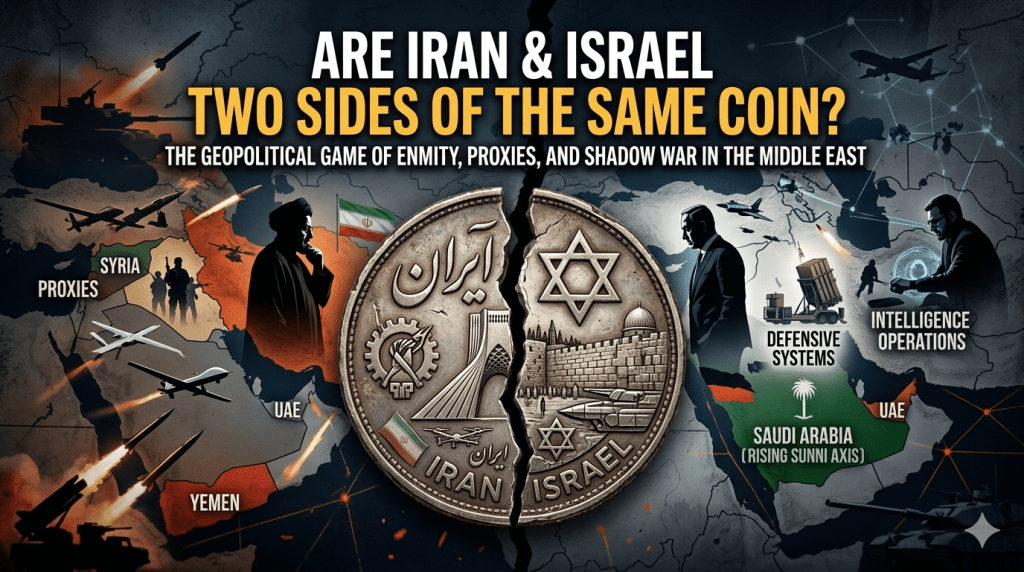
In many ways, the answer is yes. Their enmity in the Middle East often produces outcomes that strengthen each other’s narrative while keeping the region on edge. A deeper look at history shows that Iran and Israel were not always adversaries. Before the 1979 Iranian revolution, both countries had covert military, intelligence, and economic cooperation. Joint missile projects were even underway.
Intelligence Penetration, the Shadow War, and the Shifting Power Balance in the Middle East
For decades, the rivalry between Iran and Israel has been portrayed as one of the most intense geopolitical confrontations in the Middle East. The rhetoric from both sides is uncompromising. Iranian leaders frame Israel as a central ideological enemy and a symbol of Western influence in the region, while Israeli officials consistently describe Iran as their most serious long-term strategic threat.
However, beneath the dramatic speeches, military threats, and periodic escalations lies a far more complex geopolitical reality.
Much of the confrontation between these two states is not fought through open warfare but through a long-running shadow war. Intelligence operations, cyber sabotage, proxy conflicts, assassinations, and covert strikes form the real battlefield.
In many ways, Iran and Israel function like two sides of the same coin. Their rivalry sustains a cycle of tension that reinforces each side’s strategic narrative while simultaneously shaping the broader geopolitical architecture of the Middle East.
Understanding this dynamic requires examining the historical foundations of their relationship, the intelligence warfare that defines their conflict today, and the rapidly evolving regional balance of power that may ultimately reshape the Middle East.
The Historical Blueprint: Shared Strategic DNA
The idea that Iran and Israel are eternal enemies is historically inaccurate.
In fact, one of the most revealing aspects of their relationship is that they once operated as quiet strategic partners.
During the rule of Shah Mohammad Reza Pahlavi, Israel and Iran maintained discreet but highly significant cooperation. This relationship was part of Israel’s “periphery doctrine,” which sought alliances with non-Arab states surrounding the Arab world.
One of the clearest examples of this cooperation was Project Flower, a joint Israeli-Iranian missile development initiative in the late 1970s.
Under this program, Iran reportedly provided roughly $300 million in oil and financial resources, while Israel contributed missile technology and engineering expertise. According to documents later disclosed through intelligence archives and reported by outlets such as The New Indian Express, the project explored the development of advanced surface-to-surface missiles and potentially even nuclear-capable delivery systems.
For the Shah, Israel was a valuable partner against regional rivals. For Israel, Iran was a critical ally that provided strategic depth and energy security.
This period demonstrates that their current hostility is not an inevitable historical outcome but a geopolitical transformation triggered by regime change.
From Strategic Partners to Ideological Enemies
The 1979 Iranian Revolution fundamentally altered Iran’s geopolitical orientation.
The new Islamic Republic built much of its ideological identity around opposition to Israel and Western influence. The revolutionary leadership framed Israel as a colonial outpost in the region and made support for Palestinian resistance movements a cornerstone of its foreign policy.
This transformation quickly dismantled decades of quiet cooperation.
Israel, which had once relied on Iran as a strategic partner, now faced a new regional actor actively supporting groups such as Hezbollah and Hamas.
What emerged was not merely a diplomatic rivalry but a multi-layered strategic confrontation that continues to shape Middle Eastern geopolitics.
The Functional Symmetry of the Shadow War
Despite the intensity of their rhetoric, Iran and Israel rarely engage in direct military confrontation.
Instead, their conflict has evolved into a sophisticated shadow war involving espionage, cyber operations, covert assassinations, sabotage campaigns, and proxy battles across multiple countries.
This shadow war reveals a striking functional symmetry between the two states.
Both governments use the existence of the other as a strategic tool.
Iran’s narrative utility
The Iranian regime frequently invokes the Israeli threat to reinforce ideological legitimacy and rally domestic support. During economic protests in late 2025, analysts at the International Institute for Counter‑Terrorism noted that Iranian officials framed internal unrest as a coordinated operation supported by Israeli intelligence in order to unify a fragmented political environment.
Israel’s strategic utility
Israel, meanwhile, uses the Iranian threat to maintain its military technological superiority and deepen security partnerships with regional allies.
The perception of a nuclear-armed Iran has helped Israel secure significant U.S. defense support while simultaneously driving regional normalization initiatives such as the Abraham Accords.
By presenting itself as the primary security barrier against Iranian expansion, Israel strengthens its strategic relevance to both Western and regional partners.
In this sense, the rivalry itself has become strategically useful for both states.
Mossad and the Battle for Intelligence Dominance
The most fascinating dimension of this conflict lies within Iran itself.
Over the past two decades, Israel’s intelligence agency, Mossad, has repeatedly demonstrated an extraordinary ability to conduct operations inside Iranian territory.
Multiple incidents have revealed serious intelligence breaches within Iran’s security apparatus, including the powerful Islamic Revolutionary Guard Corps.
These operations range from cyber sabotage and drone attacks to targeted assassinations and infiltration of sensitive supply chains.
One of the earliest and most dramatic examples was the Stuxnet cyberattack on Iran’s Natanz nuclear facility. The malware manipulated centrifuge speeds until they destroyed themselves, temporarily crippling Iran’s uranium enrichment operations.
Such an attack required not only advanced cyber capabilities but also physical infiltration of secure systems.
The success of Stuxnet demonstrated that cyber warfare had become a central battlefield in the Iran-Israel conflict.
Assassinations and Precision Intelligence
Targeted assassinations have also played a major role in this shadow war.
Throughout the 2010s, several Iranian nuclear scientists were killed in operations widely attributed to Israeli intelligence.
These operations were designed to slow Iran’s nuclear program while simultaneously demonstrating Israel’s deep intelligence reach.
The assassination of nuclear scientist Mohsen Fakhrizadeh in 2020 further highlighted this capability.
The operation reportedly involved a remotely operated weapon system guided through satellite technology, requiring precise knowledge of Fakhrizadeh’s movements, security protocols, and travel patterns.
Such operations suggest the presence of highly sophisticated intelligence networks operating inside Iran.
Intelligence Penetration and the 2026 War
The conflict that escalated in early 2026 revealed the depth of these intelligence capabilities.
According to reporting by the Financial Times, Israeli intelligence constructed detailed behavioral “life patterns” of senior Iranian officials by hacking Tehran’s traffic camera systems and using artificial intelligence to analyze movement patterns.
This unprecedented situational awareness enabled the launch of Operation Roaring Lion, the opening phase of the 2026 conflict.
The operation targeted leadership compounds with remarkable precision despite Iran being on heightened military alert.
Such accuracy strongly suggests not only external surveillance but potentially internal information networks within Iranian institutions.
Corrosive Paranoia Inside the Iranian State
The success of these intelligence operations has created significant internal tensions within Iran.
Reporting by the BBC has suggested that the Iranian regime may be experiencing what analysts describe as a form of “slow collapse,” driven by growing mistrust within its own security institutions.
Security agencies increasingly suspect infiltration.
Command structures have reportedly begun investigating one another, while internal purges have targeted officials suspected of leaking information.
The Observer Research Foundation has highlighted how Mossad’s ability to infiltrate supply chains and launch short-range drone attacks from within Iranian territory has intensified this atmosphere of suspicion.
This dynamic has produced what analysts call corrosive paranoia within Iran’s counterintelligence system.
Decapitation Strikes and Leadership Losses
The perception of compromised leadership intensified after a series of targeted strikes during the conflicts of 2025 and 2026.
During the June 2025 confrontation often referred to as the Twelve-Day War, several high-ranking Iranian military officials were reportedly eliminated in precision strikes.
Among them were senior commanders connected to the IRGC command structure.
According to reporting from Iran International and analysis by the House of Commons Library, the opening phase of the 2026 conflict focused heavily on decapitation strikes targeting command infrastructure.
These operations reportedly struck regime command centers, Basij headquarters, and other critical nodes within Iran’s security network.
The strategy appears designed to systematically weaken the leadership layer of Iran’s military establishment.
The Leadership Transition Crisis
These developments coincided with a dramatic political transition inside Iran.
Following the death of Supreme Leader Ali Khamenei in early 2026, his son Mojtaba Khamenei was elevated to the position of Supreme Leader.
However, the transition has reportedly been accompanied by significant internal tensions.
Multiple reports suggest that Mojtaba Khamenei has remained largely absent from public view while purges have taken place inside both the IRGC and other security institutions.
This environment reflects a deep crisis of trust within Iran’s ruling elite.
The leadership must now simultaneously manage external conflict and internal suspicion.
Iran’s Strategic Shift Back to Analog Systems
One of the more surprising consequences of Israeli cyber operations has been Iran’s gradual shift back toward analog communication systems.
Due to fears of digital infiltration, parts of Iran’s national security infrastructure have reportedly reduced reliance on networked communication systems.
While this approach may reduce cyber vulnerabilities, it introduces a new strategic risk.
Analog communication is slower and less flexible, potentially creating coordination gaps between central command structures and field units.
In the event of large-scale military escalation, this could produce dangerous delays in strategic decision-making.
The Strategic Logic Behind Escalation
The transition from the limited conflict of 2025 to the broader war of 2026 reflects a significant shift in strategic objectives.
Early operations focused primarily on degrading Iran’s nuclear infrastructure.
However, more recent operations appear aimed at dismantling the broader military-industrial ecosystem of the Iranian state.
Analysis published by The Guardian indicates that Israeli and American operations have significantly damaged parts of Iran’s military production network.
Yet the absence of a clear ground strategy for regime change has forced a different approach.
Instead of invasion, the strategy now appears to rely on highly precise intelligence operations targeting repression units, command structures, and internal security institutions within Tehran.
Some of these operations reportedly rely on intelligence provided by individuals inside Iran itself.
The Collapse of the Old Regional Axes
While the Iran-Israel confrontation dominates headlines, a much larger geopolitical shift is underway across the Middle East.
The long-standing Shia axis led by Iran appears to be under significant pressure.
Following the 2025 war and subsequent regional confrontations, the so-called Axis of Resistance has weakened considerably.
Research institutions such as the Wilson Center and the Institute for National Security Studies have noted that the weakening of Hezbollah and the political collapse of Syria’s previous regime have severely damaged Iran’s forward defense strategy.
Without these buffer zones, Iran’s ability to project power across the Levant has been reduced.
Pressure on Israel’s Own Strategic Axis
At the same time, Israel’s own strategic environment is not without challenges.
While Israel has achieved notable military successes, analysts at the Stimson Center warn that sustained operations across multiple theaters including Gaza, Lebanon, and Syria are creating increasing international scrutiny and internal political pressure.
This environment complicates Israel’s ability to maintain stable regional partnerships.
The Emergence of a New Sunni Axis
In the strategic vacuum created by these developments, a new geopolitical alignment is beginning to emerge.
At the center of this shift is Saudi Arabia.
Regional analysts from institutions such as IRIS and Manara Magazine argue that Saudi Arabia is moving toward a more structured regional leadership role, particularly through economic initiatives tied to Vision 2030.
One emerging concept is a Saudi-Pakistan-Turkey strategic triangle focused on preserving state sovereignty and regional stability.
Unlike the proxy-driven geopolitical strategies of the past, this emerging axis appears more focused on economic integration and institutional security.
Iran, the IRGC, and the Drone War in the Gulf
The Saudi Drone Incident and Iran’s Denial
Following recent drone attacks targeting Saudi Arabia, the Public Relations Office of the Islamic Revolutionary Guard Corps stated that the incident had no connection to Iran and urged Riyadh to investigate the true origin of the strikes.
At the same time, Saudi authorities confirmed that four drones had been intercepted over Riyadh, highlighting the growing role of unmanned systems in shaping modern regional conflict.
The Internal Divide in Iran’s Power Structure
Understanding the significance of these denials requires recognizing an important internal dynamic inside Iran. The Iranian government and the IRGC do not always operate with identical strategic priorities.
In recent months the Iranian political leadership has frequently attempted to pursue diplomatic de-escalation, while the IRGC has sometimes acted in ways that appear significantly more aggressive and operationally unpredictable.
This divergence became particularly visible during the recent regional crisis, when IRGC actions complicated diplomatic efforts that were reportedly supported by Pakistan during discussions between Iran and Saudi Arabia.
Plausible Deniability and the Nature of Drone Warfare
When examining the denials surrounding the recent drone incident, a pattern becomes evident.
The IRGC has not hesitated in the past to acknowledge involvement in certain missile or drone operations, yet in this case it specifically denied responsibility for the Saudi strike. Meanwhile, Iranian government officials have previously issued denials regarding other incidents, including missile events involving Türkiye.
Technically this creates space for plausible deniability. Drones are significantly harder to trace than ballistic missiles due to their smaller radar signatures, variable launch locations, and the complexity of tracking operational chains.
While debris analysis may reveal manufacturing origins, it does not always conclusively identify the operator responsible for the launch.
Internal Power Struggles Inside Iran
At the same time, the internal political environment inside Iran cannot be ignored.
Over the past year several high-profile regime figures including scientists, senior leadership members, and even a sitting president have been killed under mysterious circumstances. Among many observers there is a growing belief that factional competition inside the system may have allowed or facilitated the removal of certain figures.
If that pattern holds true, it raises the possibility that elements within the IRGC may be operating with strategic calculations that differ from those of the civilian political leadership.
Whether this dynamic stems from institutional rivalry, revenge-driven thinking, or deeper strategic alignments remains a subject of debate. However, the practical outcome appears consistent. IRGC actions have repeatedly escalated tensions in ways that ultimately benefit Israel by pushing the region closer to confrontation.
The Shifting Balance of Power in the Region
At the broader geopolitical level, the regional balance itself is undergoing transformation.
The traditional Shia axis centered around Iran and the strategic axis surrounding Israel both appear to be facing structural pressures. At the same time a Sunni-aligned geopolitical framework led by Saudi Arabia is gradually emerging as a new organizing force within the region.
In such an environment it would not be surprising to see unexpected alignments and covert cooperation emerge around efforts to counterbalance that evolving bloc.
Watching the India–Afghanistan Factor
Within this larger strategic context, analysts increasingly point to the growing roles of India and Afghanistan. Both states are becoming more active within the wider regional security architecture and are often viewed by observers as operating within a broader strategic environment in which Israeli intelligence influence remains significant.
As regional rivalries deepen and alliances shift, the actions of these actors will likely play an increasingly important role in shaping the strategic environment surrounding Pakistan and the wider Middle East.
The Geopolitical “Same Coin”
Analysts argue that Iran and Israel’s ongoing confrontations are not just mutual enmity; they are a geopolitical game aimed at influencing this emerging Sunni axis. Both powers share a strategic interest in preventing a cohesive, autonomous Sunni bloc from consolidating.
- Iran’s Disruptive Veto: By creating instability through weapons transfers and drone technology, Tehran signals to the region that no security architecture is viable without its inclusion.
- Israel’s Strategic Dependency: Israel leverages U.S. “Maximum Pressure 2.0” and the constant threat of escalation to ensure that regional states remain dependent on Israeli intelligence and security cooperation.
Consolidating Conflict
The strategy is clear: to control the Sunni axis, the region must be pushed into a state of perpetual sectarian or security-based anxiety. Moderate and peace-oriented states like Jordan, Egypt, and even the UAE come under immense pressure, losing the autonomy to chart a truly independent path. According to the Gulf Research Center, the blurring of lines between “conflict zones” and “neutral states” is a deliberate outcome of this bilateral escalation.
As the 2026 conflict progresses, it becomes clear that Iran and Israel are two sides of the same coin, utilizing a shared cycle of violence to justify their respective roles as indispensable regional actors, even as the world around them attempts to move toward a different kind of order.
India and Afghanistan: The Peripheral Pressure on Pakistan’s Middle East Pivot
In the strategic landscape of 2026, the roles of India and Afghanistan extend far beyond South Asia. Both have increasingly become critical levers in what some analysts describe as a regional “sandwich strategy” designed to constrain Pakistan as it expands its role as a defense partner for the emerging Sunni axis in the Middle East.
As regional power blocs reorganize following the conflicts of 2025 and 2026, Pakistan’s growing strategic alignment with Gulf states has altered the regional calculus. For rival actors, preventing Islamabad from fully consolidating this role has become a strategic priority.
The Counter-Axis: India’s Strategic Westward Push
India’s growing involvement in Middle Eastern geopolitics is closely linked to the September 2025 Strategic Mutual Defense Agreement (SMDA) between Pakistan and Saudi Arabia.
From New Delhi’s perspective, a Pakistan that functions as the primary “security guarantor” for Gulf monarchies represents a significant shift in regional influence. Such a role would not only enhance Pakistan’s diplomatic leverage but also strengthen its financial and military depth through deeper integration with Gulf security architecture.
To counterbalance this possibility, India has adopted what analysts describe as a westward strategic push.
According to research from the Observer Research Foundation, India is pursuing a model of “strategic autonomy” by deepening partnerships with states such as United Arab Emirates and Israel. This network allows India to position itself as a stable technological and security partner in the Middle East without becoming embedded in the sectarian or military alliances that dominate regional politics.
By emphasizing economic cooperation, defense technology, and digital infrastructure, India presents itself as an alternative partner for Gulf states seeking diversification beyond traditional security arrangements.
The Iranian Conduit: Chabahar and Strategic Access
One of the most important instruments of India’s regional strategy remains the development of the Chabahar Port in Iran.
Despite the instability created by the 2026 conflict, India has continued investing in the port and its associated transport corridors. The project was originally conceived as a logistical alternative that would allow India to access Afghanistan and Central Asia without relying on Pakistani territory.
According to reporting from The Wire, this corridor has evolved beyond a simple trade route. It now represents a strategic lifeline that enables India to project economic and political influence into Afghanistan and Central Asia.
In practical terms, Chabahar creates a western gateway that bypasses Pakistan entirely. By sustaining this corridor even during periods of conflict, India ensures that its regional influence remains independent of Pakistani transit routes.
For Islamabad, this development has long-term implications. The corridor effectively creates a parallel economic and strategic pathway into Central Asia, reducing Pakistan’s ability to act as the primary regional transit hub.
Afghanistan: The Master Proxy of 2026
If India represents the economic and diplomatic dimension of this pressure, Afghanistan has become the kinetic one.
Since the declaration of “Open War” between Pakistan and Afghanistan in February 2026, the relationship between Islamabad and Kabul has undergone a dramatic transformation.
For decades, Pakistan had viewed Afghanistan through the concept of “strategic depth.” The idea was that influence in Kabul would prevent encirclement by hostile powers and provide a buffer against India.
However, the strategic environment of 2026 has reversed this calculation.
The Afghan leadership, now governed by the Taliban administration, has increasingly positioned itself as an independent actor rather than a subordinate partner.
The Diversion of Pakistani Military Capability
According to analysts from Chatham House, the escalating border confrontation between Pakistan and Afghanistan is forcing Islamabad to divert substantial military resources toward its western frontier.
Reports of Pakistani airstrikes targeting locations in Kabul and Kandahar illustrate the intensity of this confrontation.
From a strategic perspective, this conflict imposes a major opportunity cost.
Every fighter aircraft, drone squadron, or special forces unit deployed along the Durand Line represents an asset that cannot be allocated to broader regional commitments.
For Pakistan, which is expected to play a deterrence role under the Saudi-led security framework, this diversion of military capacity weakens its ability to act as a full-spectrum security partner in the Middle East.
The India–Taliban Normalization
In an unexpected geopolitical shift, Kabul has simultaneously begun cautiously improving its diplomatic relationship with New Delhi.
According to reports from the New Lines Institute, Taliban leaders increasingly view India as a development-focused partner capable of providing infrastructure investment and economic cooperation.
This represents a pragmatic recalibration.
While Pakistan is conducting airstrikes along the Afghan frontier, India has hosted Taliban delegations and maintained diplomatic engagement focused on reconstruction and trade.
In effect, the geopolitical script that once positioned Afghanistan as a Pakistani proxy is slowly being rewritten.
Instead of acting as Pakistan’s strategic depth, Afghanistan is now emerging as an independent actor capable of reshaping regional alignments.
Controlling Pakistan’s Defense Partner Role
The combined pressure from India and Afghanistan creates a strategic dilemma for Pakistan’s emerging role in the Middle East.
From the perspective of Islamabad’s rivals, this pressure operates through three interconnected mechanisms.
1. Strategic Paranoia and Internal Security Pressure
Pakistan’s security establishment already faces multiple internal challenges, including insurgent movements in Balochistan and attacks by militant groups such as the Tehrik-e-Taliban Pakistan.
The perception that external actors might be supporting these groups generates an environment of heightened security vigilance.
Such pressure forces the Pakistani military to allocate significant attention and resources toward internal stabilization rather than external projection of power.
2. Narrative Competition in the Gulf
Rival actors also seek to shape how Gulf monarchies perceive Pakistan’s role as a security partner.
By highlighting the escalating conflict along Pakistan’s western frontier, critics attempt to portray Islamabad as a “distracted guardian” whose domestic instability could undermine its ability to guarantee regional security commitments.
In strategic messaging terms, this narrative attempts to weaken Pakistan’s credibility as the principal defense pillar of the emerging Sunni axis.
3. Sectarian Complications
The confrontation with the Taliban introduces another complication.
Analysts at the Center for Strategic and International Studies note that Pakistan’s conflict with a Sunni Islamist movement complicates its standing within the broader Sunni geopolitical framework.
If Pakistan is perceived as engaged in conflict with other Sunni actors, its ability to position itself as the unifying defense partner for a Saudi-led bloc may become politically more complex.
A New Layer in the Regional Chessboard
Taken together, these developments illustrate how the strategic competition surrounding the Middle East increasingly extends into South Asia.
India applies pressure through economic corridors, diplomatic partnerships, and technological cooperation.
Afghanistan applies pressure through asymmetric conflict along Pakistan’s western frontier.
In combination, these dynamics create a layered strategic environment in which Pakistan must simultaneously manage domestic security, regional rivalry, and its expanding commitments to Gulf partners.
In this 2026 geopolitical landscape, India and Afghanistan are no longer merely neighboring actors. They have become active participants in the broader strategic contest shaping the Middle East’s future balance of power.
For Pakistan, this means that its role as a defense partner in the emerging Sunni axis will not be determined solely by developments in the Gulf. It will also depend on how effectively Islamabad navigates the complex pressures building along its own borders.
The Expanding Hybrid Battlefield Around Pakistan
Growing Suspicion of Foreign Intelligence Activity in Afghanistan
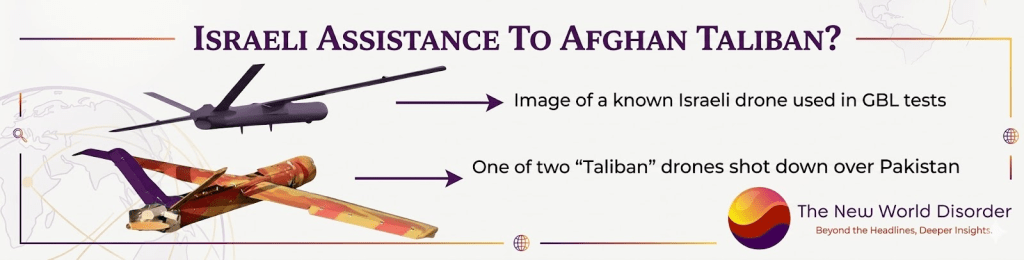
A strong perception is emerging within Pakistan that Mossad may be operating within Afghanistan and potentially providing covert assistance to elements within the Afghan Taliban. While definitive public evidence remains limited, the persistence of this belief within strategic circles reflects how rapidly the regional threat environment is evolving beyond traditional cross-border militancy into something far more complex.
From Insurgency to Hybrid Warfare
Emerging intelligence patterns suggest that the security landscape surrounding Pakistan’s western frontier is shifting toward a hybrid warfare model where militant groups may be supported through technological inputs, intelligence facilitation, and deniable external actors.
Reports that Iranian security agencies uncovered Afghan-origin operatives linked to covert drone assembly networks, allegedly working under Israeli instruction, add another layer to this evolving picture of regional conflict.
If such networks intersect with militant ecosystems operating out of Afghanistan, it would indicate the emergence of a broader architecture in which technological expertise, intelligence support, and proxy actors converge to create pressure on multiple fronts simultaneously.
The Rise of Technologically Enabled Militancy
From Pakistan’s perspective, this transforms the western theatre from a localized insurgency challenge into a multi-vector security threat. In such a scenario, drones, precision-strike tools, and external technical assistance could enable militant groups to attempt increasingly sophisticated operations against Pakistani targets.
Under these conditions, the strategic response cannot be limited to reactive border operations. The logical doctrine becomes the systematic dismantling of logistical nodes, drone infrastructure, and technical hubs inside militant safe havens while simultaneously exposing any external linkages through diplomatic channels in order to restrict the flow of advanced capabilities into the conflict zone.
Afghanistan as a Technical Staging Ground
Reports that Afghan-origin operatives were involved in covert drone construction networks inside Iran further deepen suspicions that Afghanistan may be evolving into a technical staging ground through which external actors channel hybrid capabilities into militant ecosystems.
Strategically, this fits a broader pattern of pressure directed at Pakistan. Technologically enabled militant groups operating along the western frontier could stretch Pakistan’s security bandwidth at a time when its eastern deterrence posture must remain intact.
Pakistan’s Emerging Counter-Doctrine
Pakistan’s current operational approach, which includes precision strikes on militant infrastructure, destruction of drone hubs, logistics denial, and strict avoidance of civilian collateral, reflects a deliberate doctrine aimed at dismantling the technical backbone of such networks before they mature into a sustained hybrid warfare capability along the frontier.
Ultimately, disrupting these pipelines requires more than kinetic operations alone. Only by undermining the Taliban’s domestic religious legitimacy while simultaneously imposing a clear kinetic cost on foreign technical facilitators can Pakistan prevent the long-term destabilization of its northwestern frontier.
The Geopolitical “Same Coin”
It is within this changing strategic environment that the rivalry between Iran and Israel begins to take on a deeper geopolitical meaning.
At the level of rhetoric, the relationship is framed as a civilizational confrontation. Iranian leadership frequently describes Israel as an illegitimate state that must be resisted, while Israeli officials portray Iran as the primary existential threat to their national security. Yet when examined through the lens of strategic incentives rather than ideology, the relationship becomes far more complex.
Some analysts argue that both powers, despite their hostility, operate within a strategic framework where sustained tension produces advantages.
For Iran, the existence of a permanent confrontation with Israel helps justify the expansion of its asymmetric warfare capabilities. Tehran has invested heavily in drone warfare, missile development, and proxy networks across the Middle East. These tools allow Iran to project power beyond its borders while avoiding the risks of direct conventional confrontation.
Israel, on the other hand, maintains strategic leverage by ensuring that regional actors remain dependent on its intelligence networks, technological superiority, and security partnerships. Israeli intelligence institutions, particularly the Mossad, have built a reputation for deep infiltration capabilities across hostile territories. Operations targeting nuclear infrastructure, cyber networks, and senior military personnel have reinforced Israel’s image as the region’s most formidable intelligence power.
Within this environment of controlled escalation, both states derive strategic utility from maintaining a constant level of tension.
However, the geopolitical equation becomes even more intricate when the broader regional chessboard is examined.
In South Asia, the roles of India and Afghanistan have increasingly intersected with Middle Eastern rivalries in ways that directly affect Pakistan.
Pakistan’s growing defense alignment with Gulf monarchies, particularly Saudi Arabia, has positioned Islamabad as a potential security guarantor for parts of the emerging Sunni geopolitical bloc. This evolving role has raised concerns among actors who view the consolidation of such a bloc as a challenge to their regional influence.
From this perspective, pressure applied to Pakistan’s western and eastern strategic environment serves a broader purpose.
India’s westward strategic outreach, including partnerships with the United Arab Emirates and security coordination with Israel, provides New Delhi with influence inside the same Middle Eastern space where Pakistan is attempting to expand its defense role.
Meanwhile, Afghanistan’s deteriorating relationship with Pakistan since the 2026 border escalation has transformed Kabul from a former strategic buffer into a persistent security distraction for Islamabad.
The result is a multi-layered strategic environment in which Pakistan’s ability to project power toward the Gulf is constantly moderated by pressures closer to home.
In this sense, the Iran-Israel rivalry cannot be understood in isolation. It exists within a wider network of strategic interactions where regional and extra-regional actors continuously adjust the balance of power.
Two Sides of the Same Strategic Equation
When viewed purely through ideological rhetoric, the Iran-Israel rivalry appears to be an existential conflict between irreconcilable enemies.
However, when examined through the lens of intelligence warfare, geopolitical incentives, and long-term strategic planning, the relationship reveals a more nuanced dynamic.
Both states benefit from maintaining a calibrated level of confrontation.
Iran uses the Israeli threat to mobilize domestic political unity, justify military expansion, and legitimize its extensive network of regional proxies. The narrative of resistance has become a central pillar of Iranian strategic culture.
Israel, in turn, uses Iranian ambitions to reinforce its position as an indispensable security partner for regional and Western allies. The perception of an Iranian threat strengthens Israel’s diplomatic ties and helps justify continuous investment in advanced intelligence and military technologies.
Within this framework, the actions of each state indirectly reinforce the strategic narratives of the other.
This dynamic also creates a geopolitical environment in which sustained tension discourages the emergence of unified power blocs that could alter the regional balance.
For example, a fully cohesive Sunni security architecture led by Saudi Arabia and supported militarily by Pakistan could represent a significant shift in Middle Eastern power structures.
Preventing such consolidation aligns with the strategic interests of multiple actors.
Iran maintains influence by sustaining asymmetric disruptions that keep regional alliances fragile.
Israel preserves leverage by ensuring that regional states continue to rely on its intelligence cooperation and security capabilities.
At the same time, India’s growing diplomatic and economic engagement with Gulf states introduces an additional balancing force within the same strategic environment.
Meanwhile, instability along Pakistan’s western frontier with Afghanistan forces Islamabad to continuously divide its strategic focus between domestic security and external commitments.
Together, these dynamics create a geopolitical ecosystem in which no single bloc can consolidate uncontested power.
In that sense, Iran and Israel often function like two sides of the same coin. Their rivalry sustains a geopolitical landscape where tension remains constant, alliances remain fluid, and regional actors are compelled to continually recalibrate their strategies.
The inclusion of South Asian pressures only deepens this complexity. India’s strategic outreach into the Middle East and Afghanistan’s evolving posture toward Pakistan ensure that the regional chessboard extends far beyond the traditional boundaries of the Arab-Israeli conflict.
As the shadow war between Iran and Israel intensifies and regional power structures continue to evolve, the consequences of this rivalry will shape Middle Eastern geopolitics for decades to come.
What appears on the surface as a binary confrontation is, in reality, part of a far more intricate strategic equation. One where multiple actors influence outcomes, alliances shift with changing incentives, and the balance of power is constantly renegotiated.
Conclusion:
Both Iran and Israel currently share the same strategic goal. They want to pull the Middle East deeper into conflict to consolidate their political and geopolitical influence. Iran creates instability through weapons, drones, and strategic capabilities. Israel leverages U.S. pressure and its own regional influence to benefit from the conflict.
The strategy is clear. To control the Sunni axis, the region must be pushed into a sectarian war. Moderate and peace-oriented states come under pressure and lose autonomy. Both sides are using sensitive countries and locations to advance their strategic agenda while showing power and influence. As this conflict progresses, it will become clear that Iran and Israel are two sides of the same coin shaping the region according to their own goals.