
Special Edition, When Diplomacy Became a Battlefield: Israel’s Strike on Hamas in Doha
By Zohaib Ahmed | 9th September 2025
Executive summary (TL;DR)
- On September 9, 2025, an Israeli strike hit Doha targeting senior Hamas figures in the middle of active ceasefire negotiations — a watershed moment that turned a mediation capital into an active battlefield.
- The operation shattered long-standing diplomatic taboos, exposed limits in Gulf deterrence, and raised urgent questions about who saw what, and who tacitly permitted the strike — including credible indications that U.S. ISR and CENTCOM activity in the region made absolute secrecy impossible.
- Concurrent incidents — notably the Houthi drone strike near Ramon Airport and a lethal attack on Israeli forces at Jabalia — underline that the theater is now multi-vector: aerial, ground, and asymmetric.
- The consequence is immediate: mediation confidence evaporates, Gulf capitals face a deterrence crisis, and the normative firewall that once protected diplomatic spaces is collapsing. This blog unpacks the facts, the plausible operational mechanics, the optics, and worst-case and pragmatic policy responses.
1. What happened — the facts (short, verifiable)
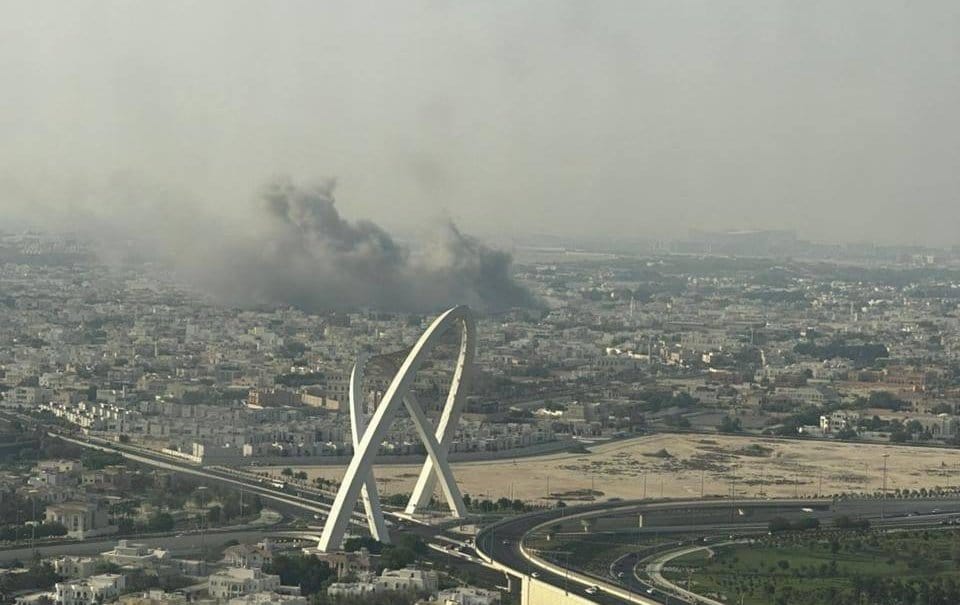
Multiple outlets confirmed explosions in Doha on September 9 as Israeli forces struck a target tied to Hamas leadership while ceasefire talks were unfolding in Qatar’s capital. Doha publicly condemned the strike; Israel’s leadership accepted responsibility for an operation targeting Hamas leaders. Independent reporting and live coverage documented the blasts and the immediate political fallout.
Concurrently, in the days around the Doha strike, two other disruptive events reshaped regional optics: a Houthi-launched drone struck near Ramon (Eilat) airport, temporarily closing operations, and Hamas fighters killed several Israeli soldiers in an ambush near Jabalia — reminders that the battlefield now reaches airports, capitals, and the perimeters of occupied territories.
2. Why timing and location are a strategic break
Striking during active mediation is not merely escalation — it weaponizes negotiation. For decades, mediators and certain host capitals (Qatar foremost among them) have been treated as zones of relative sanctuary: locations where political actors could safely congregate to hammer out deals. When a belligerent turns that space into a target, it does two things at once:
- It destroys trust in mediation. Parties stop believing negotiations are safe, and visible progress collapses.
- It elevates tactical advantage over strategic settlement — you can kill or capture a negotiator but you cannot kill a political solution.
That is why this strike matters beyond the immediate tactical kill/capture objective: it reinterprets ceasefire rooms as legitimate fields of targeting. Diplomacy — the one mechanism still capable of stopping a wider conflagration — is now itself under threat.
3. Who knew what — CENTCOM, ISR and the plausibility problem
There are two connected facts: the U.S. runs dense ISR over the Gulf and CENTCOM officials had recently visited Israel for operational consultations. Those facts make it plausible — though not proven in public sources — that Washington was at least aware of unusual movements in the region in the run-up to the strike. That awareness falls short of a formal “green light” in open reporting, but it collapses the notion that any actor could move an attack package into Qatari airspace with zero third-party knowledge. The point is political: in a region where U.S. radars and bases monitor air corridors, a strike on a Gulf capital cannot be operationally invisible.
That plausibility has political consequences. If Doha received no warning, it suggests the U.S. prioritized Israeli operational freedom (or at least tolerated it) over its Gulf partner’s territorial sanctity. If Doha was informed, then the political cost of intelligence sharing — signaling diminished protection — is enormous for Gulf perceptions of the American umbrella.
4. How the strike likely arrived — plausible corridors, not certainties
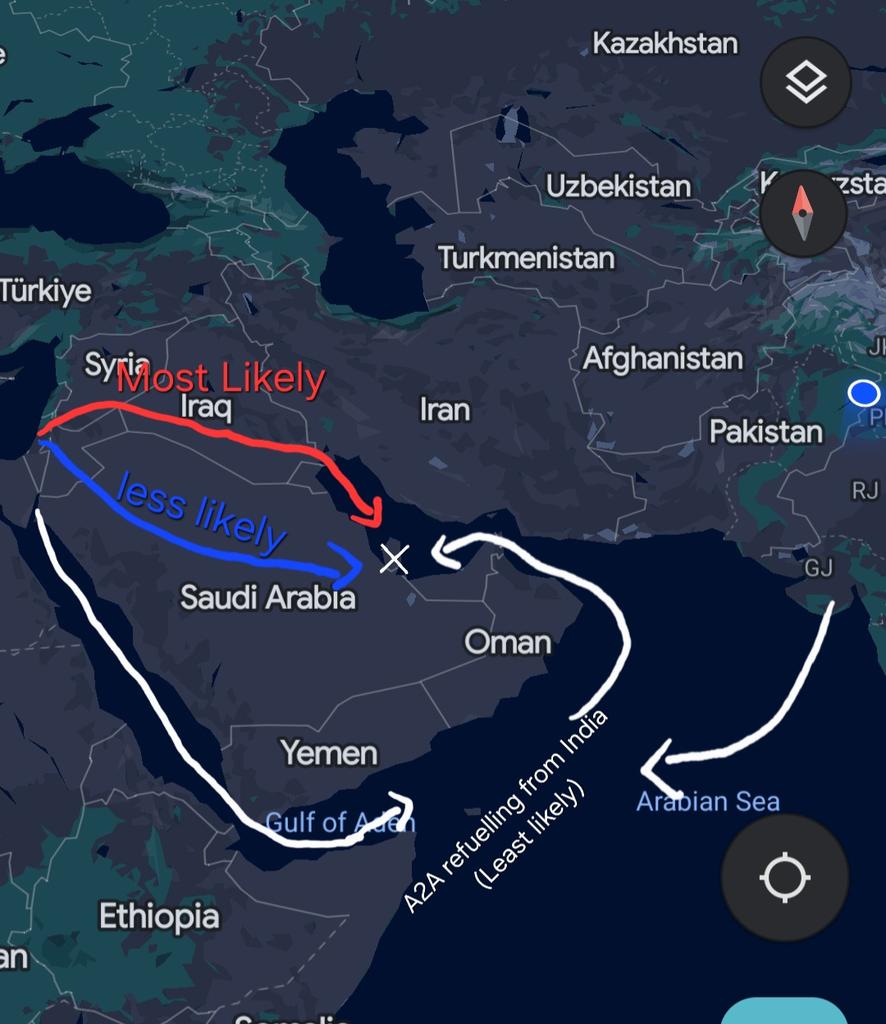
Open-source analysts typically point to three possible ingress routes for such a strike package (air or missile):
- Syria–Iraq corridor (most likely): Years of operations and permissive pockets in eastern Syria and western Iraq have created a corridor that can be used for rapid east–west transits under overlapping ISR coverage.
- Saudi airspace (covert or tacit allowance): Officially sensitive, but political silence can equate to tacit acquiescence. Overflight through Saudi corridors would be politically explosive were it ever publicly admitted.
- Jordan–Iraq pivot: A more circuitous route that minimizes exposure but still runs under Allied radar networks.
None of these can be proved in open sources at the moment; they are operationally plausible based on how modern strikes in the region have been executed and where ISR gaps and political allowances exist.
5. The optics: a Western-armed Israel, yet a humiliated state
Here is the paradox: Israel operates with vast Western political cover and weapons flows, yet the theater shows cracks. A Houthi drone striking the Ramon Airport area and a successful Jabalia ambush are not minor embarrassments — they are visible proof that even a heavily armed state can be vulnerable to asymmetric tactics and overflow from neighboring battlefields. Combined with the Doha strike, the optics are terrible for the traditional narrative of overwhelming Israeli control.
That is where the “Frankenstein” metaphor fits: the West built and sustained a militarized actor meant to dominate a contested region; the weapon systems and political oxygen were intended to guarantee control. But the monster is now stumbling — exposed to low-cost high-impact threats, operationally stretched, and facing reputational damage for striking a mediator’s capital. The image of a state backed to the teeth yet unable to fully secure its skies or to prevent timely counterstrikes is diplomatically toxic.
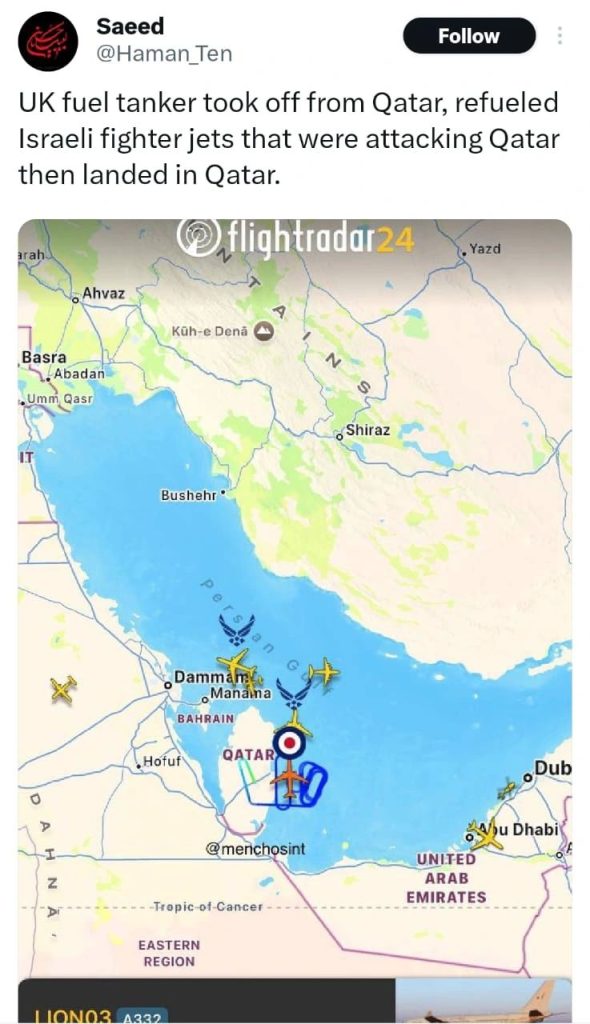
This detail takes the entire operation into an even darker domain of optics and strategy. If a UK tanker launched from Qatari soil, refueled Israeli fighters mid-strike, and then landed back in Qatar, it means Doha’s sovereignty was not merely bypassed, it was actively compromised from within its own infrastructure. This isn’t just about an Israeli raid; it’s about how Anglo-American military assets embedded in the Gulf can weaponize host bases against the host itself. The message to regional capitals is chilling: your runways, your radars, and your skies can be turned against you with zero warning, all under the veil of alliance agreements.
Strategically, it exposes two realities:
1. Deterrence fragility, Qatar’s billion-dollar Rafales, THAADs, and Patriots are irrelevant if the very coalition forces stationed in Al Udeid can blind or override them.
2. Optical humiliation, For Arab public opinion, the idea that Qatari soil enabled Israeli jets to strike Doha while Qatari defenses stood idle is not just defeat—it’s betrayal optics on a global stage.
This wasn’t just a military strike. It was a carefully engineered psychological operation to demonstrate that Israel, with U.S./UK complicity, can bend Gulf sovereignty at will.
Furthermore:
If Israeli jets, backed by KC-135s vectoring south of Doha, could loiter and refuel practically in Qatari FIR without detection, it signals either deliberate U.S. jamming of ADS-B and radar nets or a quiet “green corridor” carved through Al Udeid’s command. The optics are brutal: Qatar’s billions in Rafales, Typhoons, Patriots, THAADs, and NASAMS were neutralized not by kinetic action but by network warfare and airspace control asymmetry. The bigger takeaway is strategic—in modern conflict, sovereignty isn’t defended by hardware but by who owns the battlespace data and who grants (or denies) visibility. For Doha, this was less an operational failure and more a revelation of dependence: your skies are only yours if Washington allows them to be.
6. The strategic ripple: mediation collapsed, deterrence questioned
What we’re seeing is the systematic weaponization of diplomacy, negotiations are being turned into hunting grounds. The assassination of Haniyeh during ceasefire talks, bombings of Iran mid-nuclear dialogue, and strikes in Doha while mediation was underway all prove one point: Israel and its backers treat “peace tracks” not as frameworks for resolution, but as traps to weaken and decapitate opponents. This transforms the mediation file into a file of fire, every round of talks now carries the risk of escalation instead of de-escalation. The optics are clear: diplomacy in West Asia has been hijacked, and the credibility of Western mediation lies in ashes.
The immediate strategic fallout is kinetic and diplomatic:
- Ceasefire prospects collapse. Mediators lose credibility when they are attacked on their soil. Confidence between negotiating teams vanishes overnight.
- Gulf deterrence erodes. If Qatar can be struck, what protects Abu Dhabi, Riyadh or Manama? The implicit bargain — U.S. backing in exchange for strategic alignment — looks less reliable when political partners can be bypassed.
- Escalation risk rises. Actors who feel protected or empowered (whether state or non-state) will test new thresholds; the region becomes an accelerant for broader conflagration.
If the Gulf cannot demonstrate red lines now, we will see a strategic realignment — not necessarily an instant pivot to different patrons, but a serious recalculation of what “protection” means.
7. Weaponizing diplomacy: a new, brutal doctrine
Israel’s choice to strike during talks sends a doctrine signal: negotiations can be used as cover to identify, locate and eliminate leadership. From a short-term operational view this can deliver decapitation effects. From a long-term political view it kills trust, and with trust dead, no durable peace can be negotiated.
This approach transforms the mediator role into a high-risk political function; potential hosts will think twice before offering their soil to actors perceived as likely targets. The consequence is fewer neutral spaces, fewer channels for de-escalation, and a higher bar for any future peacemaking.
8. What Qatar and the Gulf should (and can) do — pragmatic steps to restore deterrence
The real optics are damning: Qatar fields some of the most advanced defensive systems money can buy—Rafales, Typhoons, F-15QAs, THAAD, Patriots, NASAMS, and Searchmaster radars—yet not a single intercept or even early warning was triggered. That points to two brutal truths: American radars saw it all but didn’t warn Doha, and Qatari sovereignty exists only at Washington’s convenience.
The strategic embarrassment here is bigger than the strike itself: Qatar’s cutting-edge arsenal looks ornamental when U.S. permissions dictate what can or cannot be seen in its skies.
If Doha is to survive as a mediator and a Gulf power, it must act decisively — not necessarily in a way that immediately escalates kinetically, but in ways that restore norms and impose political costs:
- Public, forensic transparency. Commission a credible, independent inquiry into the strike’s flight path and ISR awareness; make results public to break plausible deniability.
- Legal/diplomatic escalation. Use UN forums, the IAEA (if relevant), and emergency OIC/GCC meetings to build a united diplomatic front. Public political cost imposes limits.
- Defensive posture upgrade. Rapidly deploy hardened EW, passive sensors, and redundant alerting channels independent of third-party ISR. Invest in counter-drone and dispersal procedures.
- Collective messaging and limited reciprocity. The Gulf can coordinate a set of diplomatic measures (temporary withdrawal of certain intelligence-sharing privileges, legal measures, or public condemnations) that impose reputational costs without immediate kinetic war.
- Diversify security ties. Quietly expand cooperation — intelligence, EW, logistics — with non-Western partners where appropriate, while managing the inevitable U.S. diplomatic blowback.
Qatar’s unique role as host to political files is a lever: they can make hosting conditional and thus rebuild the political rent that comes from being a mediator.
9. The longer arc — regional fragmentation and the death of sanctuary
If “peace rooms” become hunting grounds, the incentive to mediate falls sharply. The replacement is not peace but fragmentation: more unilateral operations, more proxy escalations, and fewer diplomatic bets that can be placed with any confidence.
This is not abstract. The regional chain reaction will include:
- States reframing their deterrence calculus (more redundancy, less reliance on single guarantors).
- Non-state actors exploiting the breakdown of norms to expand operational space.
- A slow rerouting of diplomatic traffic away from contested Gulf hubs to more distant or securitized venues — if such venues even exist.
if Qatar bows under U.S.–Israeli pressure and ejects Hamas, which Arab capital dares to carry that burden? History tells us much, the PLO’s expulsion from Lebanon (1982) is a mirror. Back then, Arab states raised slogans but closed their doors when it came to giving Arafat’s movement a political sanctuary. The regional environment today is even more volatile, with U.S. surveillance, Israeli reach, and Gulf insecurity at their peak. No Arab state, be it Egypt, Jordan, or the Gulf, wants to be the next “Doha.”
What I believe is that: Qatar won’t crumble. Doha has invested two decades in building its role as the region’s indispensable mediator, hosting the Taliban, Hamas, and countless other negotiations. Relinquishing Hamas would mean not only a surrender to Israeli diktat but also Qatar’s self-erasure from the geopolitical chessboard. Unlike the PLO precedent, Doha’s leverage is tied to hosting such files. If it falls, it loses its identity as the Gulf’s power broker.
No other Arab state will risk hosting Hamas, and Qatar knows this. Its survival as a mediator depends on holding the line.
10. The final diagnosis — what the Doha strike tells us about power and law in 2025
The Doha strike is a hinge event. It says, bluntly: in the current Middle East, raw power can override diplomatic sanctuaries; alliances are transactional and conditional; and operational choices can be used to shape political outcomes by undermining the very mechanisms that produce peace. The immediate victors may be those who can deliver surgical effects. The long-term losers will be all who rely on a rules-based regional order that presumes sanctuaries, neutral mediators, and predictable third-party guarantees.
GCC can no longer afford illusions about the U.S. security umbrella, which bends under Israeli adventurism. A strategic reset is overdue, China offers advanced technology and strategic depth, Türkiye provides drones and naval projection, while Pakistan brings unmatched military manpower, combat experience, and the ultimate layer of deterrence credibility as the only Muslim nuclear power. Building this trilateral defense partnership will not be easy, given decades of U.S. entanglement and Western pressure, but without it, Gulf capitals will remain vulnerable to external strikes and manipulation. The GCC’s long-term survival hinges on this shift.
If you ask me — the region faces a near-term future of higher volatility and fewer reliable mediators. The only sane response for Gulf capitals and neutral hosts is to rebuild the architecture of protection: transparency, regional solidarity, diversified deterrence, and technical upgrades that make strikes both harder to execute and harder to disguise. For mediators and peacebuilders, the imperative is to make negotiations unattractive as targeting opportunities — to restore the sanctity of talks before the talkers themselves disappear from the map.
Optically, if Doha does not respond decisively it will be read across the Gulf as a failure of deterrence and a weakening of sovereign sanctuary, emboldening actors who calculate they can strike with impunity; conversely, any measured Qatari retaliation risks rapid regional escalation. Strategically, the incident exposes a troubling reality: American platforms and bases do not automatically translate into unconditional protection when a client-state’s security calculus collides with Israeli operational imperatives, thereby undercutting the perceived value of the U.S. umbrella and forcing Gulf capitals to reassess both their deterrence posture and reliance on external guarantees.
Sources (selected, contemporaneous reporting): Al Jazeera; Reuters; Times of Israel; i24news.