
A Strategic Foresight Analysis
By Zohaib Ahmed | 9th January 2026
Introduction
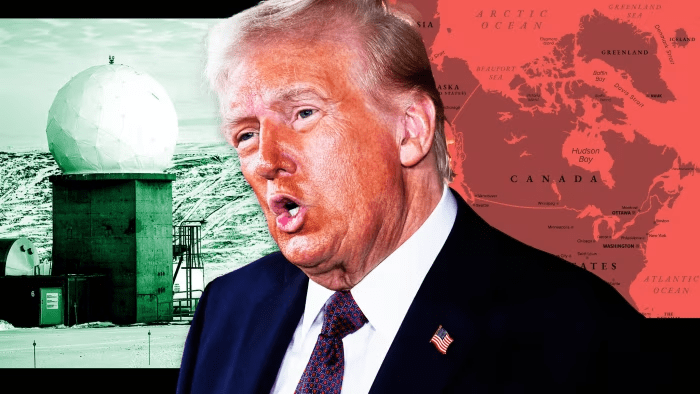
Greenland, the world’s largest island, has emerged as a focal point in global strategic calculations. In early 2026, U.S. policymakers openly signaled interest in acquiring or securing influence over Greenland, citing its geographic position, resource potential, and strategic significance in the Arctic. While Danish leadership has formally rejected any U.S. purchase, the discussion reflects a broader recalibration of American grand strategy following reputational setbacks in the Middle East and expanding global competition in resource-rich regions.
Geographic and Strategic Significance
Greenland occupies a pivotal position in the Arctic, controlling key maritime passages and access to potential offshore energy reserves. Its ice-covered terrain conceals mineral wealth, rare earth deposits, and untapped hydrocarbons. Control or influence over Greenland would provide the United States with the ability to project power in the Arctic, monitor rival states, and secure critical resources for both military and industrial purposes. The Arctic has become increasingly central to global strategic competition as climate change exposes new shipping routes, reducing transit times between Asia, Europe, and North America.
Limitations of European Influence
The European Union and Denmark are largely constrained in their ability to counter U.S. ambitions. The EU lacks unified military capabilities in the Arctic and depends on U.S. cooperation for enforcement and surveillance. Denmark’s rejection of a Greenland sale highlights limited options for external containment, leaving the United States with significant leverage in negotiations. Any final decision on Greenland ultimately hinges on Washington’s strategic calculus and willingness to commit political capital and financial resources to secure influence.
Strategic Rationale: Energy, Technology, and Security
Greenland’s appeal extends beyond geography. Its mineral wealth, including rare earth elements essential for high-tech manufacturing and defense systems, represents a critical asset in a world increasingly dependent on advanced technologies. Arctic positioning also enhances surveillance capabilities, missile defense coverage, and naval reach. In addition, Greenland offers potential for climate-resilient settlements and automated infrastructure development, positioning it as a long-term hub for technological and strategic assets.
The Broader Geopolitical Context
U.S. interest in Greenland reflects a shift in global strategy toward securing peripheries previously considered stable or peripheral. Following setbacks in the Middle East and reputational challenges from conflicts such as Gaza, Washington is projecting influence into regions where leverage can be exercised decisively. Greenland, like South America, represents a theater where force projection, resource control, and geopolitical positioning intersect. The U.S. approach combines legal frameworks, economic inducements, and coercive signaling, signaling both intent and capability to competitors.
Conclusion
Greenland is central to a recalibrated American strategy aimed at securing critical resources, expanding technological and military reach, and consolidating influence in under-contested regions. The island’s combination of strategic location, mineral wealth, and Arctic accessibility makes it a key asset in long-term U.S. planning. While European actors can assert political opposition, they lack the tools to prevent American consolidation if Washington deems it a strategic priority. Greenland is no longer a remote periphery; it is a potential cornerstone of U.S. hemispheric and global influence in the decades to come.