
By Zohaib Ahmed | 21st July 2026
Introduction
Design trends are more than temporary aesthetics. They reflect how people think, feel, and connect with the world around them. In 2026, one of the biggest cultural shifts is the decline of minimalism and the rise of maximalism.
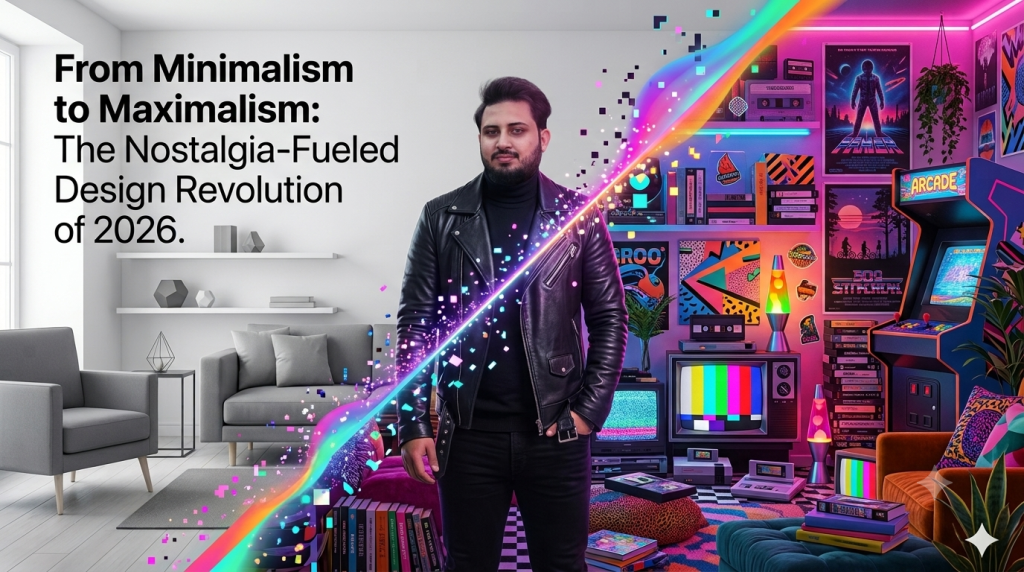
Driven by nostalgia, entertainment, and a growing desire for self-expression, designers are embracing vibrant colors, layered compositions, retro influences, and expressive storytelling. Rather than hiding personality behind neutral palettes and empty space, brands are creating experiences that feel emotional, memorable, and unmistakably human.
Among the biggest cultural catalysts behind this movement is the continued influence of Stranger Things, which has reignited global appreciation for the visual language of the 1980s, 1990s, and early 2000s.
Stranger Things and the Return of Nostalgia
The cultural impact of Stranger Things extends far beyond streaming. Its nostalgic aesthetic has helped reshape fashion, interiors, branding, and digital experiences by reminding audiences why those decades continue to resonate.
Neon lighting, arcade graphics, VHS-inspired visuals, synthwave color palettes, pixel art, retro typography, and analog textures have returned to mainstream design. Instead of viewing these elements as outdated, designers are reinterpreting them through a contemporary lens.
Rather than simply recreating the past, brands are combining nostalgic aesthetics with modern technology, sustainable materials, and interactive digital experiences to create something that feels both familiar and new.
The Neon Renaissance
For nearly a decade, minimalism encouraged clean layouts, neutral colors, and visual restraint. Today, the pendulum has swung in the opposite direction.
Maximalism celebrates abundance without sacrificing intention. Rich textures, saturated colors, layered typography, expressive illustrations, and statement pieces all work together to create environments that communicate personality.
Common characteristics include:
• Neon accents and vibrant gradients
• Jewel-toned furniture and interiors
• Bold typography
• Mixed patterns and layered graphics
• Retro-futuristic interface elements
• Decorative objects with personal meaning
The result is design that feels energetic, immersive, and emotionally engaging.
Why Minimalism Lost Its Appeal
Minimalism solved many design problems by prioritizing clarity, simplicity, and functionality. However, years of identical visual systems eventually created a landscape where many brands looked interchangeable.
Consumers increasingly associate minimalist aesthetics with corporate sameness rather than individuality.
In a world shaped by social media, digital fatigue, and post-pandemic emotional shifts, people are seeking warmth, identity, and authentic experiences. Maximalism answers that demand by allowing brands and individuals to express character rather than suppress it.
It encourages creativity instead of restraint and emotion instead of uniformity.
Maximalism as Emotional Storytelling
Modern design is becoming less focused on visual perfection and more focused on emotional resonance.
Maximalism succeeds because every layer contributes to a story. Every color, texture, object, and pattern adds another chapter to the overall experience.
This shift is visible across multiple industries, including:
- Brand identity systems
- Product packaging
- Retail environments
- Hospitality interiors
- Event experiences
- Digital interfaces
- Advertising campaigns
Consumers increasingly remember brands that make them feel something rather than brands that simply look clean.
Breaking Free from Minimalist Restraint
Maximalism is often misunderstood as visual clutter.
Effective maximalism is highly intentional.
Successful designers carefully layer contrasting elements while maintaining visual hierarchy and functional clarity. Rich compositions replace empty space, but every detail supports the broader narrative.
Examples include:
- Packaging that combines metallic foils, embossing, vivid colors, and expressive typography.
- Retail environments that integrate lighting, sound, scent, texture, and interactive installations.
- Product design that blends nostalgic aesthetics with advanced technology.
- Brand identities that embrace bold color systems and unconventional layouts without sacrificing usability.
The objective is not to add more elements. It is to create richer experiences.
Designing for the Maximalist Mindset
Consumers in 2026 expect brands to deliver memorable experiences rather than simply attractive visuals.
Dynamic Packaging
Packaging has evolved into a storytelling medium.
Collectors increasingly value tactile finishes, layered graphics, vibrant colors, premium materials, and typography that transforms ordinary products into memorable experiences.
Immersive Brand Spaces
Physical stores are becoming destinations rather than transactional spaces.
Interactive installations, neon lighting, digital displays, sensory environments, and experiential storytelling encourage visitors to spend more time engaging with the brand.
Nostalgia with a Modern Twist
Retro-inspired design continues to grow, but modern execution keeps it relevant.
Brands are combining vintage aesthetics with sustainable manufacturing, AI-enhanced personalization, and contemporary production techniques to create products that feel timeless rather than outdated.
Digital Maximalism
Even digital experiences are becoming more expressive.
Modern websites and applications increasingly feature:
- High-contrast gradients
- Bold animations
- Rich micro-interactions
- Layered interfaces
- Playful navigation
- Expressive typography
Rather than distracting users, these elements create memorable digital experiences when implemented thoughtfully.
Principles of Effective Maximalism
Successful maximalism follows discipline rather than excess.
Purposeful Layering
Every visual element should support the narrative. Decoration without intention quickly becomes noise.
Brand Authenticity
Bold aesthetics should strengthen the brand’s identity rather than overwhelm it. Visual expression must remain consistent with the organization’s personality and values.
Functional Creativity
Design should remain intuitive and accessible. Strong visual impact should never reduce usability, readability, or customer experience.
Why Maximalism Matters for Brands
The return of maximalism reflects a broader cultural shift toward authenticity, individuality, and emotional connection.
Consumers are increasingly drawn to brands that communicate personality instead of perfection. They want experiences that feel memorable, expressive, and meaningful.
For businesses, maximalism presents an opportunity to differentiate themselves in increasingly competitive markets. Brands willing to embrace bold storytelling, immersive experiences, and emotionally rich design are more likely to capture attention and build lasting connections.
Conclusion
Minimalism transformed design by teaching us the value of clarity and restraint. Maximalism is now redefining the next chapter by reminding us that personality, emotion, and storytelling matter just as much.
The design landscape of 2026 belongs to brands that are willing to be expressive, memorable, and unapologetically original.
The message is simple. Design with confidence. Tell richer stories. Create experiences people remember.