
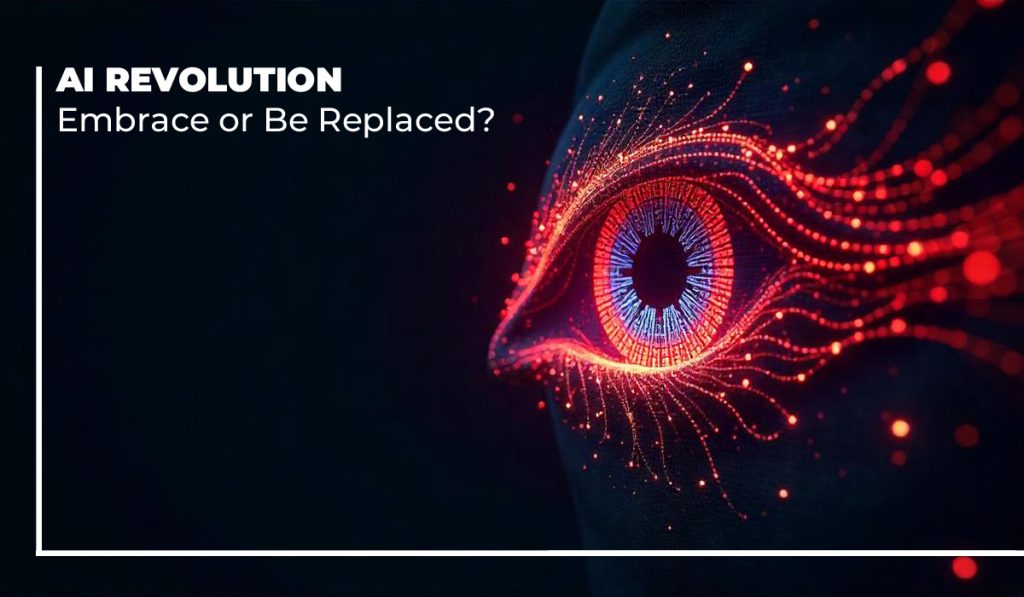
Artificial intelligence (AI) has emerged as one of the most dynamic and captivating domains, with cutting-edge tools like ChatGPT, Google Gemini, Midjourney, and more driving the headlines. These advanced AI technologies have taken the world by storm, transforming various aspects of our lives and redefining the boundaries of what is possible.
In the fast-paced world of the 21st century, technological advancements are reshaping industries, individuals, and societies. Artificial Intelligence (AI) has emerged as a powerful tool with immense potential. As the Co-Founder of Bécanvas, a fifth-generation creative agency, I have experienced firsthand the transformative capabilities of AI. In this article, we will delve into why everyone should use AI tools in everyday life, focusing on the fact that AI is not here to replace us, but rather to enhance our capabilities.
AI is not a threat to human jobs; rather, it is a key enabler that complements and amplifies human potential. Embracing AI creates new job opportunities and reshapes existing roles. A person who embraces AI and understands its intricacies gains a competitive edge in the job market. The fear of job replacement is rooted in misconceptions; in reality, those who possess AI skills will be the innovators and leaders of tomorrow.
As Kai-Fu Lee, former president of Google China said in a seminar in 2019. AI’s future is a pressing question as it gains momentum worldwide. Some fear an AI bubble or dystopian takeover, but these extremes miss the bigger picture. While caution is warranted, we must balance it with a broader view. AI’s power lies in its continuous improvement and ability to outperform humans in specific tasks. Presently, it excels in digital domains like the internet and finance, but its impact will eventually extend across industries. With time, AI will comprehend us better than we know ourselves, transforming how we work, communicate, and learn. Embrace its potential, for AI’s impact will be overwhelmingly positive in society.
As Chuck Murphy from Boston Digital explained, The digital transformation has profoundly impacted the life science industry, revolutionizing drug discovery, clinical trials, and commercial operations. With data analytics and machine learning, researchers gain deeper insights, while clinical trial management software streamlines processes. Commercial teams benefit from understanding their customers better through data analytics, enabling personalized marketing campaigns and efficient e-detailing platforms. Marketers play a pivotal role in driving modernization, collaborating with IT and R&D to innovate and create customer-centric business models, delivering exceptional experiences and business value. The digital age has unlocked unparalleled opportunities for growth and impact in life science.
The integration of AI in everyday life empowers individuals to augment their skills, talents, and capabilities. AI-powered writing tools, like ChatGPT, enable students and professionals to enhance their writing prowess by offering suggestions and correcting errors. Embracing AI empowers us to think more creatively, to solve complex problems efficiently, and to focus on high-value tasks, leaving repetitive and time-consuming tasks to AI.
In an interview Peter Flint, Capgemini’s VP of Tech & Innovation said When AI first emerged, it was hyped with great anticipation, but turning that potential into practical applications and business value proved more challenging than expected. While popular products like Alexa and Google Glass gained admiration, AI’s shop floor usage remained mostly limited to machine learning and deep learning applications for quality control and monitoring. These applications have become standard in industries, and companies have mastered their effective integration, dampening AI’s initial excitement. However, with the rise of Open AI, the technology is once again sparking hype and excitement.
While AI is a powerful ally, it is crucial to recognize its limitations. AI lacks emotional intelligence, empathy, and creativity, qualities that make us uniquely human. As we embrace AI, it is essential to strike a balance, acknowledging that there are tasks where the human touch is irreplaceable. Embracing AI should be seen as an opportunity to offload mundane tasks, allowing us to dedicate more time to harnessing our creativity and emotional intelligence.
The key to leveraging AI lies in knowing how to best use it to optimize our strengths. By understanding the technology and its capabilities, we can choose the right tools that complement our expertise. AI can be utilized to analyze vast amounts of data, provide valuable insights, and help make well-informed decisions. This symbiotic relationship between humans and AI fosters personal growth and development, enabling us to achieve more than ever before.
In the digital age, the ability to harness AI is a fundamental skill. Institutions like schools and universities that discourage AI usage are doing a disservice to their students, limiting their potential for success in the modern world. Embracing AI is not about dependency but about equipping ourselves with the tools necessary to thrive in the evolving landscape.
From a report by Mckinsey, For us and many executives, trying ChatGPT from OpenAI showcased the impressive power of generative AI. Within five days of its release, over a million users logged in to experience it themselves, causing a surge in demand that occasionally overwhelmed OpenAI’s servers. Products like ChatGPT and GitHub Copilot, backed by advanced AI models like GPT-3 and DALL·E 2, are blurring the line between human and machine creativity. Computers can now generate original content, from blogs to package designs to computer code, based on data they’ve absorbed and interactions with users. The realm once reserved for humans is being reshaped by this groundbreaking technology.
The complexity arises from the fact that AI encompasses a broad spectrum of technologies, including machine learning, computer vision, natural language processing, deep learning, and more, each at different stages of development and deployment. While AI’s role in dynamic market-based pricing and targeted marketing is well-established, the realm of machines thinking like humans remains a futuristic vision, still years away from full realization. This diverse landscape gives rise to a spectrum of reactions from those who grasp the disruptive potential of AI.
Midjourney, has been at the forefront of breakthroughs in computer vision. With its ability to interpret and understand visual information, Midjourney has accelerated advancements in industries like healthcare, autonomous vehicles, and image recognition, unlocking new possibilities and propelling us into the future.
Yet, despite the awe-inspiring capabilities of these AI tools, misconceptions and uncertainties persist, hindering their widespread adoption. Many individuals remain unaware of the true potential of AI, dismissing it as a mere futuristic fantasy. However, the truth is far from this misconception.
In conclusion, AI is a revolutionary force that should be embraced rather than feared. As the Co-Founder of Bécanvas Creative Agency, I can attest to the transformative power of AI in enhancing creativity and productivity. Embracing AI in everyday life is about seizing opportunities for growth, empowering ourselves to become better versions of who we are. We must learn to wield AI as a powerful tool that amplifies our strengths, not as a replacement for our uniqueness. So, let’s be proactive, adapt to the times, and ride the wave of the fifth generation, for the future belongs to those who master AI and use it to unlock their full potential.