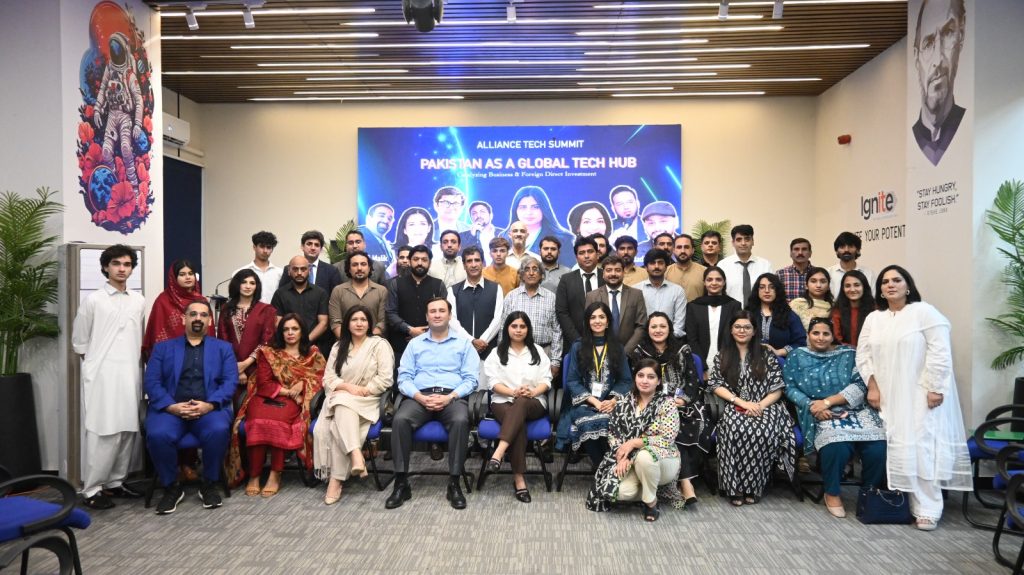
By Zohaib Ahmed – Founder, BéCanvas | Strategic Foresight Analyst If there was ever a moment where Pakistan’s tech pulse throbbed loud enough to echo globally, June 27th, 2025 was it. Welcome to the Alliance Tech Summit 2025, hosted in the futuristic, aesthetically mesmerizing halls of NICAT, Chaklala Rawalpindi — a government-backed startup incubator that felt more like a Silicon Valley spaceship than a local tech space. With its high-end tech infrastructure, minimalistic design studios, galaxy-inspired bars, and vibey lounges, NICAT is proof that Pakistan isn’t just dreaming about innovation — it’s investing in it. THE VENUE: NICAT – Pakistan’s Hidden Tech Paradise NICAT (National Incubation Center for Aerospace Technologies) deserves a standing ovation. From the cutting-edge displays to the interstellar-themed Galaxy Bar that served brilliant tech snacks and brain fuel drinks, everything screamed “we mean business.” It’s no wonder startups feel like billion-dollar unicorns the moment they enter here. This is a space where creativity collides with capital, and the government’s intention to elevate startup ecosystems isn’t just talk — it’s visible in every wall, Wi-Fi signal, and workspace. The Power Panel: Voices That Matter A special tribute must be paid to Sabih Nasir, Director Alliance Tech Summit. It was his brainchild and vision that made it all happen. Special credits to Fizza Faizan Farooqui, the powerhouse behind the scenes and Assistant Director, Alliance Tech Summit. Though she couldn’t attend the event in person, her presence was felt in every detail — from the expertly curated panel to the thoughtfully selected guest list that brought together some of the brightest minds in Pakistan’s tech ecosystem (myself humbly included). Fizza’s strategic vision, tireless coordination, and commitment to excellence laid the foundation for what became one of the most impactful tech summits in recent memory. Moderated by Arooj Abrar, a sharp Digital Media Strategist with an electric presence, the summit gathered some of Pakistan’s most formidable minds and frontline pioneers from gaming, AI, edtech, cybersecurity, and policy-making. Here’s the stellar cast: ⭐ Ursula Waqar — Co-founder, Hetric (EdTech) She kept it concise but sharp. Ursula represented the potential of women-led innovation, reminding us how education and technology intersect to rewrite futures. Hetric is going places, and Ursula’s calm yet confident presence proved it. ⭐ Khawar Naeem — Country Head, Tencent Games (Pakistan & Afghanistan) This was one of the show-stealers. Khawar dropped the bombshell that Pakistanis rank among the highest creators of custom PUBG “WOW” maps globally — mind blown! And yes, Tencent actually has an office in F-7, Islamabad (who knew?!). Khawar’s energy and insight revealed how deeply embedded Pakistani talent already is in global gaming ecosystems. ⭐ Gull Zeba — Chairperson, HEC EdTech Panel One word: Powerhouse. Gull Zeba’s speech cut through the noise. Passionate, deeply experienced, and unapologetically focused on fixing Pakistan’s education-tech disconnect, she reminded everyone that if we don’t solve the classroom crisis, we can forget the boardroom dreams. Easily the most admired speaker of the event. ⭐ Ali Malik — Founder, The Hydrobotics Group Cybersecurity and geopolitical intelligence might sound intimidating, but Ali made it gripping. He answered some brutally tough questions (including one on ethical AI usage) like a total pro. His insights about digital warfare, cyber vulnerabilities, and sovereign tech strategies made everyone sit up straighter. ⭐ Sheikh Abdul Qadir — CEO, Idrak AI & PASHA Board Member He didn’t speak much, but his quiet presence was intriguing. Sheikh Qadir is one of those “minds behind the curtain” types — not loud, but legacy-level impactful. ⭐ Raza Ahmed Sukhera — Director, PSEB He started strong, highlighting how Pakistan’s IT exports are steadily rising, but had to leave mid-way. His slot was smoothly filled by the CEO of Alliance Group, who added fresh energy and clarity on policy frameworks and export incentives. ⭐ Shahrukh Babar — Co-founder, Xylexa & Infix Systems Representing AI in healthcare, Shahrukh’s talk was enlightening. Pakistan’s healthtech space is fast evolving, and Xylexa is at the frontier of diagnosing through machine vision. His calm but confident tone made it clear: Pakistani AI can heal, not just hustle. KEY THEMES: Real Talk, Raw Challenges, and Big Dreams The panel didn’t hold back. 🔥 Pakistan has the talent, the ambition, and the drive — but the education system is the elephant in the server room.The misalignment between market-ready skills and outdated syllabi continues to choke innovation. Students graduate with degrees but no direction. Entrepreneurship is misunderstood. Many want to be “startup founders,” but few know when to pivot or even sell. 🔥 The freelance boom is impressive — but freelancing ≠ entrepreneurship.Freelancers are skilled, yes. But building an empire takes more than Upwork gigs. It takes strategy, vision, and resilience. Most startup founders treat their ventures like emotional pets — unwilling to pivot, scale, or let go. 🔥 The government is showing intent — but mass adoption and awareness are key.From AI parks to incubation centers and IT export initiatives, momentum is building. But a learning vacuum among the masses continues to be a huge speed bump. 🔥 With the world’s 5th largest population, we’re not just a market — we’re a movement.Pakistan must stop exporting talent passively. Instead, we must attract Foreign Direct Investment (FDI) by building trust, tech IPs, and startup ecosystems that inspire confidence globally. Lighter Moments Let’s not forget the Q&A section — especially the moment when a lawyer suggested “AI must be controlled immediately”. The room exploded with laughter, and even the panel couldn’t hold it in. The crowd needed that comic relief after all the policy and product talk. Tea, Biscuits & a Bit of British Nostalgia Post-session networking over classic English tea and biscuits was the cherry on top. Conversations flowed, business cards flew, and LinkedIn connections were forged. The general consensus?“This event was 🔥… but next time, do it all in Urdu.”English might be the language of commerce, but Urdu is the language of conviction — and the audience wants to feel the conversation, not just hear it. Closing By the Legend: Mr.