
By Zohaib Ahmed | 19th December 2025
Executive Summary
Pakistan’s defense modernization is undergoing a marked transformation with the integration of advanced autonomous systems, particularly quadrupedal robotic units derived from Chinese designs such as the Robo‑Wolf. This evolution reflects a broader doctrinal shift toward technology‑enabled operations that enhance lethality, intelligence gathering, and force protection in both counter‑terrorism (CT) and border security environments. The inclusion of robotic platforms into Pakistan’s force structure aligns with global military trends toward human‑machine teaming , and signals Islamabad’s intent to leverage Chinese defense innovation to mitigate risks posed by asymmetric threats and complex terrain.
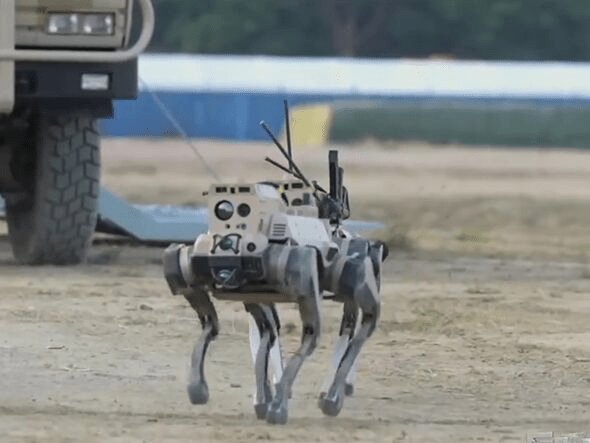
Recent reports confirm that Pakistan is actively trialing Robo‑Wolf class robots domestically in high‑risk areas to minimize human exposure during surveillance, perimeter security, and close‑quarters reconnaissance missions.
1. Strategic Context & Operational Imperatives
1.1 Persistent Asymmetric Threats
Pakistan continues to confront insurgent networks and cross‑border militant threats in regions such as Khyber Pakhtunkhwa, Balochistan, and tribal areas. These environments are characterized by:
- Rugged terrain and complex cave networks.
- Urban and semi‑urban zones prone to ambush and IED usage.
- High vulnerability of conventional forces in close‑quarters engagements.
To counter these challenges, force planners prioritize reducing troop exposure while maintaining situational dominance. Autonomous ground systems can undertake initial breach, reconnaissance and clearing tasks that would traditionally necessitate soldier risk.
1.2 Human‑Machine Teaming Doctrine
The operational philosophy behind embracing quadruped robots centers on hybrid human‑machine formations where autonomous systems conduct dull, dirty, and dangerous tasks , leaving high‑complexity decisions to trained personnel. Leaders describe such integration as a way to “protect soldiers’ lives” while enhancing operational effectiveness.
This model reflects modern military innovation trends where unmanned systems are embedded within conventional units to extend reach, persistence, and intelligence capabilities.
2. The Robo‑Wolf: Capabilities and Constraints
2.1 Core Technological Features
Robo‑Wolf class quadrupedal robots , based on Chinese developments , are engineered to navigate challenging terrain, including rubble, stairs, and confined urban spaces. Their salient features include:
- Electro‑optical sensors and thermal imaging for reconnaissance.
- Stabilized weapon mounts and sensor arrays enabling remote engagement capability.
- Autonomous navigation suites to operate ahead of infantry units.
These systems are comparable to China’s “robot wolves” which have been showcased in PLA exercises integrating robotic quadrupeds with infantry and drone swarms.
2.2 Endurance and Network Requirements
Current models exhibit endurance limitations, with operational durations commonly in the 2–3 hour range per mission. Secure, encrypted datalinks are essential for transmission of sensor data and command inputs, and represent a critical vulnerability if disrupted.
These limitations are typical of early‑generation autonomous ground platforms and suggest Pakistan’s adoption phase remains exploratory , focusing on tactical utility in specific mission sets rather than full battlefield autonomy.
3. Operational Integration & Trials
3.1 High‑Risk Missions & ISTAR Roles
Pakistan’s armed forces are placing Robo‑Wolf units in roles that historically incurred significant human risk:
- Perimeter surveillance and base defense
- Tunnel and built‑up area reconnaissance
- Forward observation and hostile terrain approaches
Such deployments are initially supervised and controlled, with human operators maintaining oversight to ensure compliance with tactical rules of engagement.
3.2 Joint Training with Chinese Forces
Recent Pakistan‑China exercises (e.g., Warrior‑IX) have featured joint integration of robotic quadrupeds with human assault forces in simulated CT scenarios. These drills aim to enhance interoperability and tactics for machine‑assisted reconnaissance and target acquisition in complex terrain.
This cooperation underscores the strategic partnership between Islamabad and Beijing,, enabling Pakistan to absorb advanced military robotics expertise more rapidly than pursuing wholly indigenous development.
4. Strategic Implications & Future Trajectory
4.1 Force Protection and Casualty Mitigation
The most immediate strategic benefit of Robo‑Wolf integration is enhanced force protection. By relegating the most dangerous tasks , such as initial reconnaissance of IED‑laden alleys or tunnel entry , to robots, Pakistan can reduce casualty rates among infantry and special operations units.
4.2 Deterrence and Operational Posture
Possession of robotic ground systems contributes to a deterrence narrative against adversarial militant groups. The psychological effect of facing autonomous systems in lethal or high‑risk missions can degrade opponent morale , a factor increasingly emphasized in modern combat thinking.
4.3 Transition to Autonomous Formations
While Pakistan currently emphasizes supervised machine operations, future upgrades could include tighter integration of AI‑enabled mission autonomy, as China and others push toward clustered unmanned systems that coordinate across ground and aerial domains.
However, full autonomy entails ethical, legal, and command‑and‑control challenges that Pakistan , like many militaries , is likely to manage conservatively, preserving human oversight in lethal decision loops.
5. Recommendations for Strategic Development
- Develop Indigenous Capability: Parallel to foreign procurement and trials, invest in domestic R&D to avoid long‑term dependence on external suppliers for robotics and autonomy components.
- Secure Communication Networks: Prioritize hardening of encrypted datalinks and mesh networks to ensure continuity of control in contested electronic warfare environments.
- Doctrine & Training Modernization: Update force doctrines to integrate robotic operations into combined arms CT gameplaybooks, and expand training curricula for operator and maintenance cadres.
- International Collaboration: Continue leveraging partnerships with technology producers while exploring diversified sources to decrease strategic vulnerability.
Conclusion
Pakistan’s deployment of Chinese‑origin Robo‑Wolf quadrupedal robotic systems represents a pragmatic and forward‑leaning response to the country’s enduring security challenges. By embracing autonomous ground platforms, Islamabad is signaling a shift toward technology‑augmented warfare that prioritizes force protection, operational flexibility, and battlefield situational awareness.
Although current capabilities remain mission‑specific and still reliant on human oversight, this strategy positions Pakistan at the forefront of regional defense innovation and adapts its force posture to the evolving character of counter‑terrorism and hybrid conflict. Continued modernization, doctrinal adaptation, and investment in indigenous autonomy infrastructure will determine the future trajectory and strategic impact of such systems on Pakistan’s overall defense architecture.