
By Zohaib Ahmed | 12th February 2026
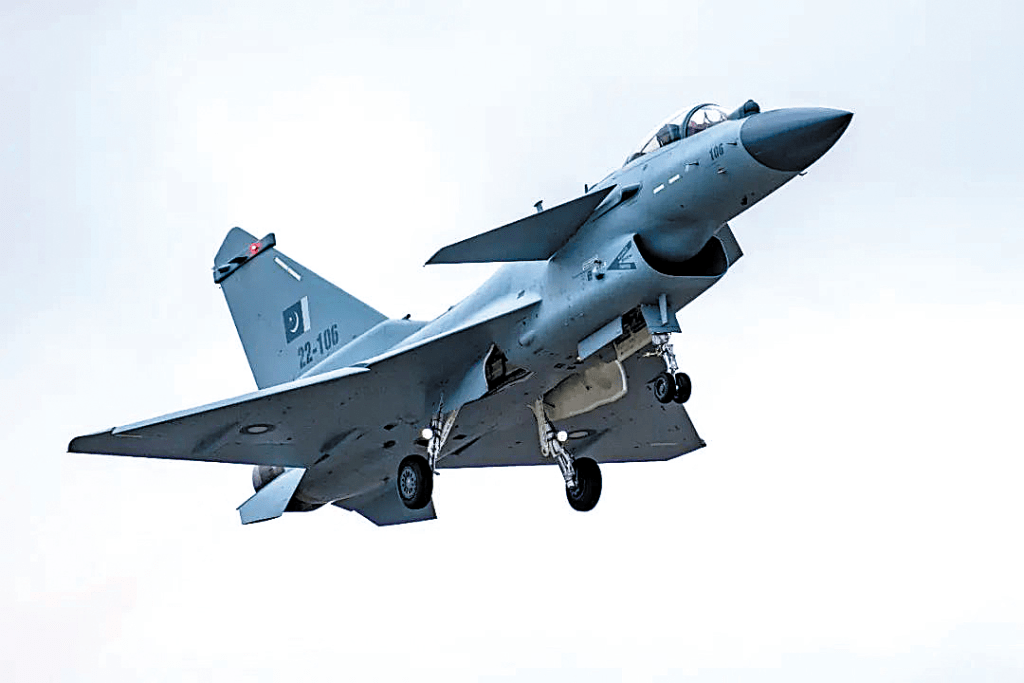
The induction of the J10C Vigorous Dragon into the Pakistan Air Force (PAF) has become one of the most scrutinized military procurement stories of 2026. While the original 2021 contract for 36 aircraft suggested a rapid delivery schedule, the arrival of the final 16 jets has been pushed into 2026. This timeline is not the result of financial or industrial failure but stems from a strategic decision to overhaul the aircraft’s software and electronic warfare (EW) suites following the high-intensity air war of May 2025. By analyzing the data from real-world engagements, the PAF and Chengdu Aircraft Corporation (CAC) chose to delay the final batch to ensure these jets arrive as combat-hardened platforms capable of defeating the latest Western sensor technology.
The May 2025 Catalyst
The brief but violent conflict in May 2025 served as the first ever combat validation for the J10CE and its primary weapon, the PL15 air-to-air missile. During the four-day war, PAF J10Cs were involved in what analysts describe as the largest air battle of the 21st century. While the J10C proved its lethality by successfully engaging high-end 4.5-generation adversaries at ranges exceeding 150 kilometers, the “electronic fog” of the battlefield revealed critical areas for improvement.
The PAF reportedly discovered that while the KLJ-7A AESA radar performed exceptionally well in clear environments, it faced sophisticated jamming from the Indian Regional Navigation Satellite System (IRNSS) and terrestrial Vayulink networks. This real-world telemetry provided a “digital blueprint” of the adversary’s electronic signature that simply didn’t exist in simulation. Instead of taking delivery of “standard” J10Cs that would need immediate upgrades, the PAF requested that the remaining 16 airframes be modified at the factory level to counter these specific threats.
Post-2025 Technical Modifications
The final 16 J10C units are currently undergoing a specific series of updates focused on sensor fusion and electronic counter-countermeasures (ECCM). The most significant change is the integration of a “hardened” software patch for the EW suite. This patch allows the aircraft to better distinguish between genuine targets and the “radar spoofing” decoys encountered during the 2025 skirmishes.
Engineers at Chengdu have also worked on the “silent hunter” capability. Data from the war showed that J10Cs were most effective when they kept their own radars off, receiving target data from KJ500 airborne early warning aircraft via a high-speed datalink. The delayed batch features an upgraded datalink protocol that is gonna be more resistant to jamming and offers higher bandwidth. This ensures that the remaining jets can act as forward-deployed sensors for the rest of the fleet without giving away their position.
Strategic Alignment with the J35
Another reason for the delay is the requirement for the J10C to be fully compatible with the upcoming J35 stealth fighter. With the first batch of J35s expected by late 2026 or early 2027, the PAF is gonna operate a “tiered” air force. The J10Cs in the final delivery batch are being fitted with the same data architecture as the J35 to ensure “Day One” interoperability.
This means a J35 could fly deep into contested airspace in stealth mode and “paint” a target, while a J10C trailing 100 kilometers behind fires a PL15 missile. This “Cooperative Engagement Capability” required hardware adjustments in the J10C’s cockpit and processing units that were not part of the initial 2022 deliveries.
Current Status and 2026 Outlook
According to the Pentagon’s 2025 China Military Power Report and recent satellite imagery from the Chengdu facility, the final 16 jets are now in their flight-testing phase. Some have already been seen in full PAF livery, suggesting that the software integration is complete. The PAF has confirmed that it currently maintains 20 operational units within the No. 15 “Cobras” squadron, and the new arrivals are gonna form the backbone of a second dedicated J10C wing by the end of 2026.
The delay has ultimately turned the J10C from a standard export fighter into a bespoke tool designed for the specific electronic environment of the South Asian theater. By the time the full 36-unit fleet is inducted, the PAF is gonna possess a force that has not only been tested in battle but has been redesigned based on the very lessons that battle provided.