
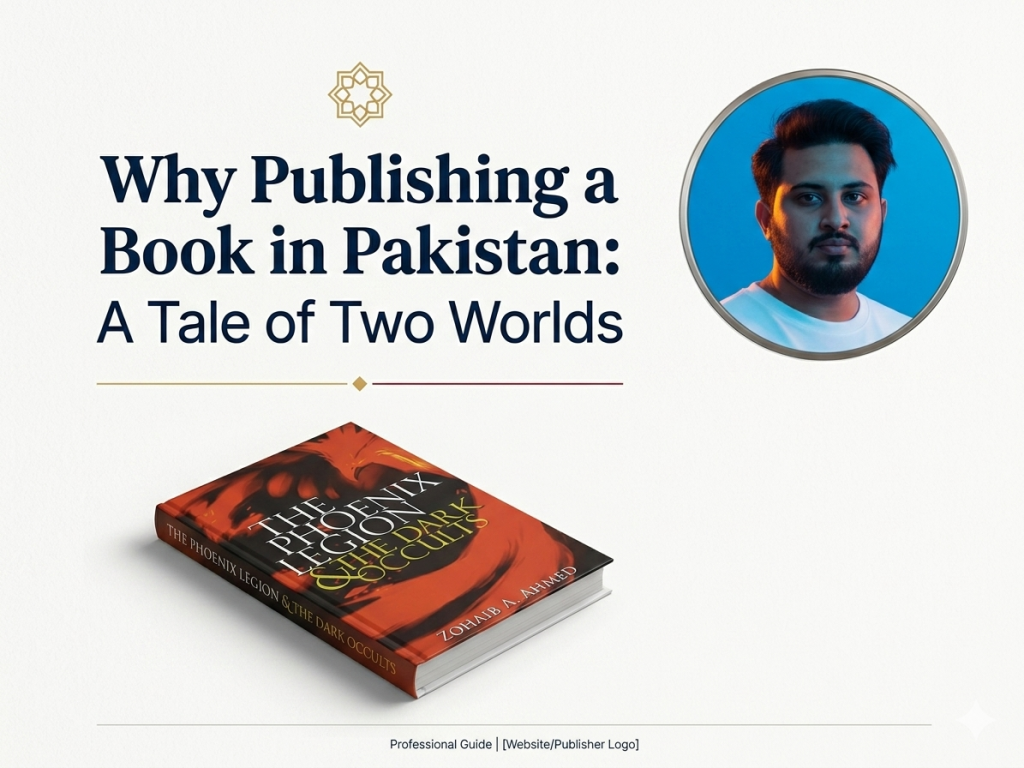
By Zohaib Ahmed
A Rich Literary Heritage
Pakistan, a land steeped in history and culture, has a rich literary tradition that spans centuries. From the Urdu poets of the Mughal era to the English-language authors of the post-colonial period, Pakistani writers have made significant contributions to the global literary landscape. Names like Saadat Hasan Manto, Intizar Husain, and Abdullah Hussain are synonymous with Pakistani literature.
A Landscape of Independent Publishers
In the past, Pakistan had a thriving publishing industry, with numerous independent publishers producing a wide range of books. These publishers played a crucial role in promoting Pakistani literature and ensuring that books reached readers across the country.
The Current Publishing Landscape: A Challenge
However, the current publishing landscape in Pakistan presents a stark contrast to its historical glory. Today, the country is largely dominated by vanity publishers and print-on-demand services. These entities often prioritize profit over quality, and their distribution networks are limited to online platforms. As a result, authors who choose to publish their books in Pakistan often find it difficult to get their work into the hands of readers.
The Marketing Hurdle
Even if an author manages to publish their book through a vanity publisher or print-on-demand service, they still face a significant challenge: marketing. Without a robust distribution network and the support of traditional publishers, authors must invest heavily in marketing their books. This can be a daunting task, especially for debut authors who may lack the resources or experience to promote their work effectively.
A Glimpse into the Future
While the current situation may seem bleak, there is hope for the future. As the country continues to develop economically and culturally, there is a growing demand for quality literature. It is possible that new publishing models and technologies will emerge, providing authors with more opportunities to get their books into the hands of readers.
A Call for Change
In the meantime, authors who aspire to publish their work in Pakistan must be prepared to face challenges. They should consider alternative publishing options, such as self-publishing or seeking representation from literary agents. Additionally, they should be proactive in marketing their books and building a strong online presence.
Conclusion
While publishing a book in Pakistan may not be as straightforward as it once was, it is still possible. By understanding the current landscape and being willing to adapt, authors can overcome the challenges and share their stories with the world. As Pakistan continues to evolve, it is hoped that the publishing industry will also undergo a transformation, providing authors with the support and resources they need to succeed.