
By Zohaib Ahmed – Strategic Foresight Analyst | 18th of September 2025
The Death of the OIC: A Burial in Doha
When the Organization of Islamic Cooperation (OIC) was founded in 1969 after the arson attack on Al-Aqsa Mosque, it carried a promise: to serve as the collective voice of the Muslim world, to defend its sanctities, and to uphold sovereignty and justice in the face of foreign encroachment. Half a century later, that promise died quietly in Doha.
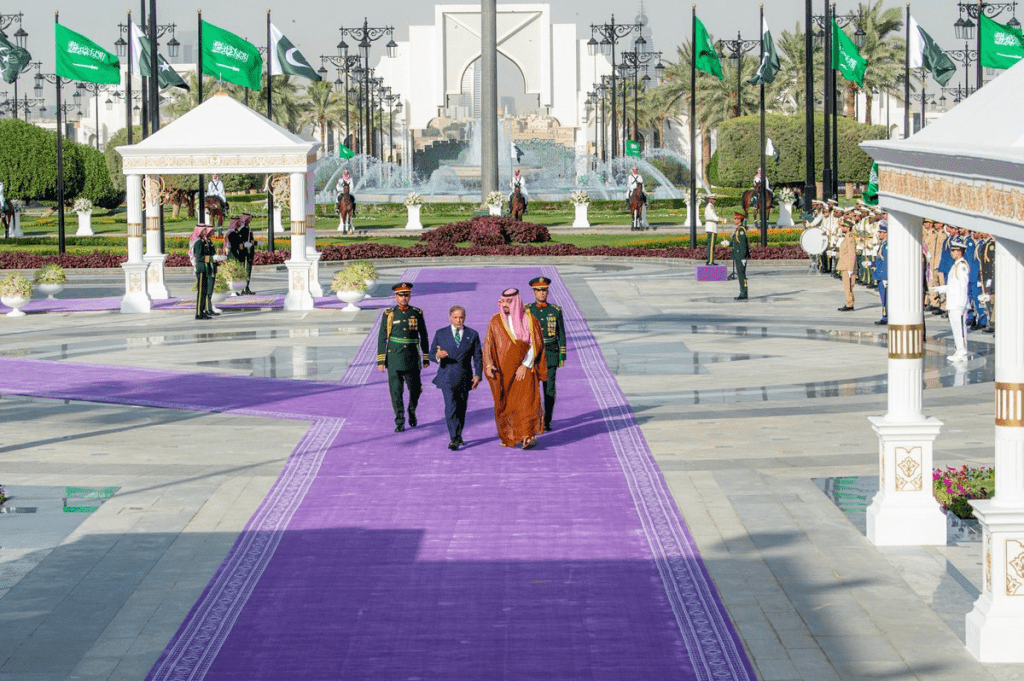
The Arab Islamic Summit hosted in Qatar, rather than revitalizing Islamic unity, effectively buried the OIC as a relevant platform. By branding the summit under an “Arab” banner, the message was unmistakable: leadership of the Muslim world remains monopolized by Arab regimes, with non-Arab Muslim nations relegated to the sidelines.
The weak resolution issued in Doha was nothing more than a diplomatic fig leaf. No real commitments to defend Al-Aqsa, no binding mechanisms against Israeli adventurism, and no clarity on retaliation against strikes already carried out on Arab soil. This diplomatic hollowness will have ripple effects — the most dangerous being on Masjid al-Aqsa, where Israeli encroachments are now certain to accelerate, knowing full well that the “collective defense” of the Muslim world exists only on paper.
The resolution’s language exposed everything: “Support the efforts of States engaged in mediation, in particular the State of Qatar, the Arab Republic of Egypt, and the United States of America, to end the aggression on the Gaza Strip…”
This line, more than any other, signals the real shift. By elevating Washington — the same power financing and arming Tel Aviv — as a “partner for peace,” the summit effectively gave the power of protection back to the United States. The Arabs outsourced their security grammar to Washington decades ago; now they’ve done it openly, burying any illusion of an independent Islamic political will. Qatar’s role as mediator was not just about Gaza; it cemented U.S. leverage in the region. The consequence? Masjid al-Aqsa will continue to suffer, because the so-called guardians of its sanctity have re-delegated their responsibilities to the very empire underwriting its occupation.
The OIC has transformed into a ceremonial relic. The Doha summit, in its timidity, signaled not deterrence but invitation. It was less a shield and more a green light for the next strike — and the next strike will almost certainly target Qatar again.
The Pak–KSA Defense Pact: Optics Over Armies
Amid this vacuum, the most concrete development has been the Pakistan–Saudi Arabia Strategic Mutual Defense Agreement. On paper, it is bold: “Any aggression against either country shall be considered an aggression against both.”
But this is not about armored columns rolling or nuclear umbrellas formally extending to Riyadh. This is about optics, leverage, and defense grammar.
Behind the scenes, engineers from the PAF and RSAF are already in conversation, exploring technical integration:
- How to marry American Patriot batteries with Chinese HQ-9s into a layered GBAD system.
- How to synchronize PAF J-10Cs (Data Link-17) with RSAF F-15s (Data Link-16) for real-time air superiority coordination.
This pact will not produce a collective shield. Riyadh’s military capacity remains limited; it couldn’t decisively handle the Houthis, let alone face a state adversary. But what Riyadh does have is money, influence, and access to Western corridors of power. What Pakistan has is what the Saudis lack: manpower, training depth, and an expanding defense industry ecosystem.
The real win for Islamabad is not a fantasy of Arab solidarity, but the opening of the Saudi market for Pakistani defense exports. Joint discussions on integrating the U.S.-made Patriot systems with Chinese HQ-9s, linking PAF J-10Cs (Data Link 17) with Saudi F-15s (Data Link 16), and even the possibility of Pakistani troop presence in Tabuk (subject to confirmation) all add credibility. But the strategic heart of this deal is business — Riyadh becomes a buyer, Pakistan a supplier.
This is exactly what I foresaw in the Crescent Security Initiative idea: Pakistan’s leverage lies in monetizing its military edge, not waiting for Arab unity that will never come. For Pakistan, this is not about “Islamic NATO,” it’s about becoming a defense exporter of consequence — carving relevance on the geopolitical chessboard where weapons, not words, matter.
Vindication of the Crescent Thesis
In my earlier blog The Crescent Moment, I argued:
“Arab regimes are risk-averse, transactional, and survivalist. They won’t bleed for Pakistan, Turkey, or even for each other. A Crescent Security Initiative is marketing, not strategy — a way for Pakistan to monetize its edge while securing leverage in GCC corridors.”
The Doha summit and the Pak–KSA pact have vindicated this thesis. The Arabs have once again chosen survival optics over substantive unity. And Pakistan, wisely, is playing the only viable card — selling defense credibility, not begging for Islamic solidarity.
This is not NATO. This is not Muslim unity. This is transactional geopolitics in its purest form — and if Islamabad plays it right, it could be the ladder that elevates Pakistan from a “mercenary state” to a regional defense exporter of choice, alongside China.
Conclusion: The New Crescent Grammar
The Arab Summit in Doha reaffirmed dependence on Washington and confirmed the OIC’s death. Masjid al-Aqsa is now hostage to U.S.-brokered “mediation.” Meanwhile, Pakistan’s pact with Riyadh shows a smarter play: don’t chase Arab solidarity, chase markets. Defense exports, training, and technology integration — this is where Pakistan can turn rhetoric into real strategic weight.
The Muslim world may still talk about unity, but the truth is simple: solidarity has been outsourced, business is the new shield, and Pakistan is finally learning to play the game on its own terms.